RMG Xpress Insights by Sohel
Denim Washing: A Buyer's Introduction85 slides · eleven sections · for buyers, merchandisers and product developers
← Projects PDF Download PPTX
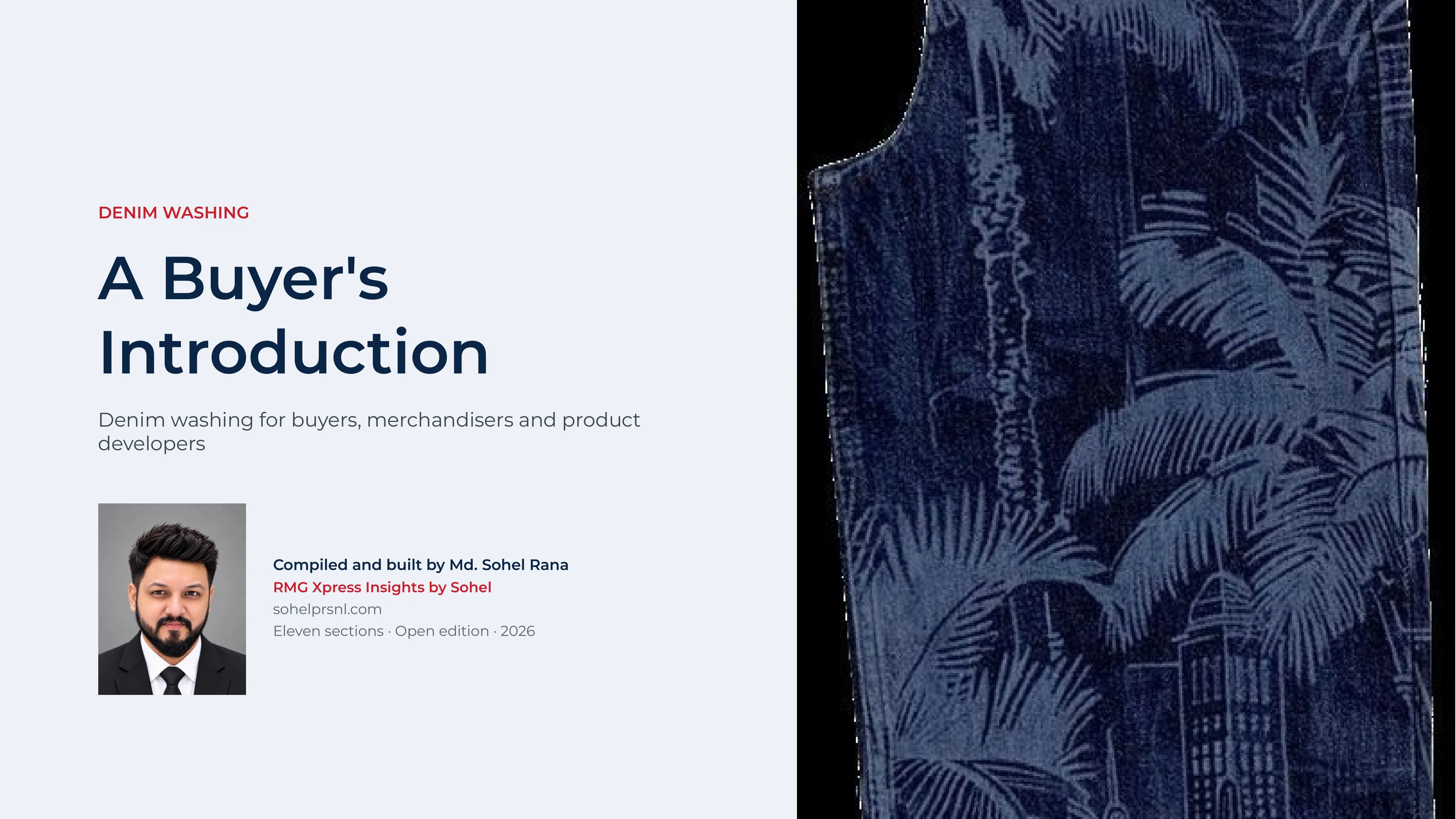
Slide 1 of 85: A Buyer's Introduction
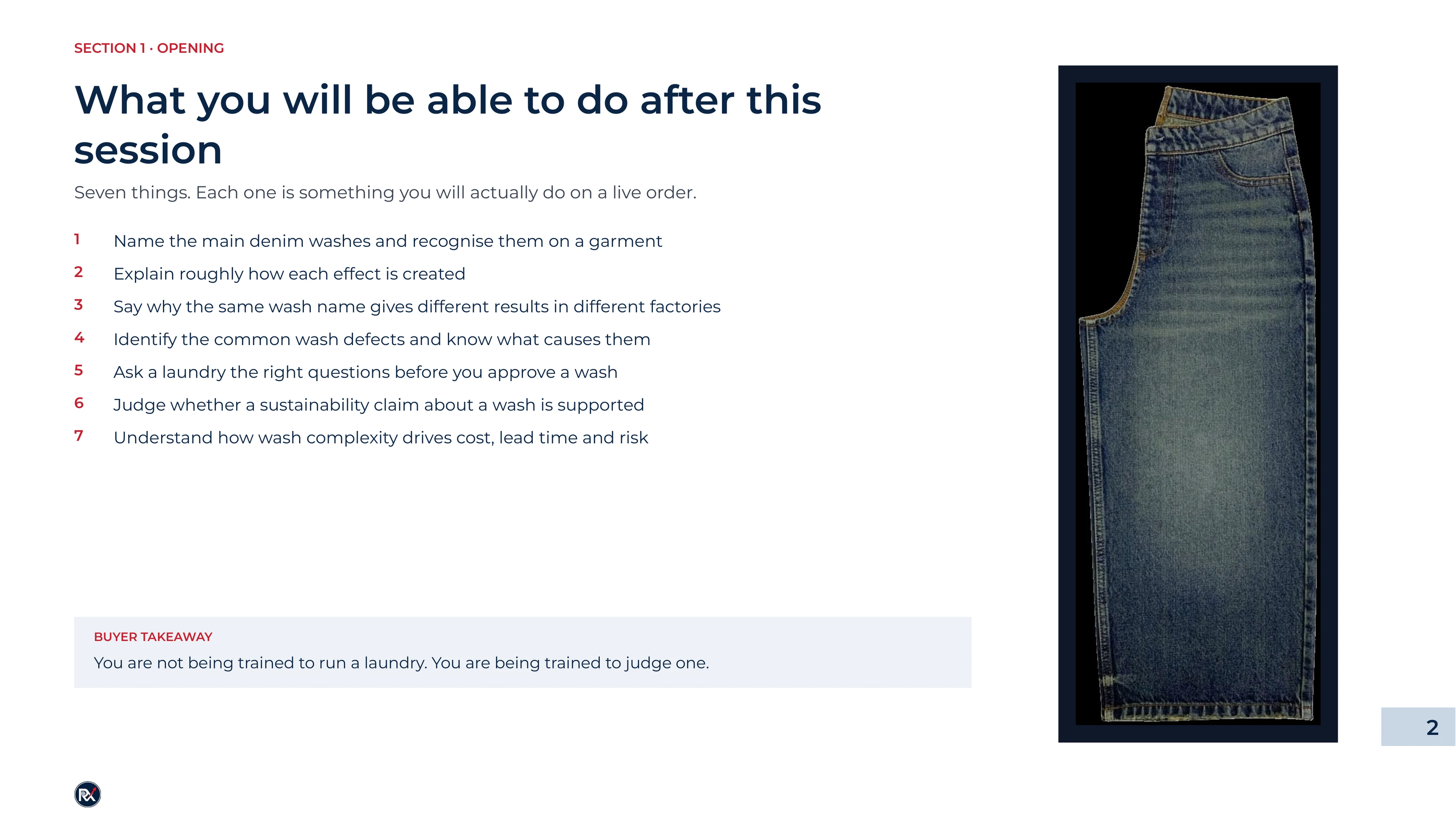
Slide 2 of 85: What you will be able to do after this session
Slide 3 of 85: The five questions to ask about any wash
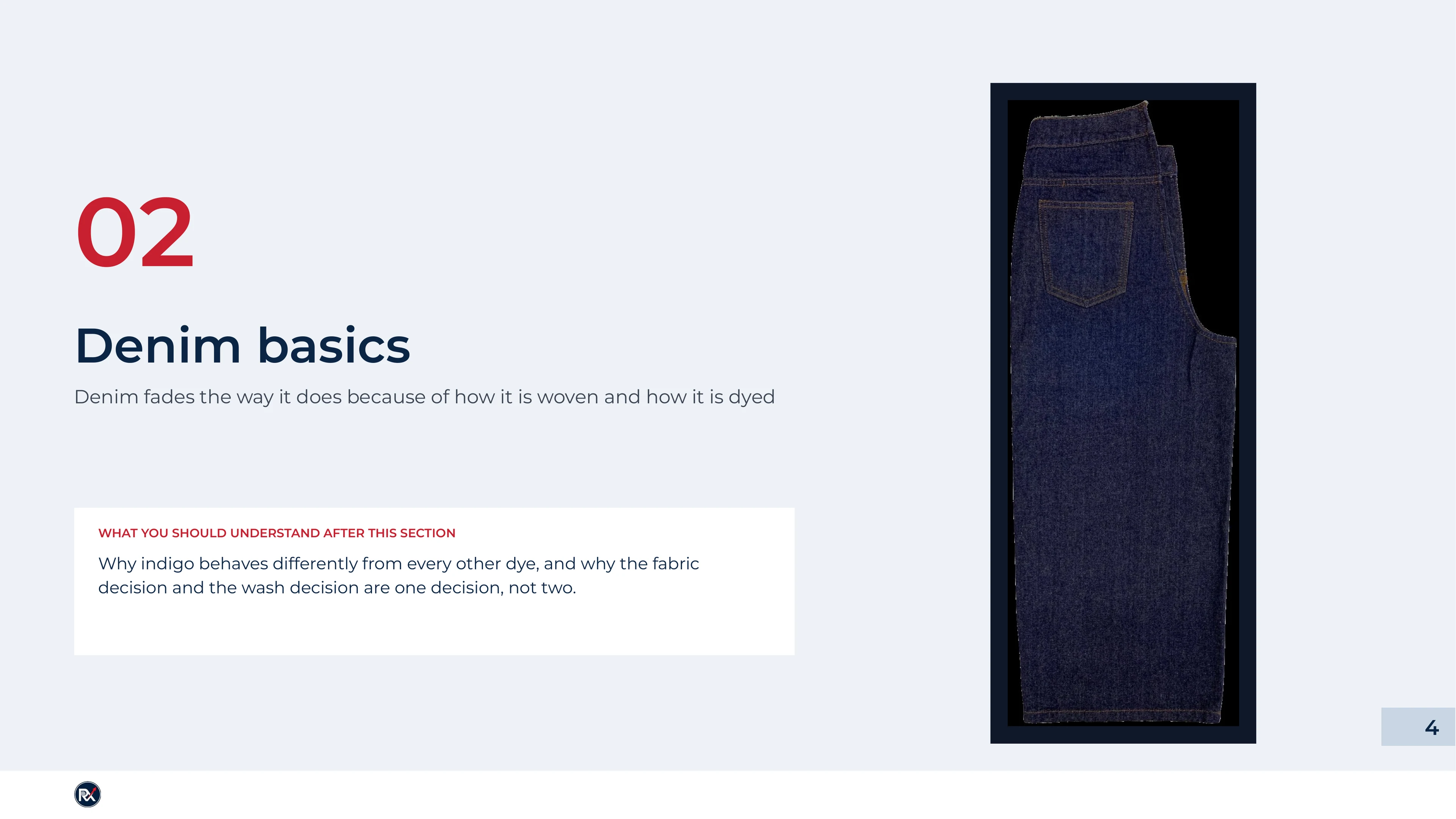
Slide 4 of 85: Denim basics
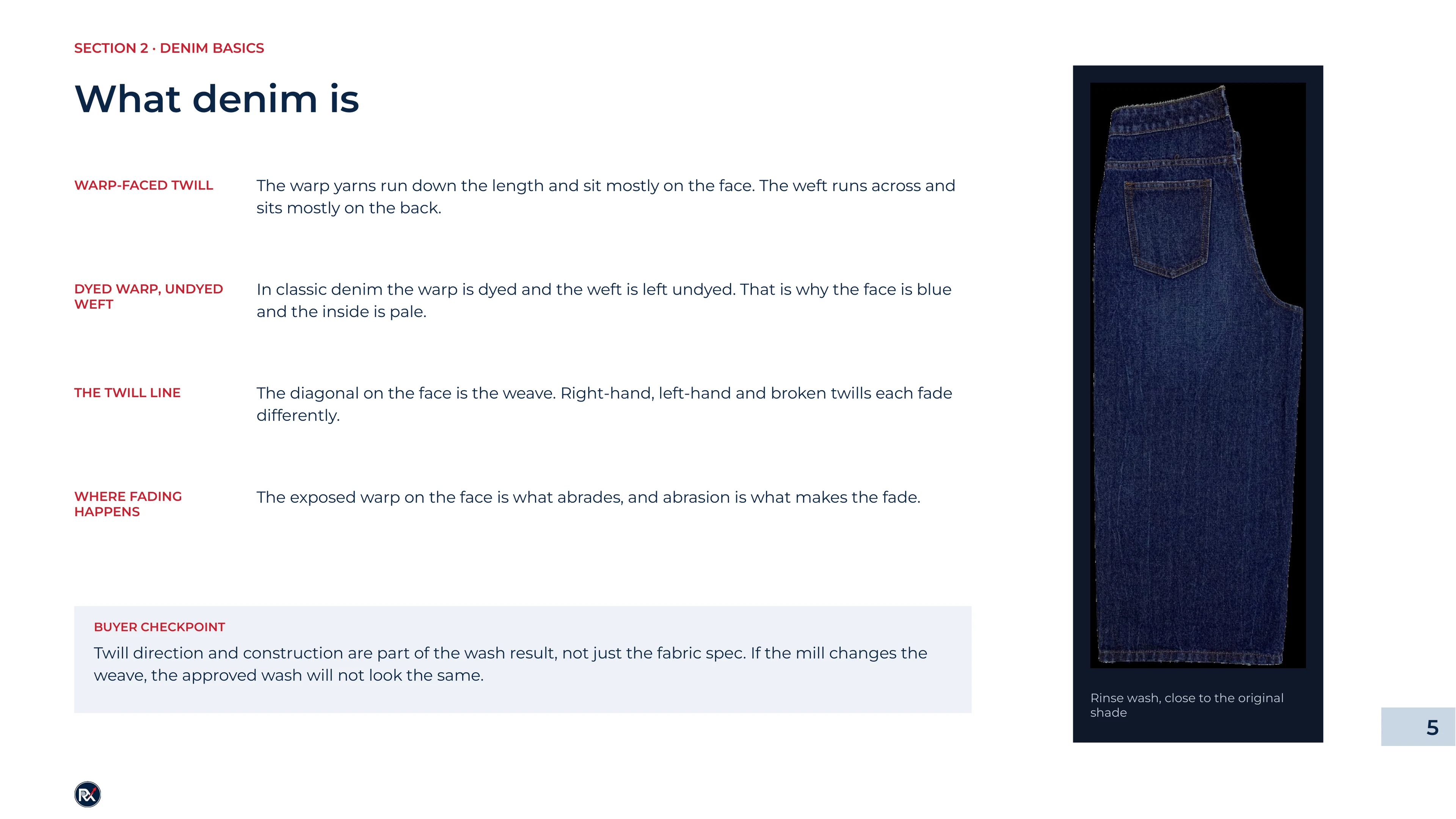
Slide 5 of 85: What denim is
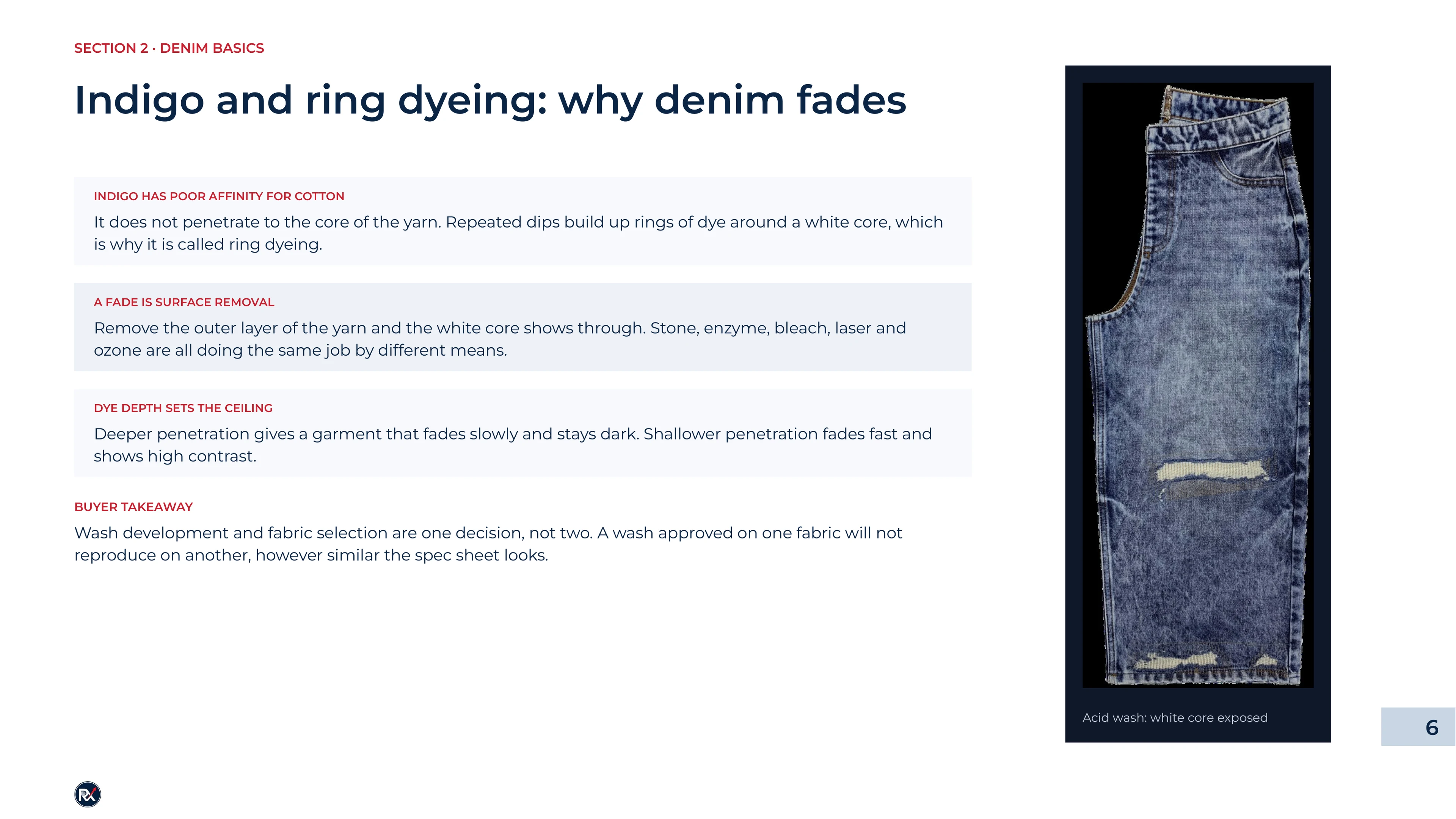
Slide 6 of 85: Indigo and ring dyeing: why denim fades
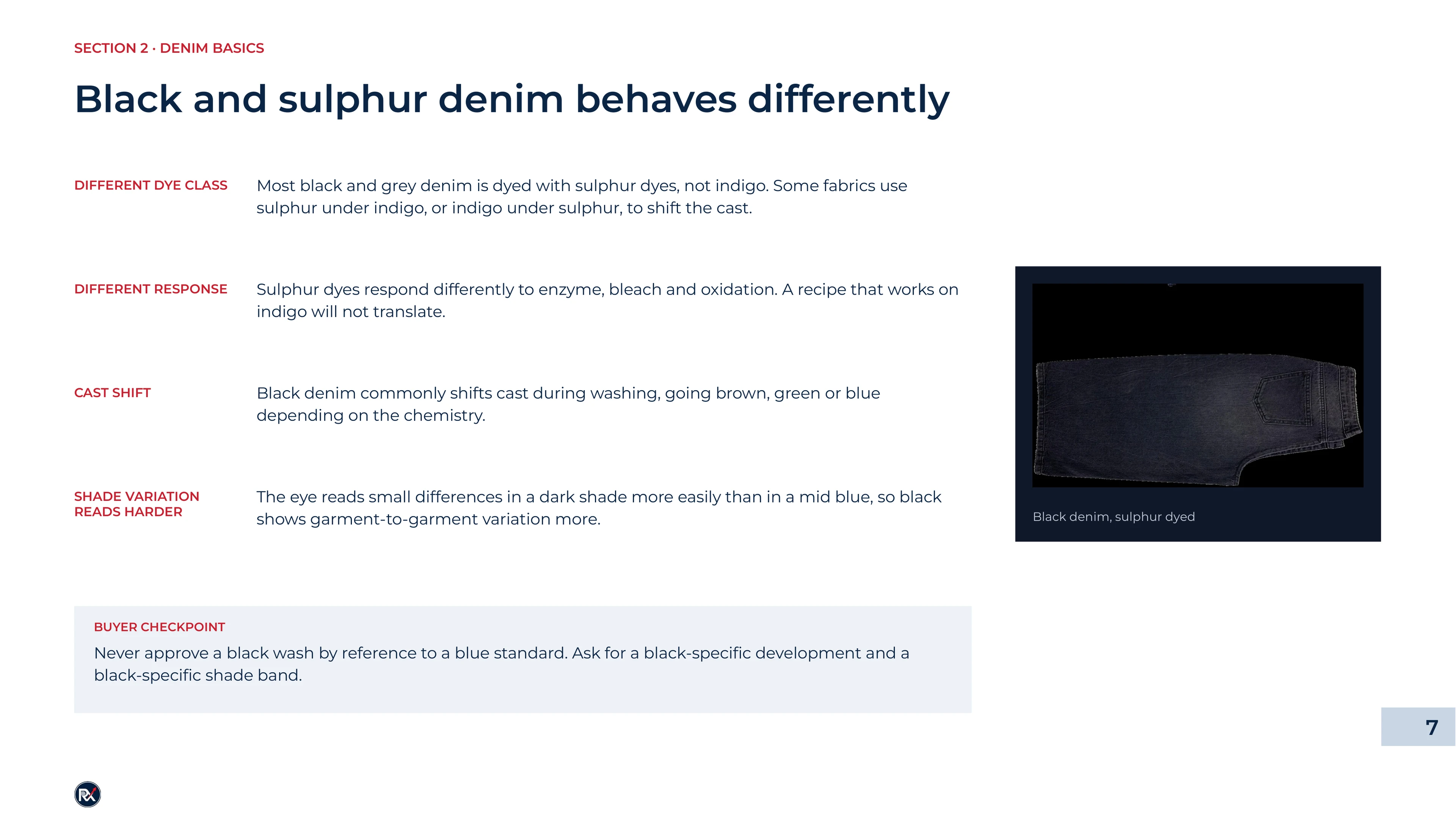
Slide 7 of 85: Black and sulphur denim behaves differently
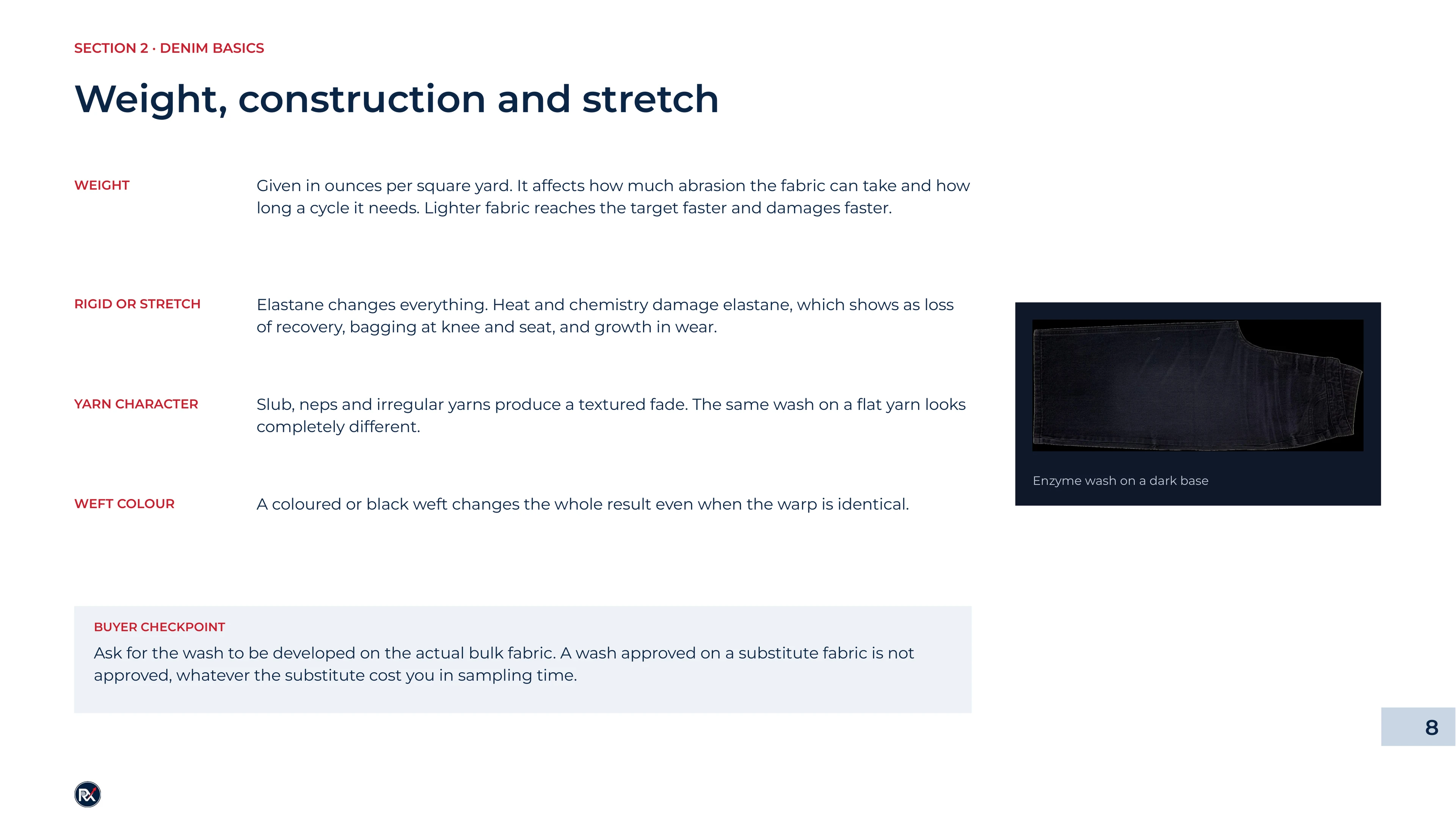
Slide 8 of 85: Weight, construction and stretch
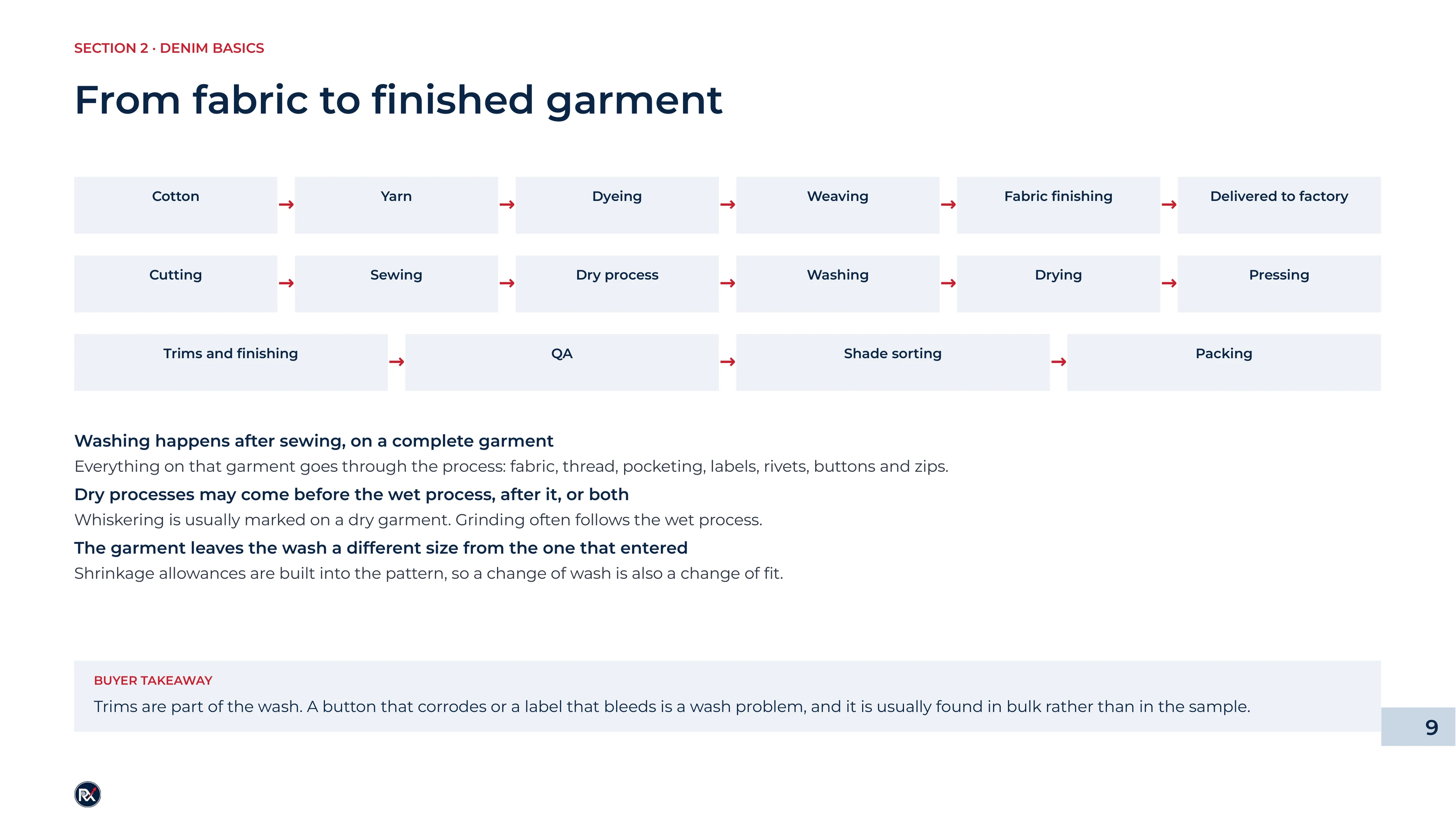
Slide 9 of 85: From fabric to finished garment
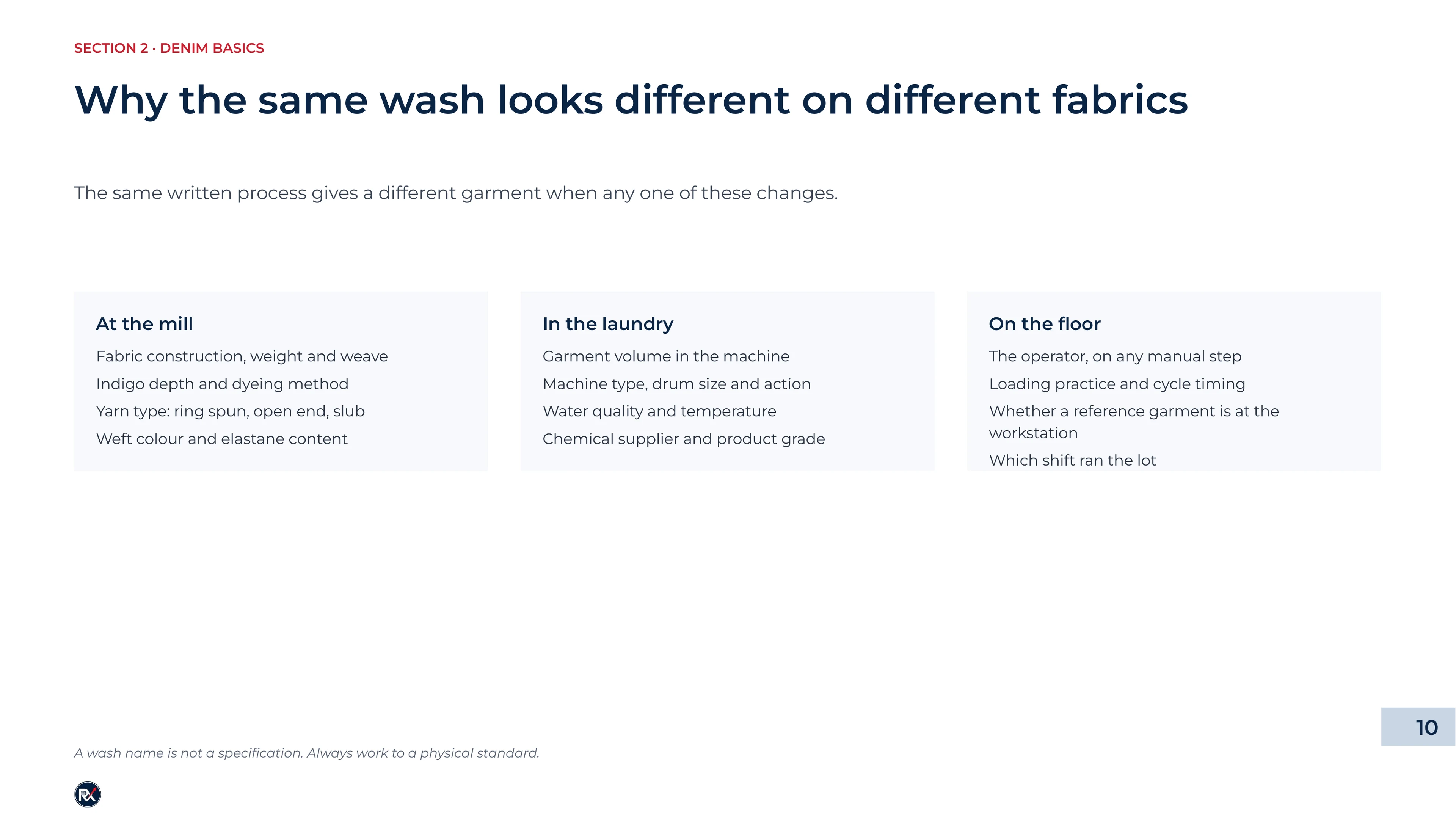
Slide 10 of 85: Why the same wash looks different on different fabrics
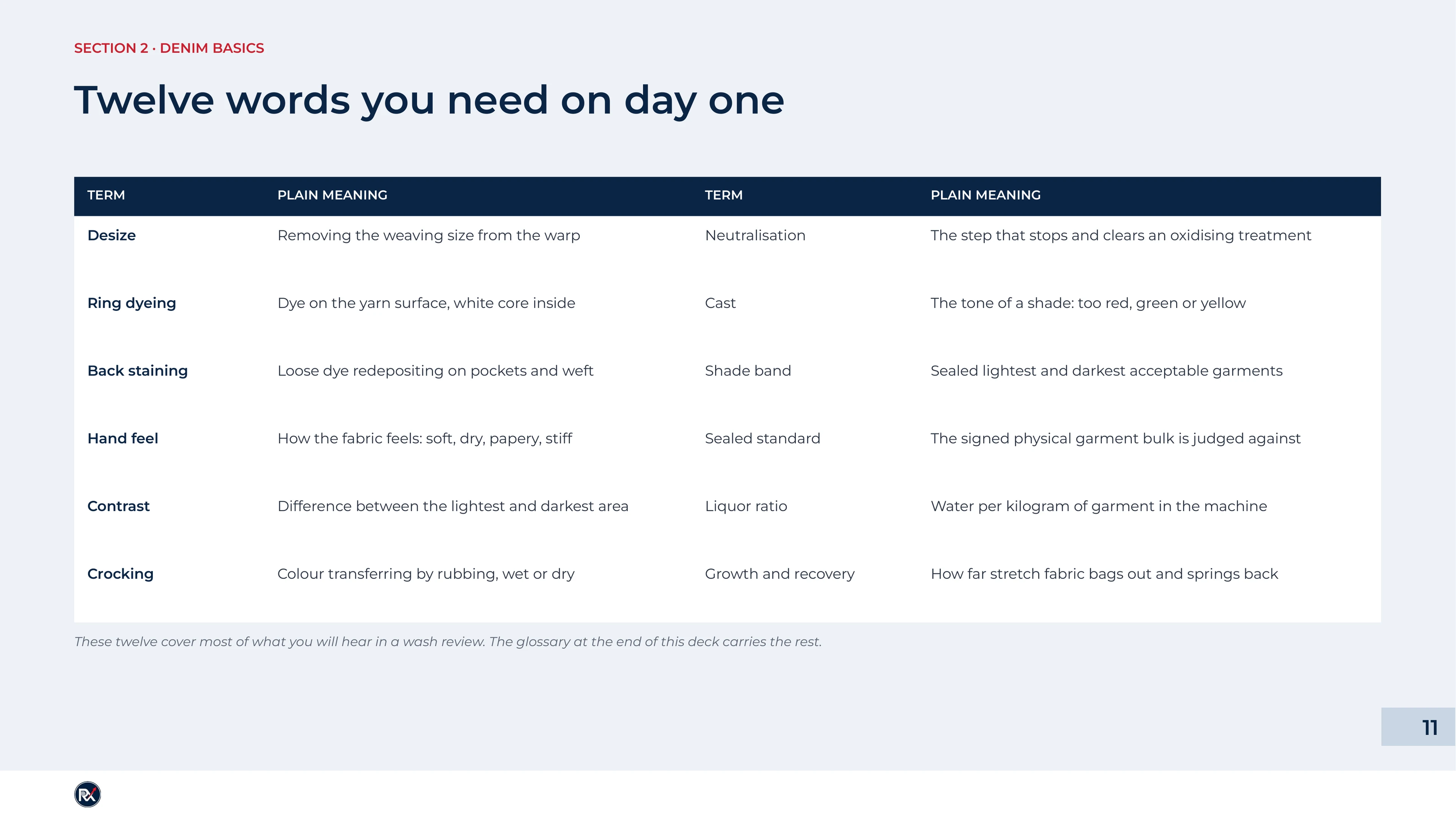
Slide 11 of 85: Twelve words you need on day one
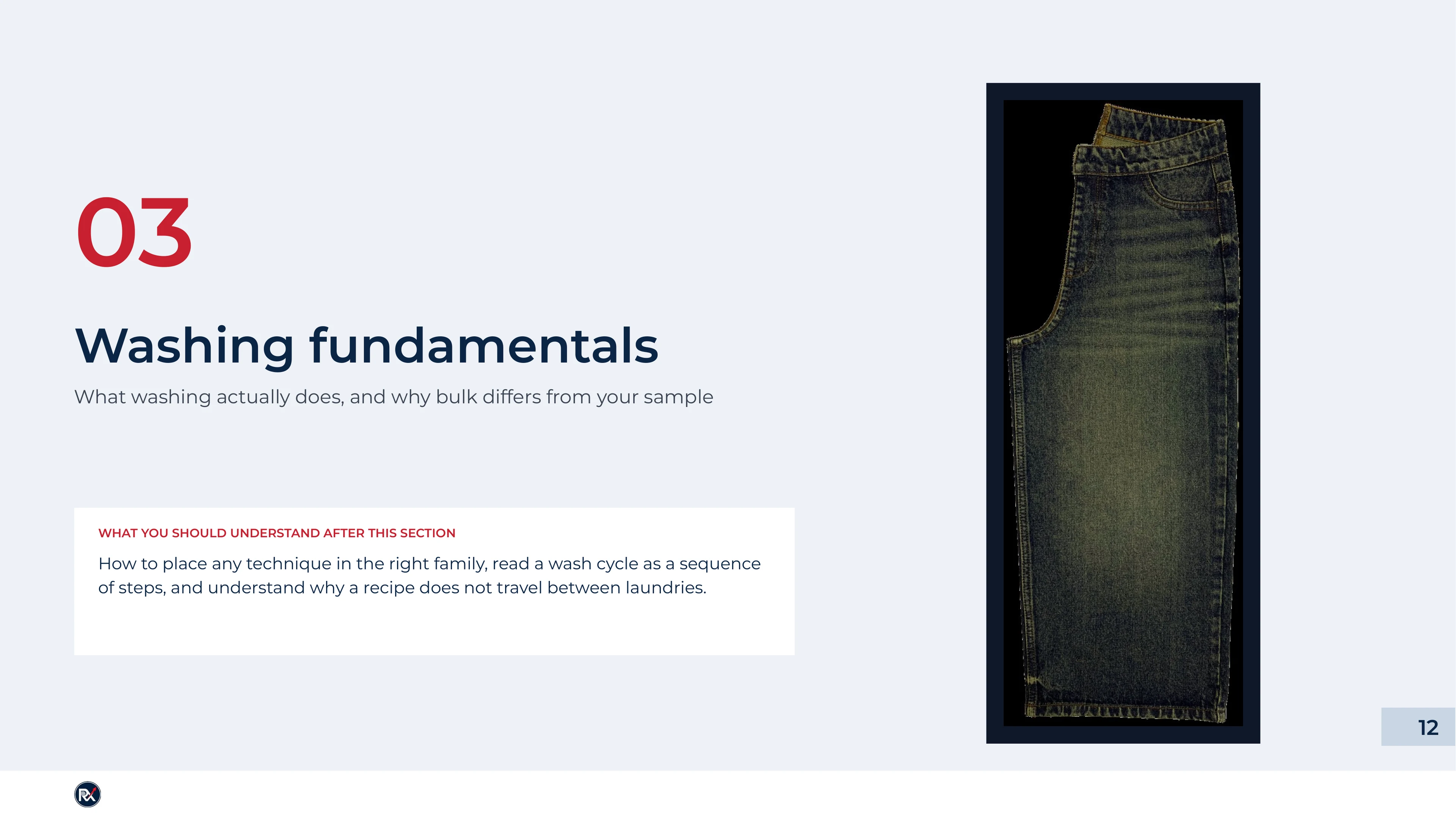
Slide 12 of 85: Washing fundamentals
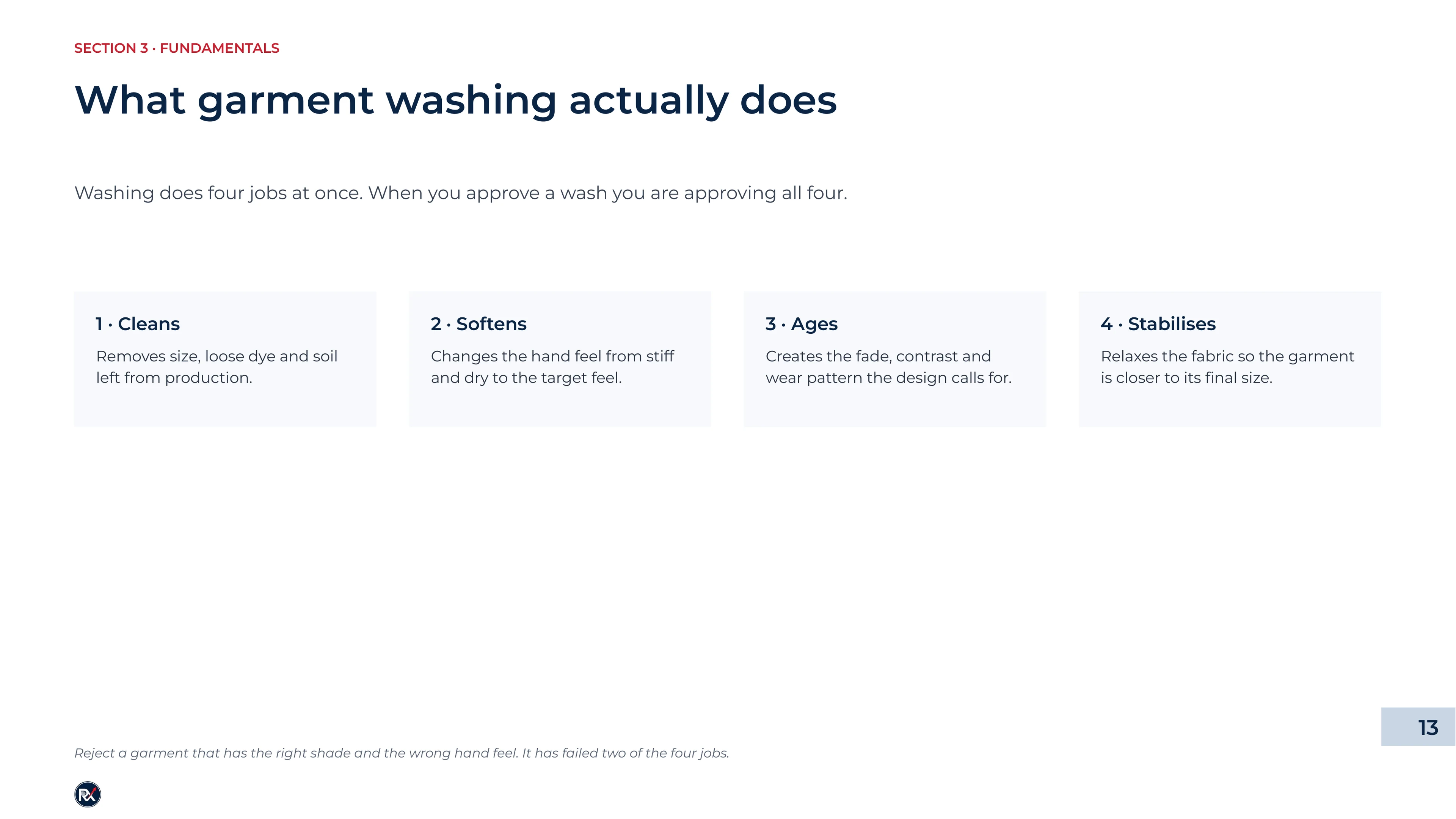
Slide 13 of 85: What garment washing actually does
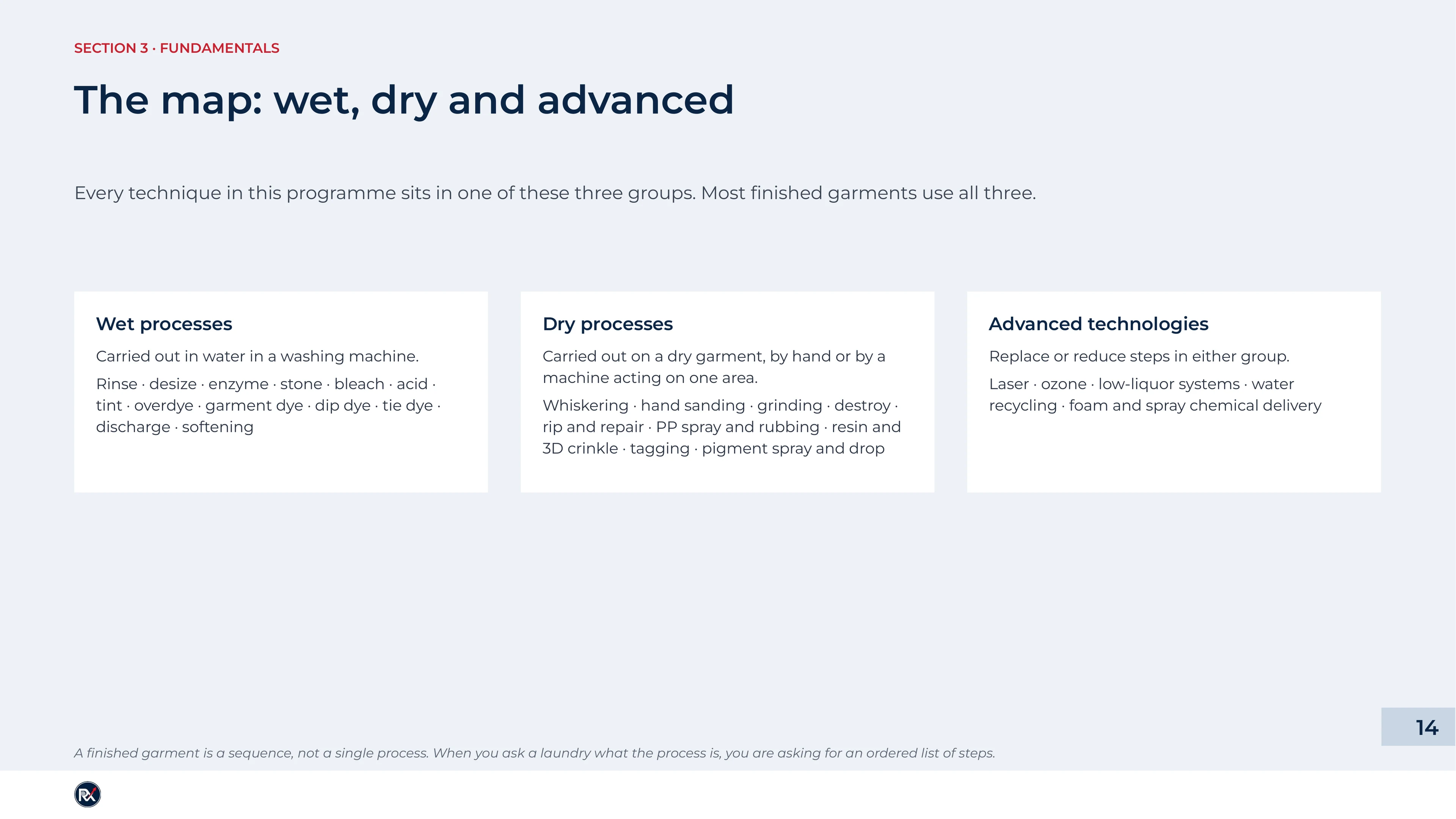
Slide 14 of 85: The map: wet, dry and advanced
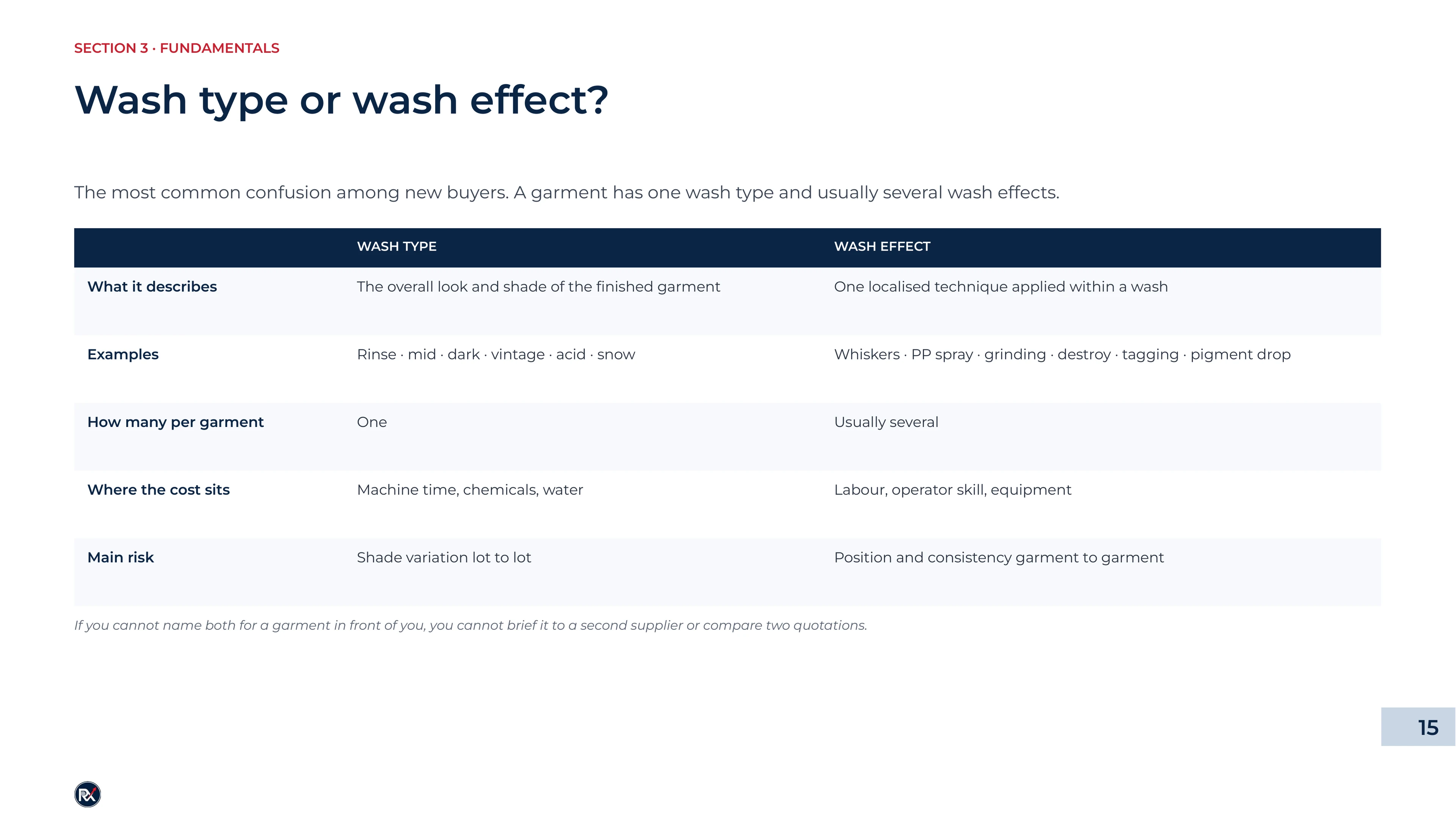
Slide 15 of 85: Wash type or wash effect?
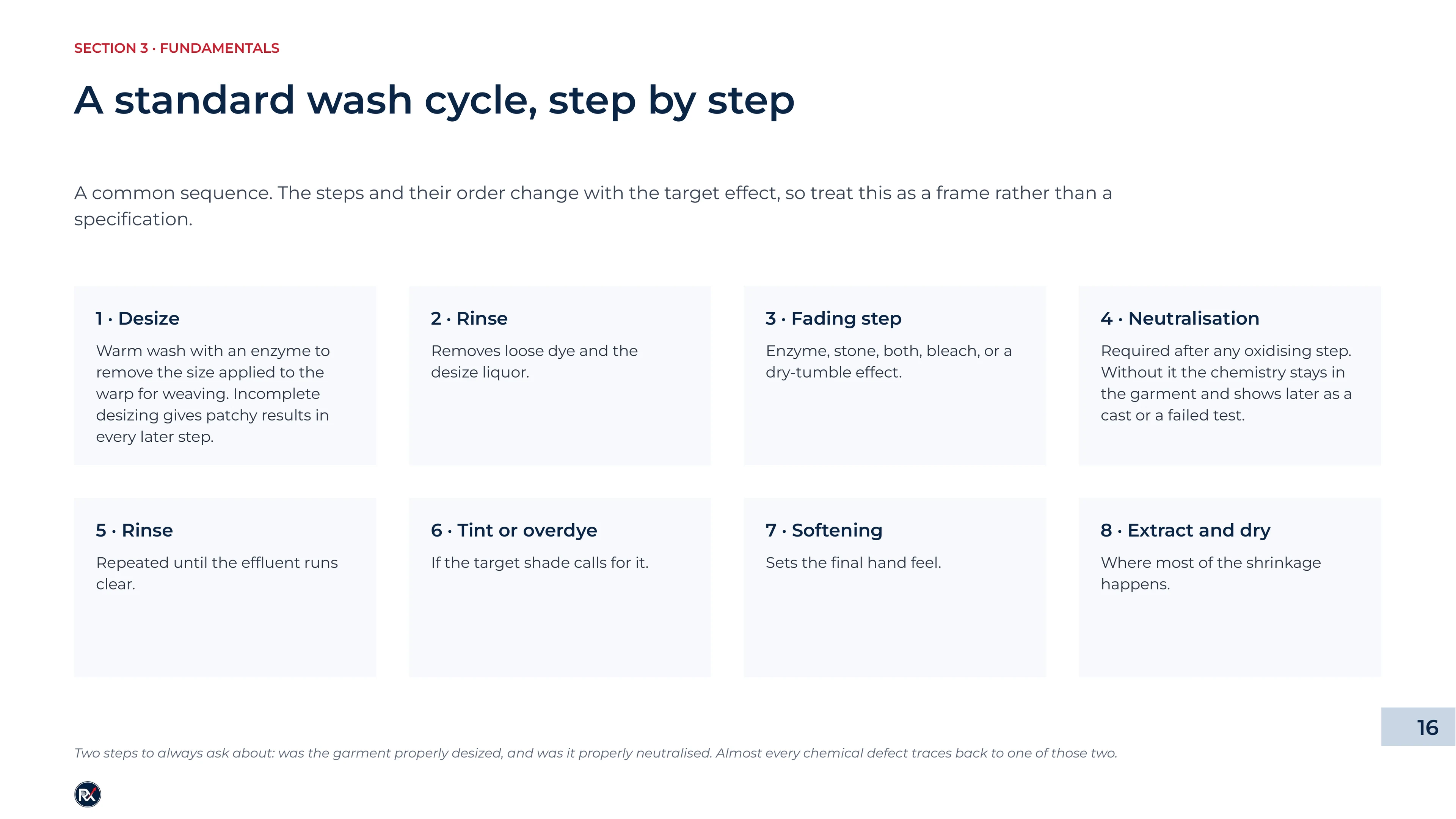
Slide 16 of 85: A standard wash cycle, step by step
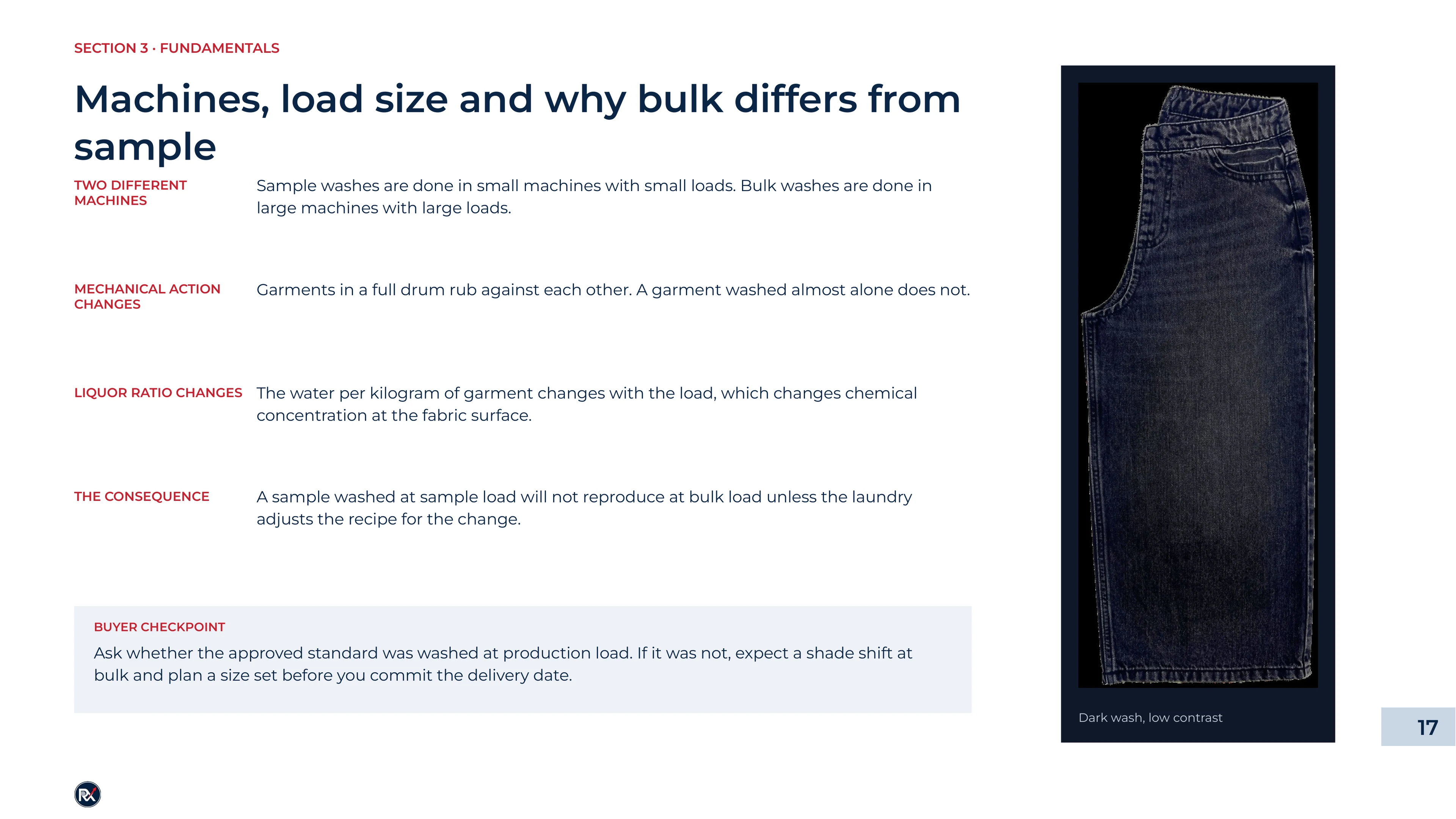
Slide 17 of 85: Machines, load size and why bulk differs from sample
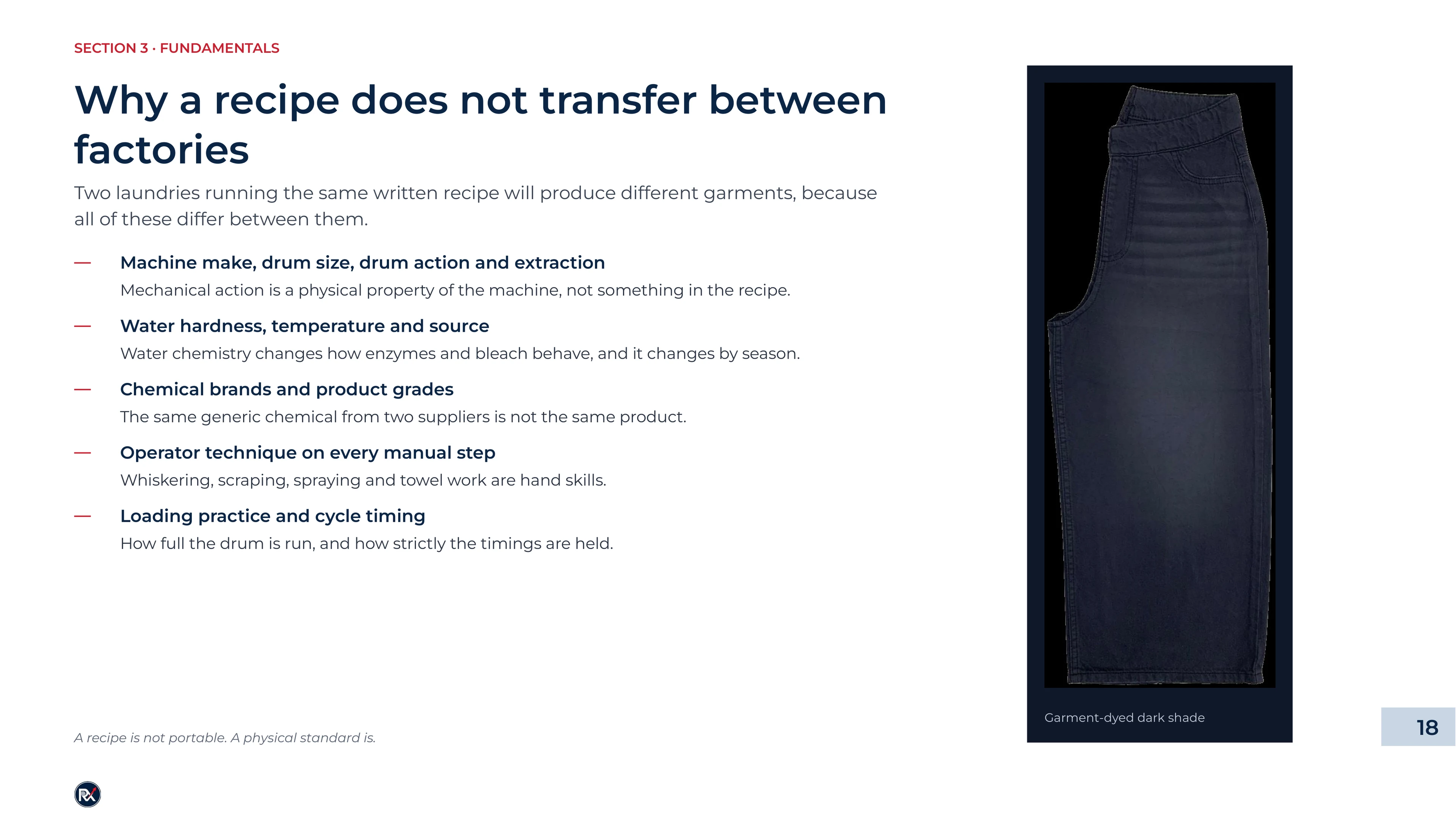
Slide 18 of 85: Why a recipe does not transfer between factories
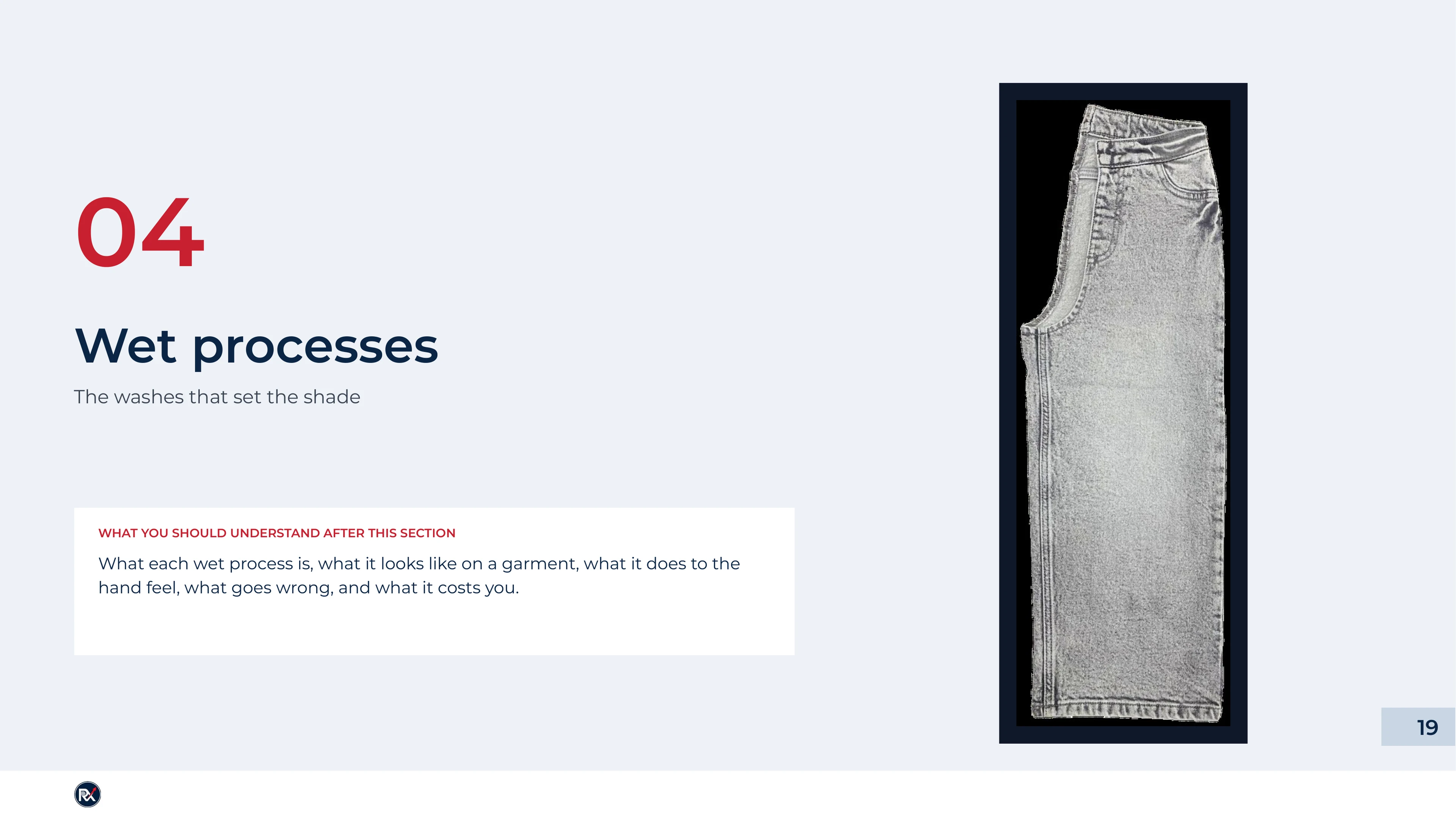
Slide 19 of 85: Wet processes
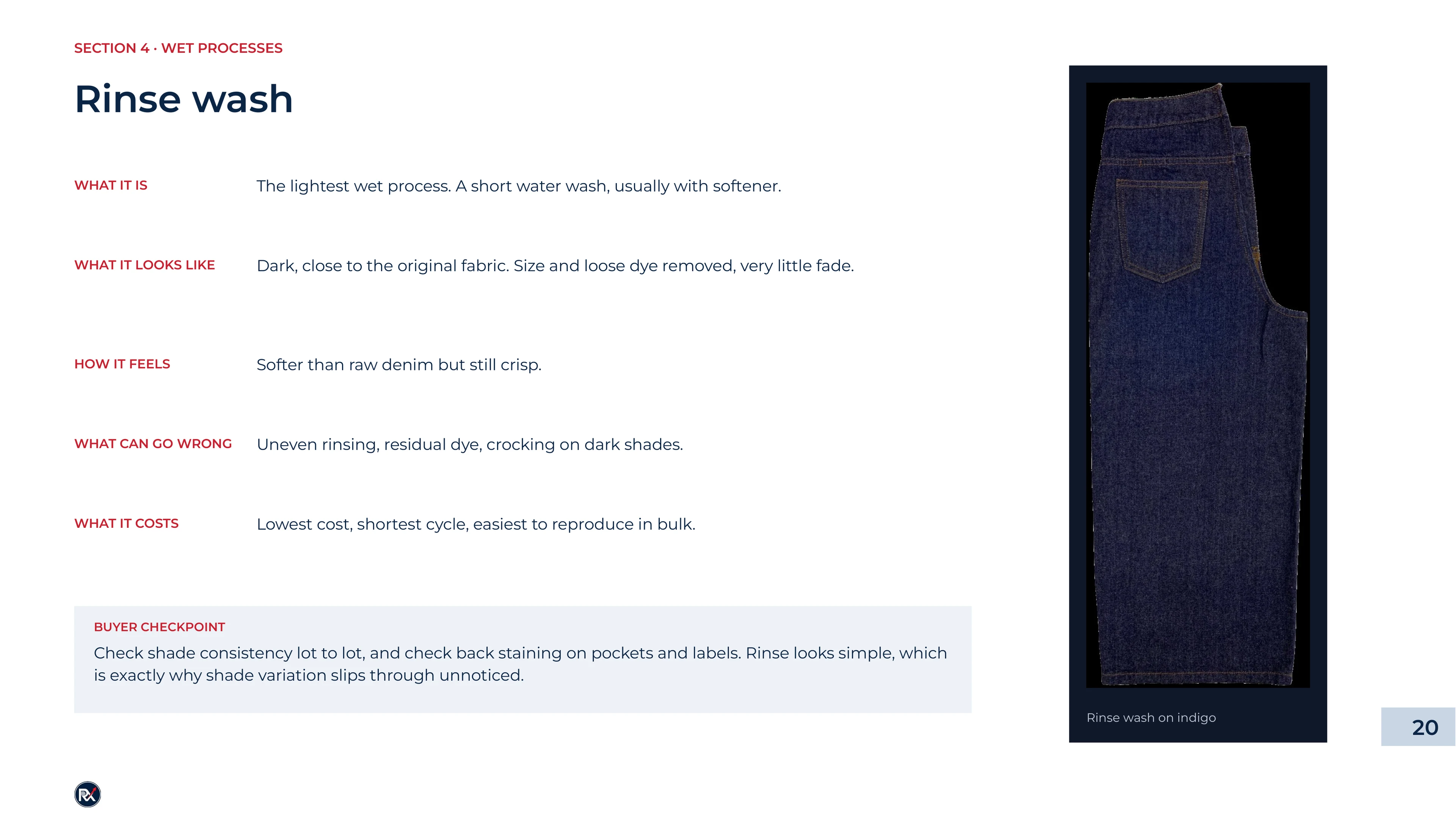
Slide 20 of 85: Rinse wash
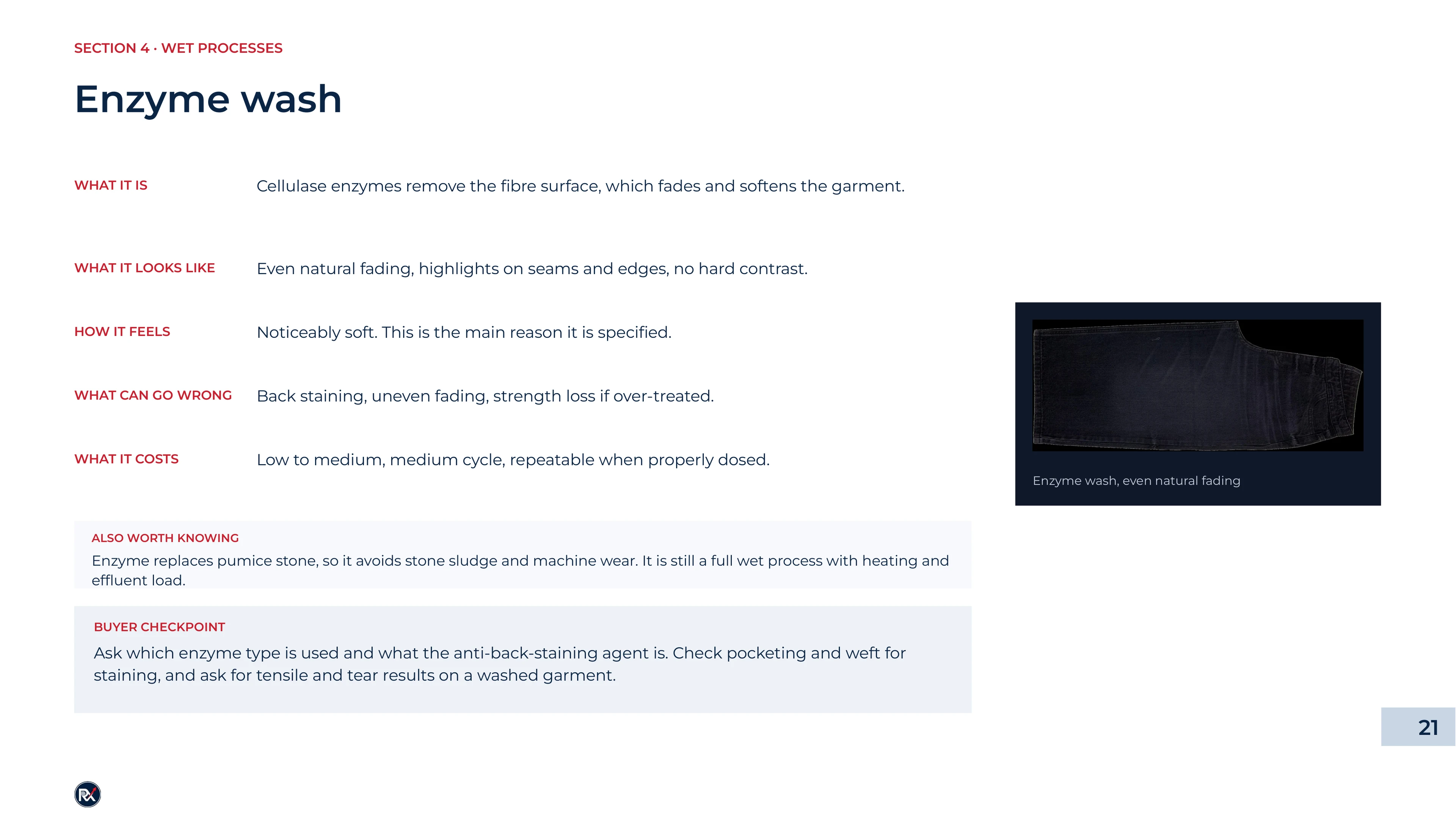
Slide 21 of 85: Enzyme wash
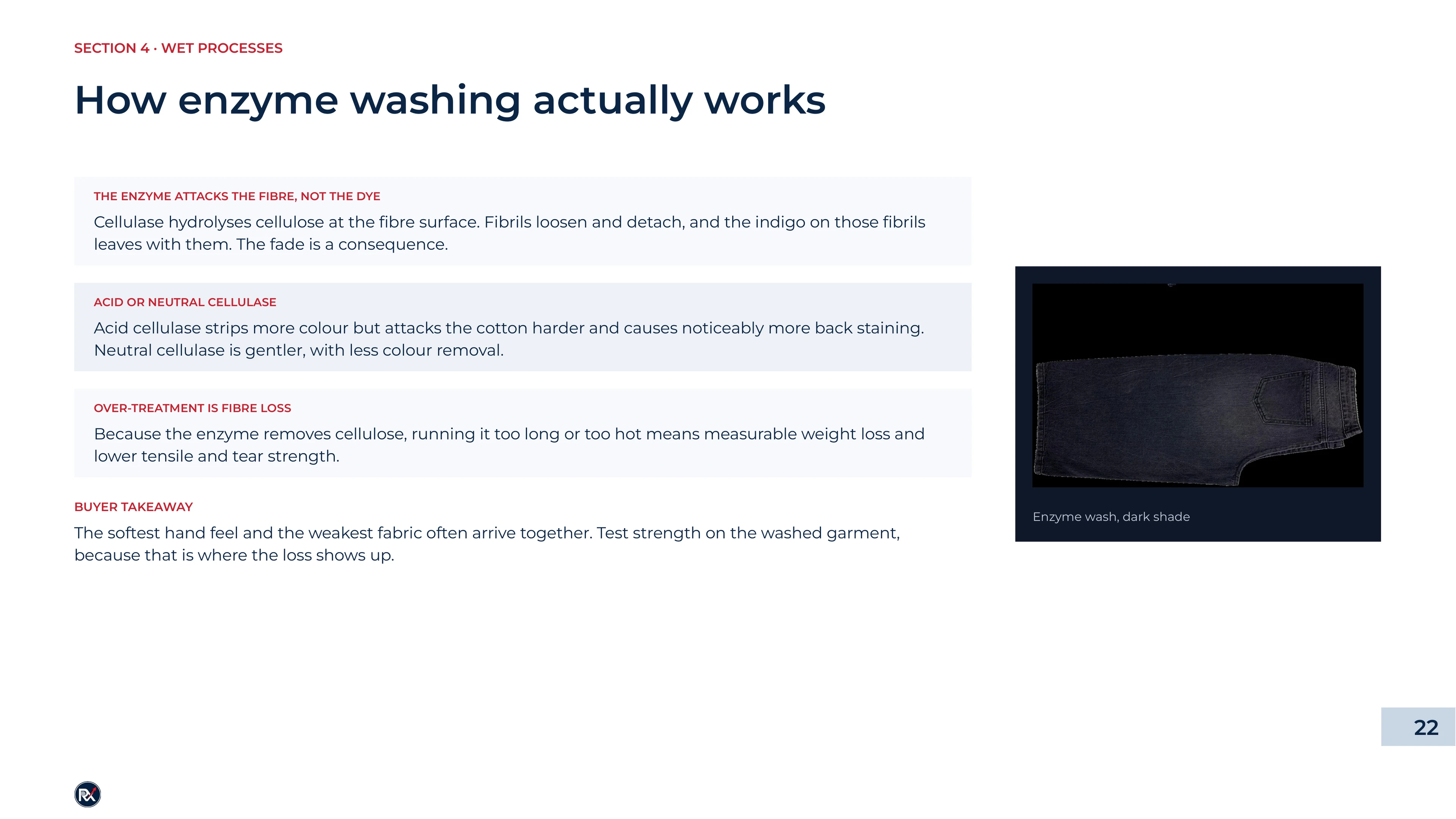
Slide 22 of 85: How enzyme washing actually works
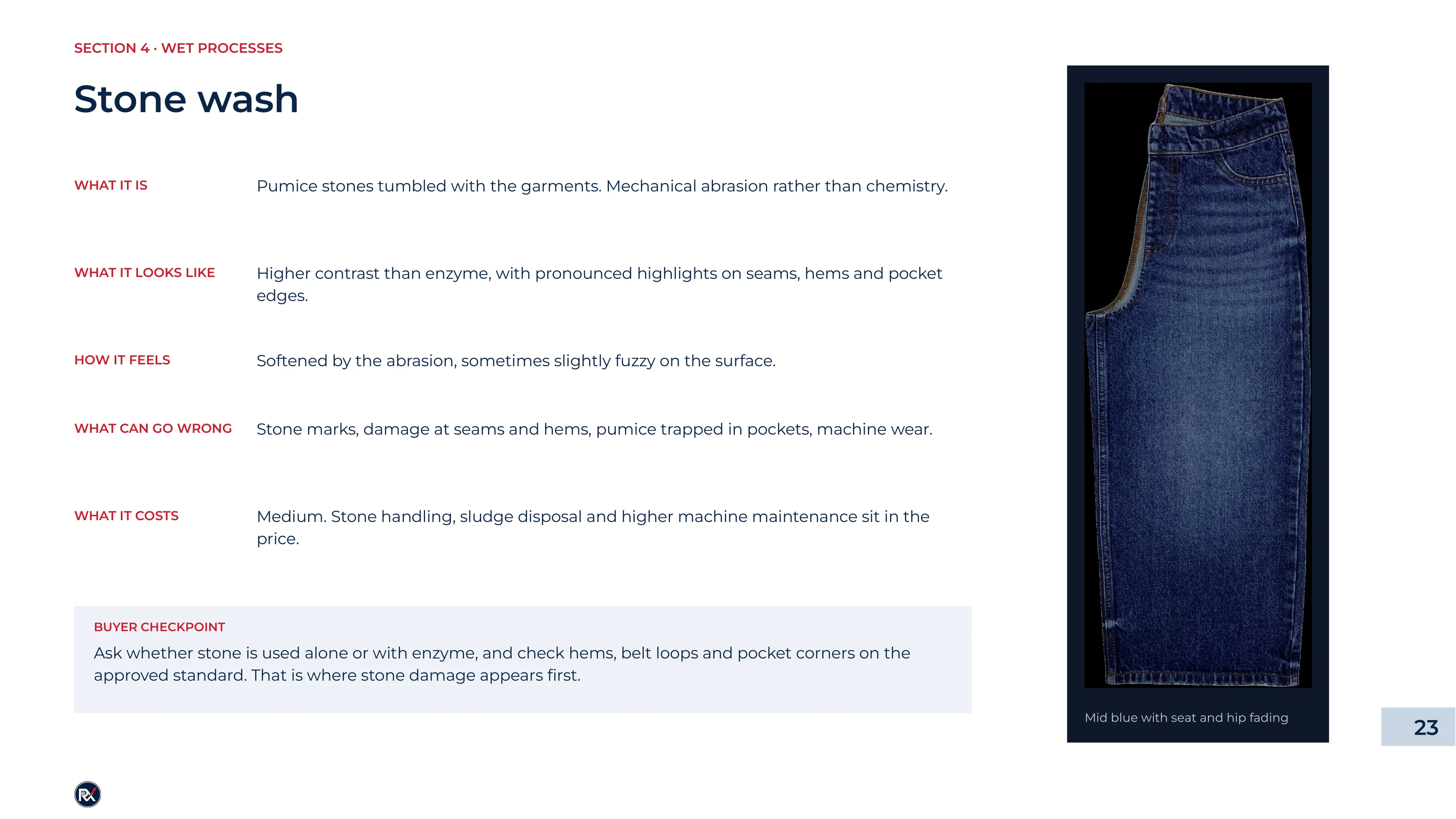
Slide 23 of 85: Stone wash
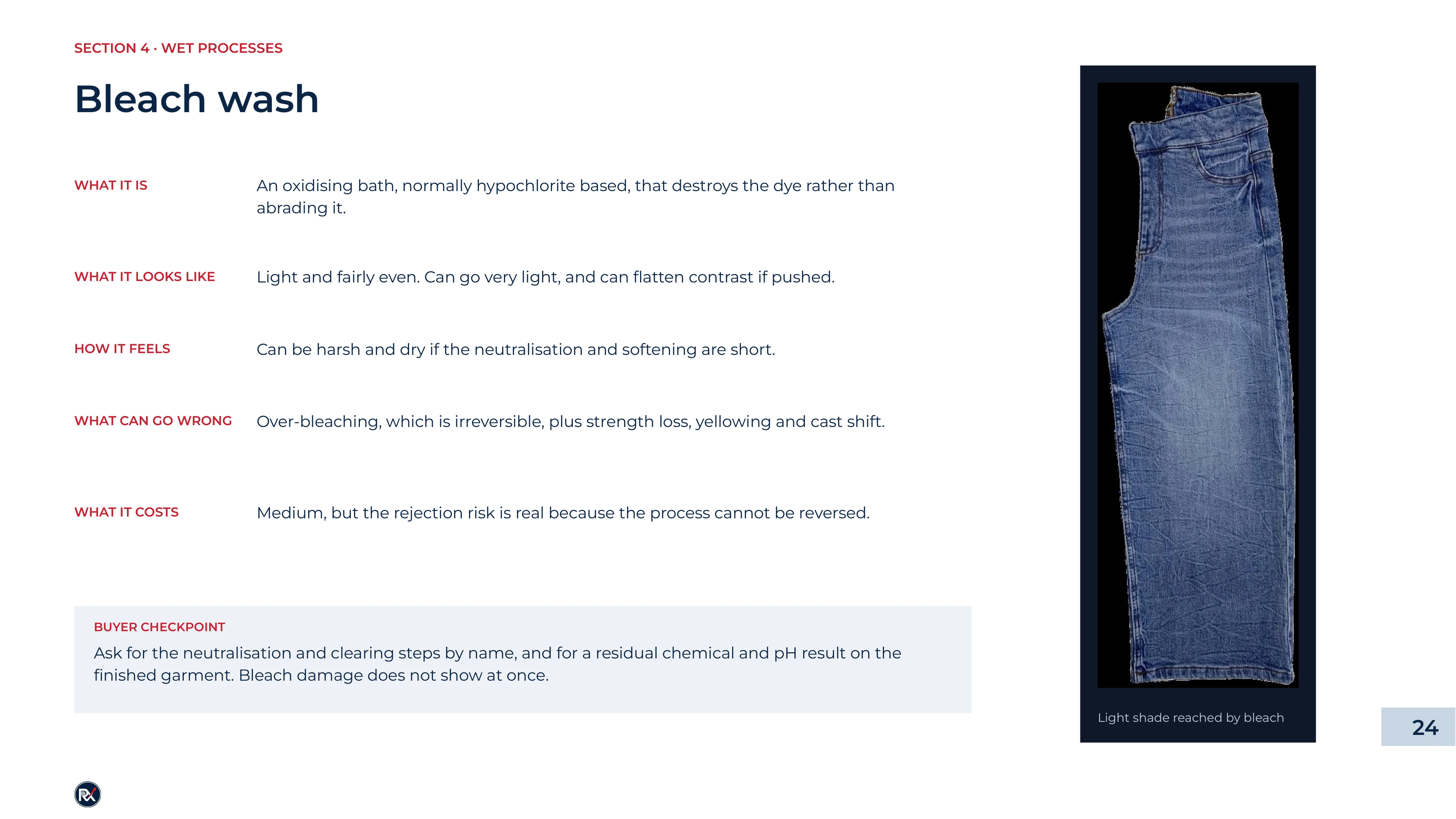
Slide 24 of 85: Bleach wash
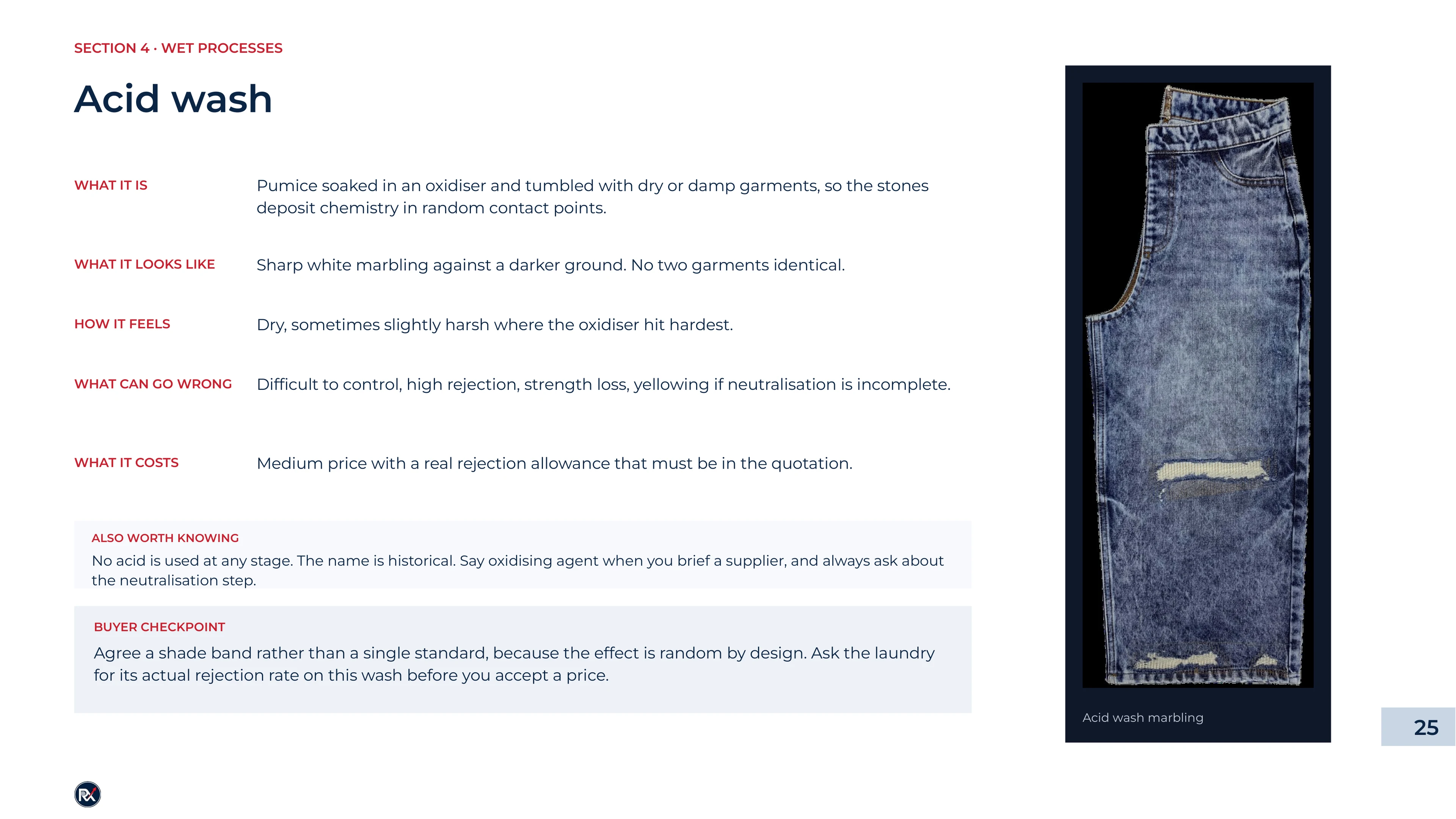
Slide 25 of 85: Acid wash
Slide 26 of 85: Neutralisation is not optional
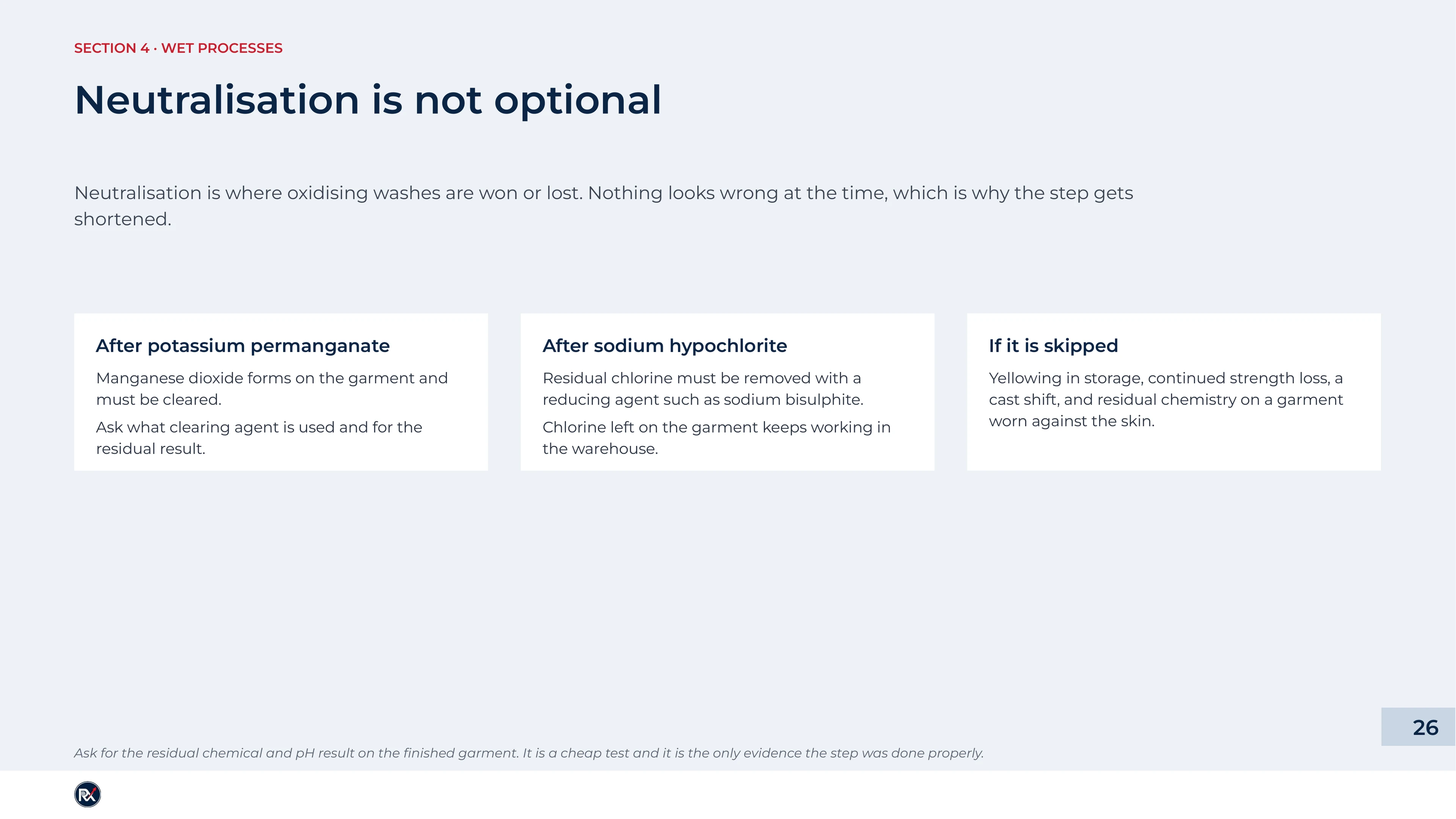
Slide 27 of 85: One family, three names
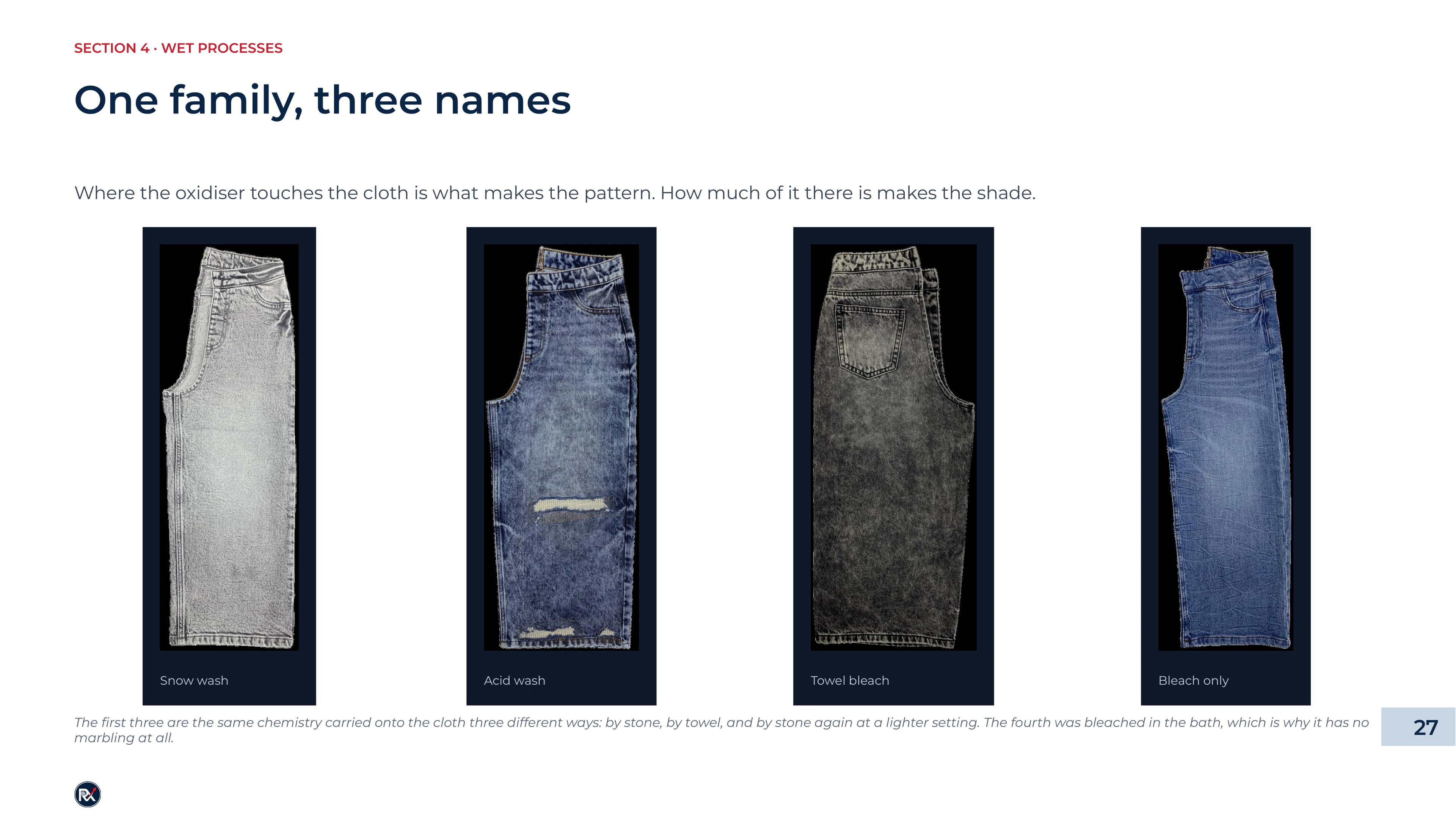
Slide 28 of 85: Vintage wash
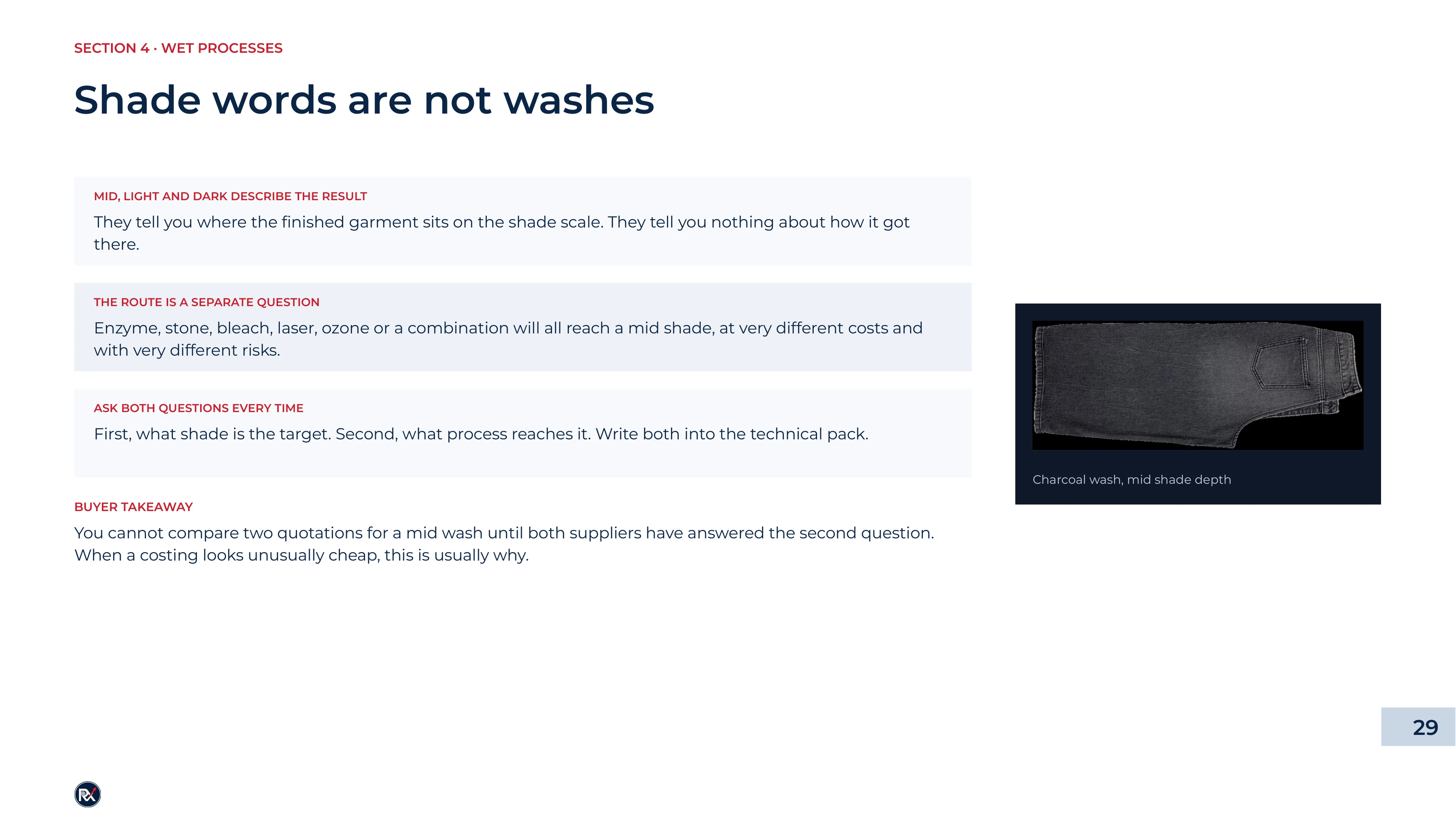
Slide 29 of 85: Shade words are not washes
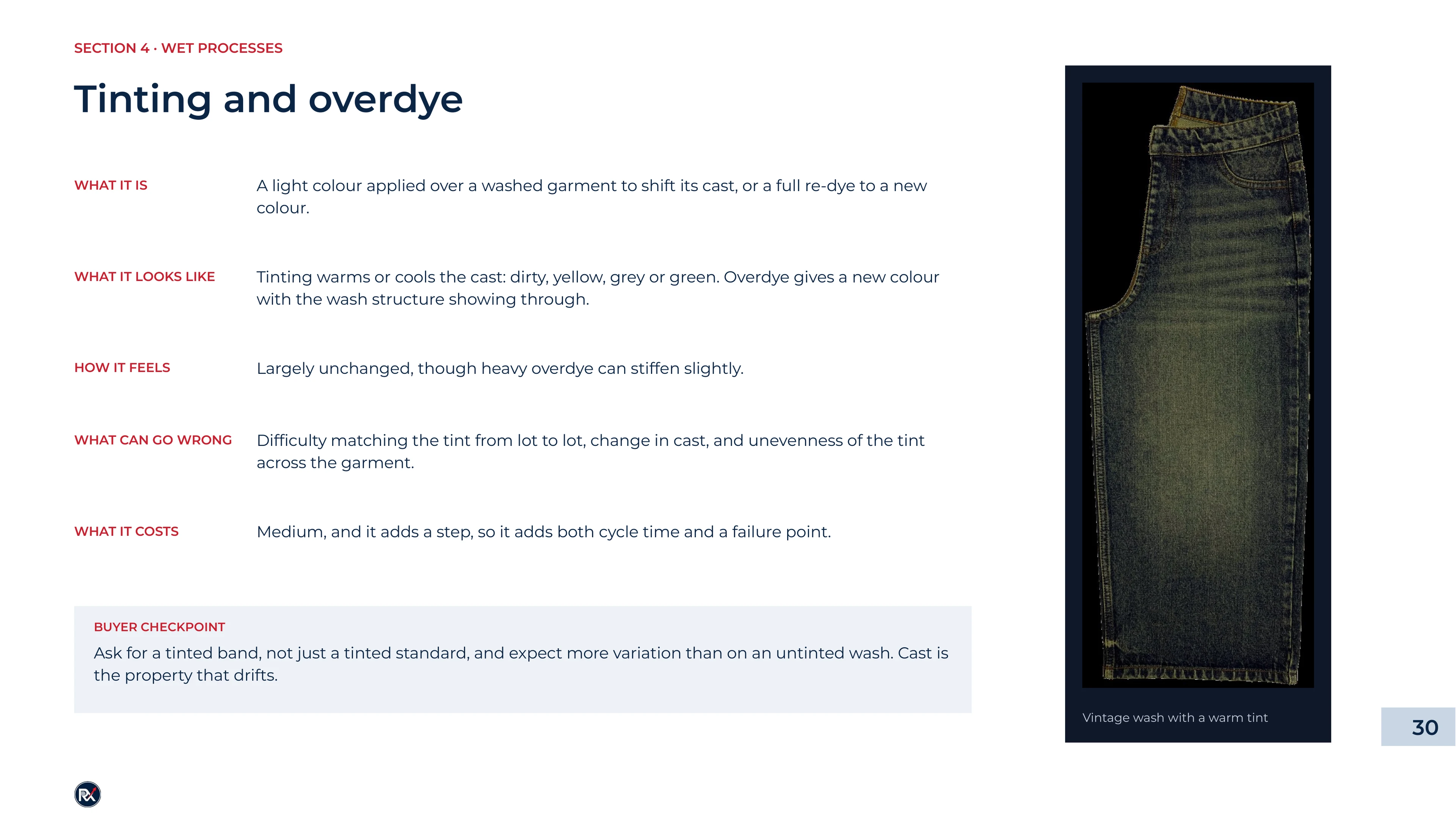
Slide 30 of 85: Tinting and overdye
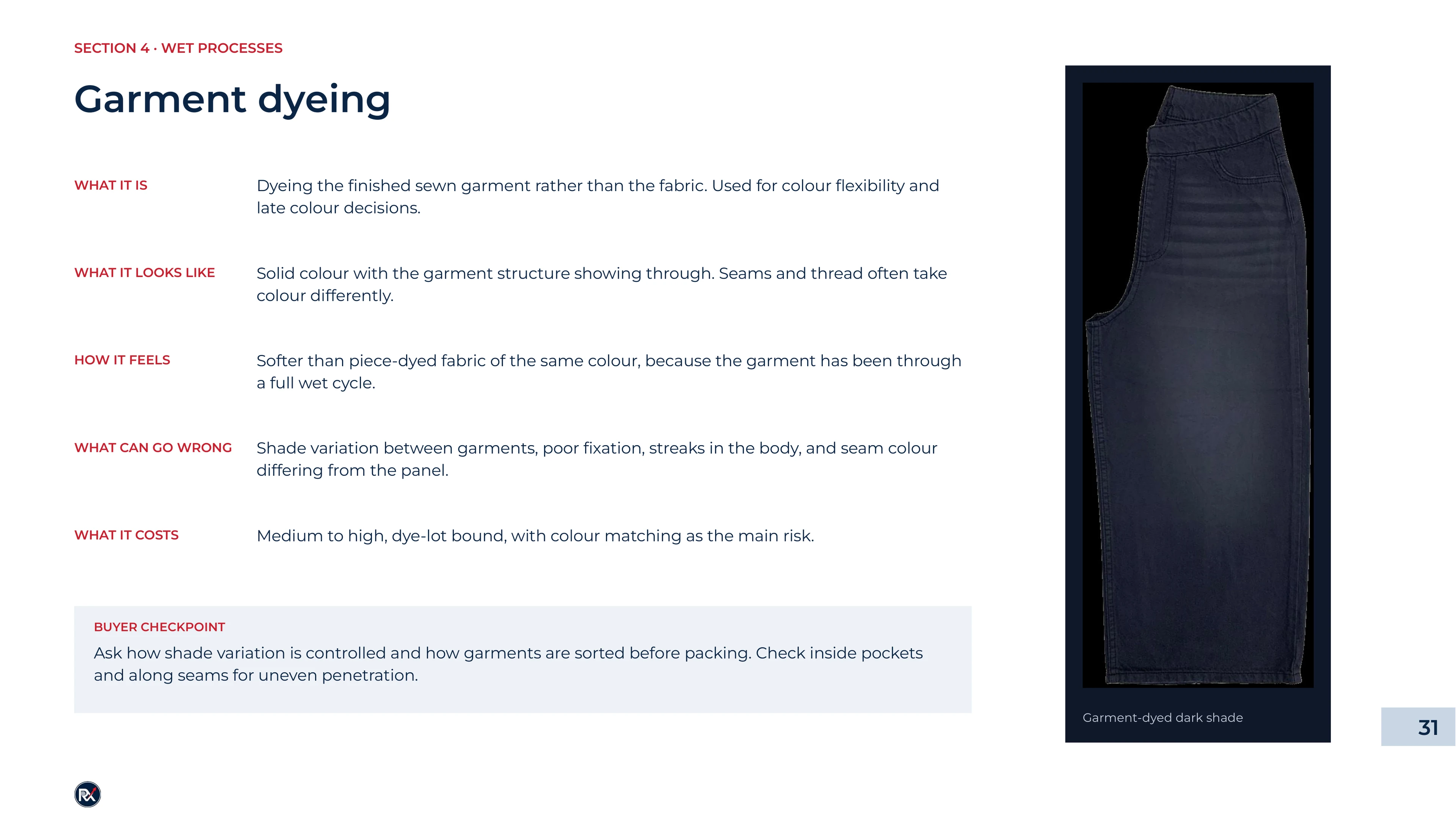
Slide 31 of 85: Garment dyeing
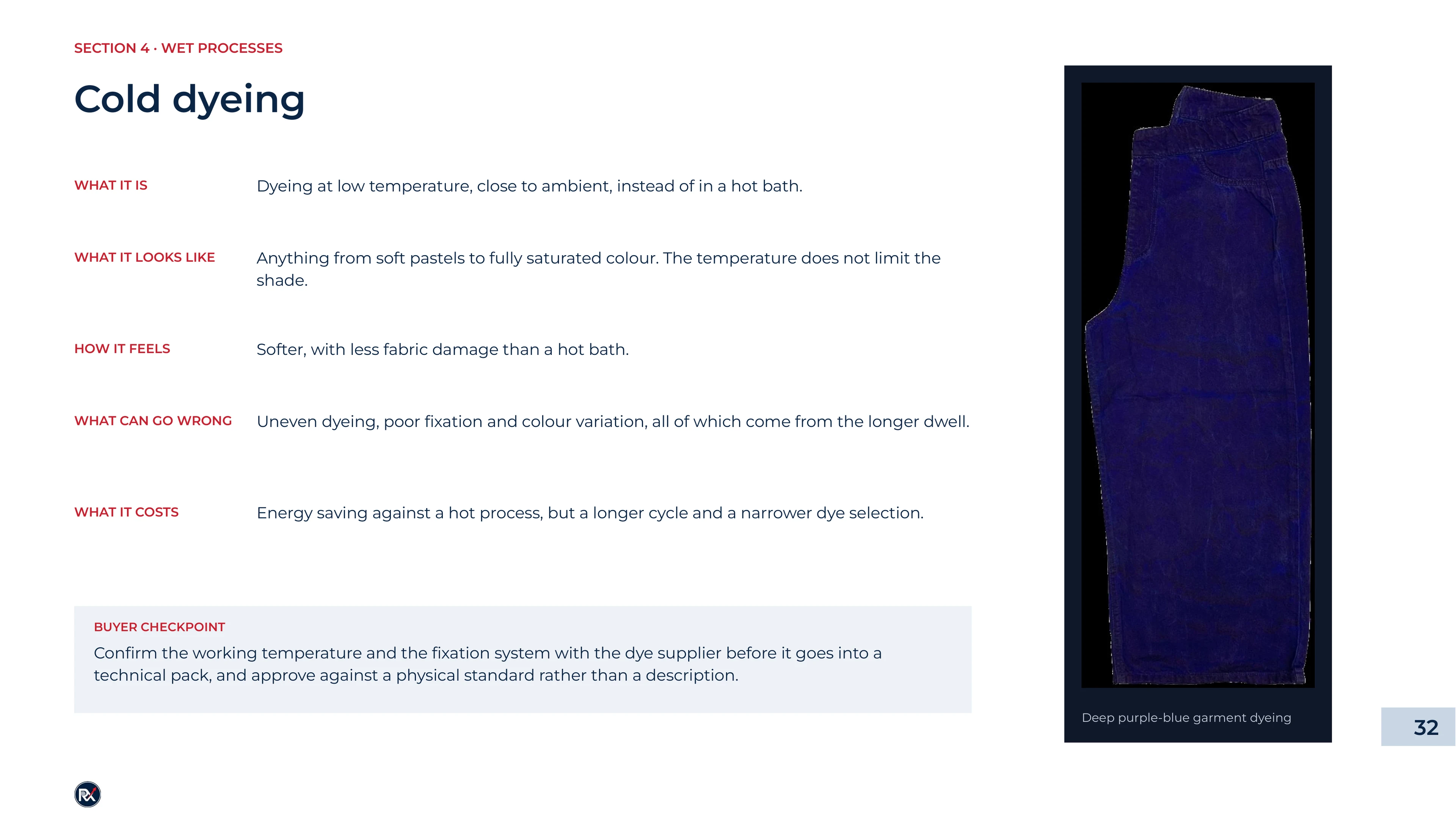
Slide 32 of 85: Cold dyeing
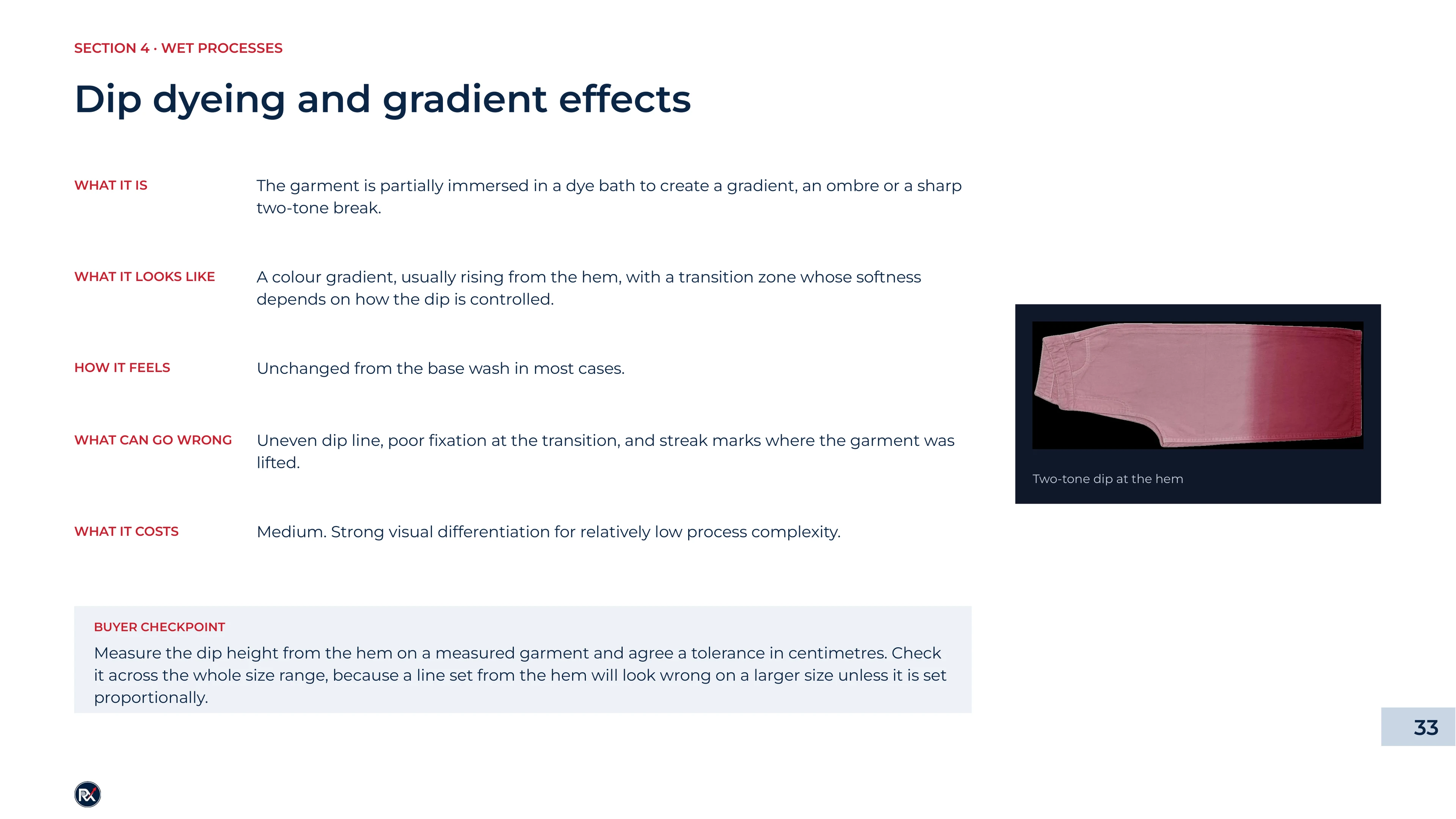
Slide 33 of 85: Dip dyeing and gradient effects
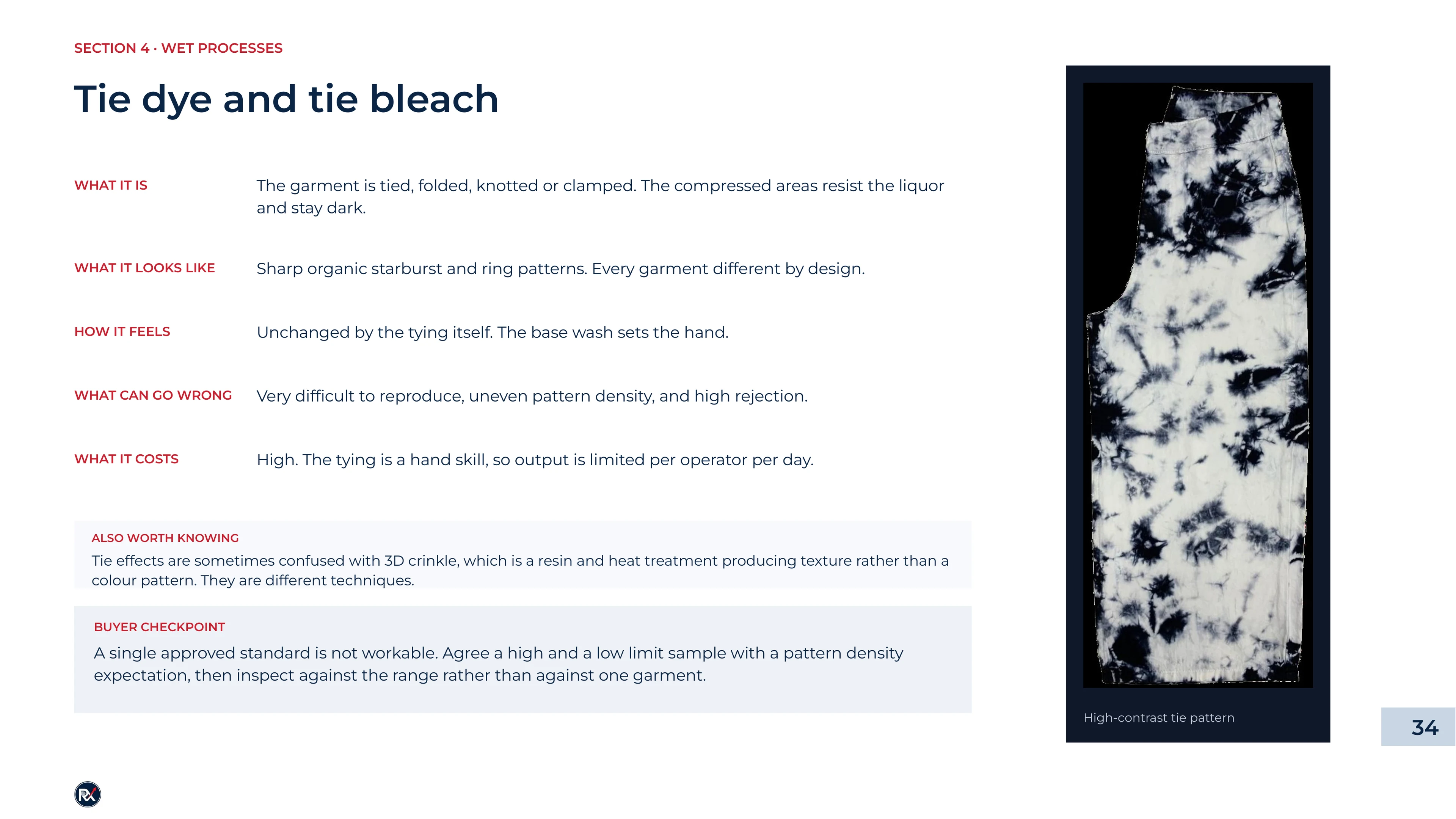
Slide 34 of 85: Tie dye and tie bleach
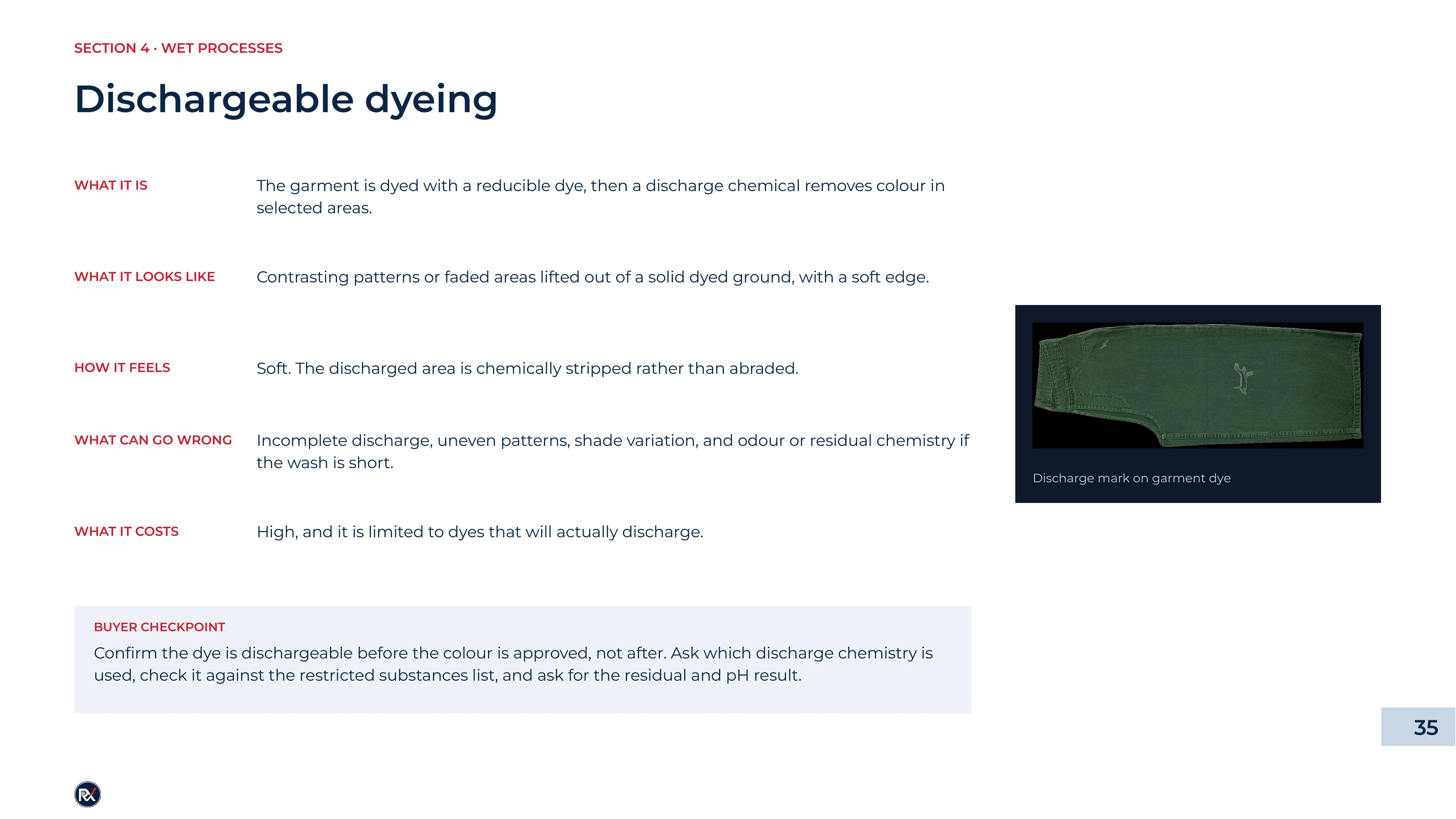
Slide 35 of 85: Dischargeable dyeing
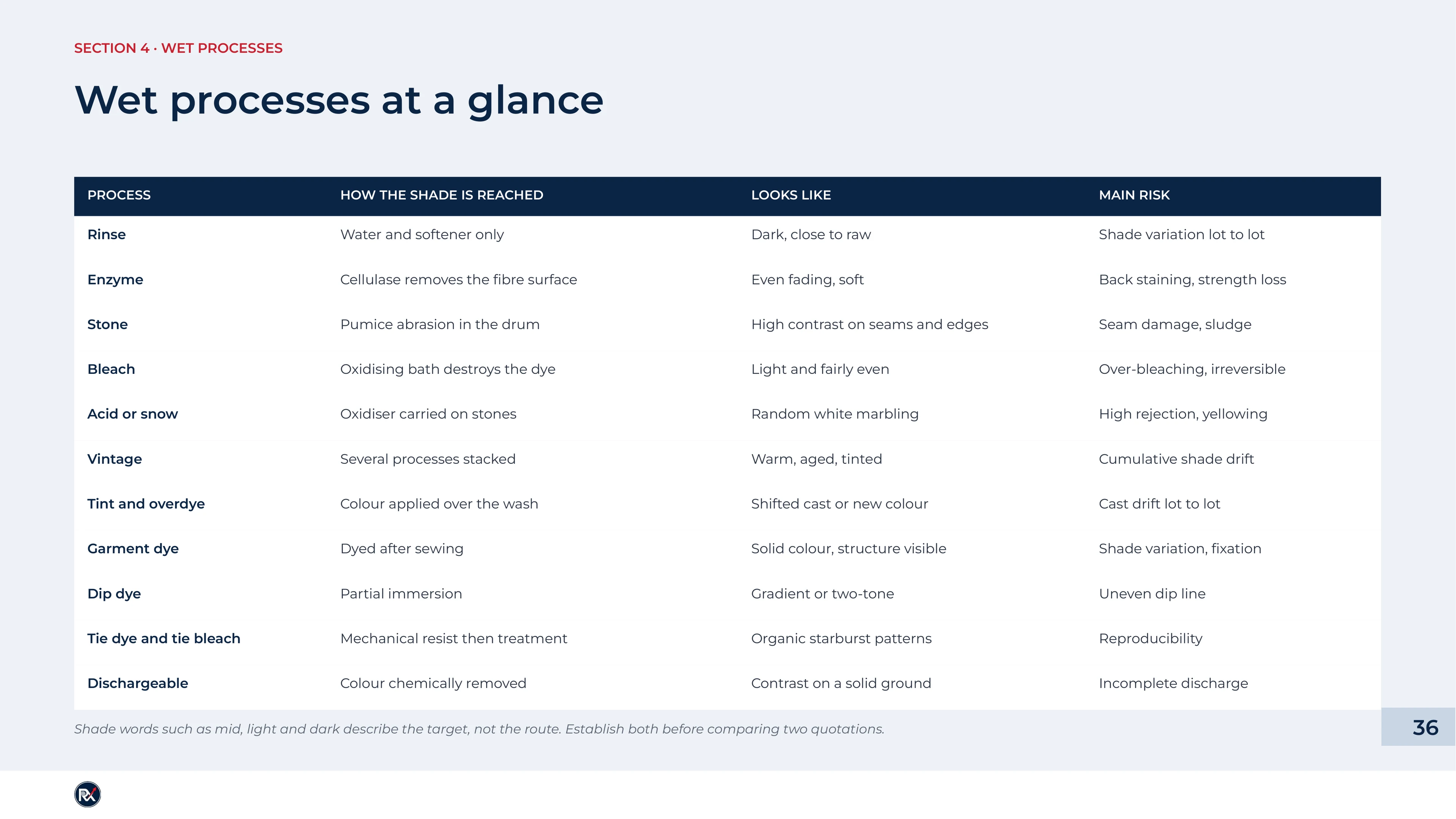
Slide 36 of 85: Wet processes at a glance
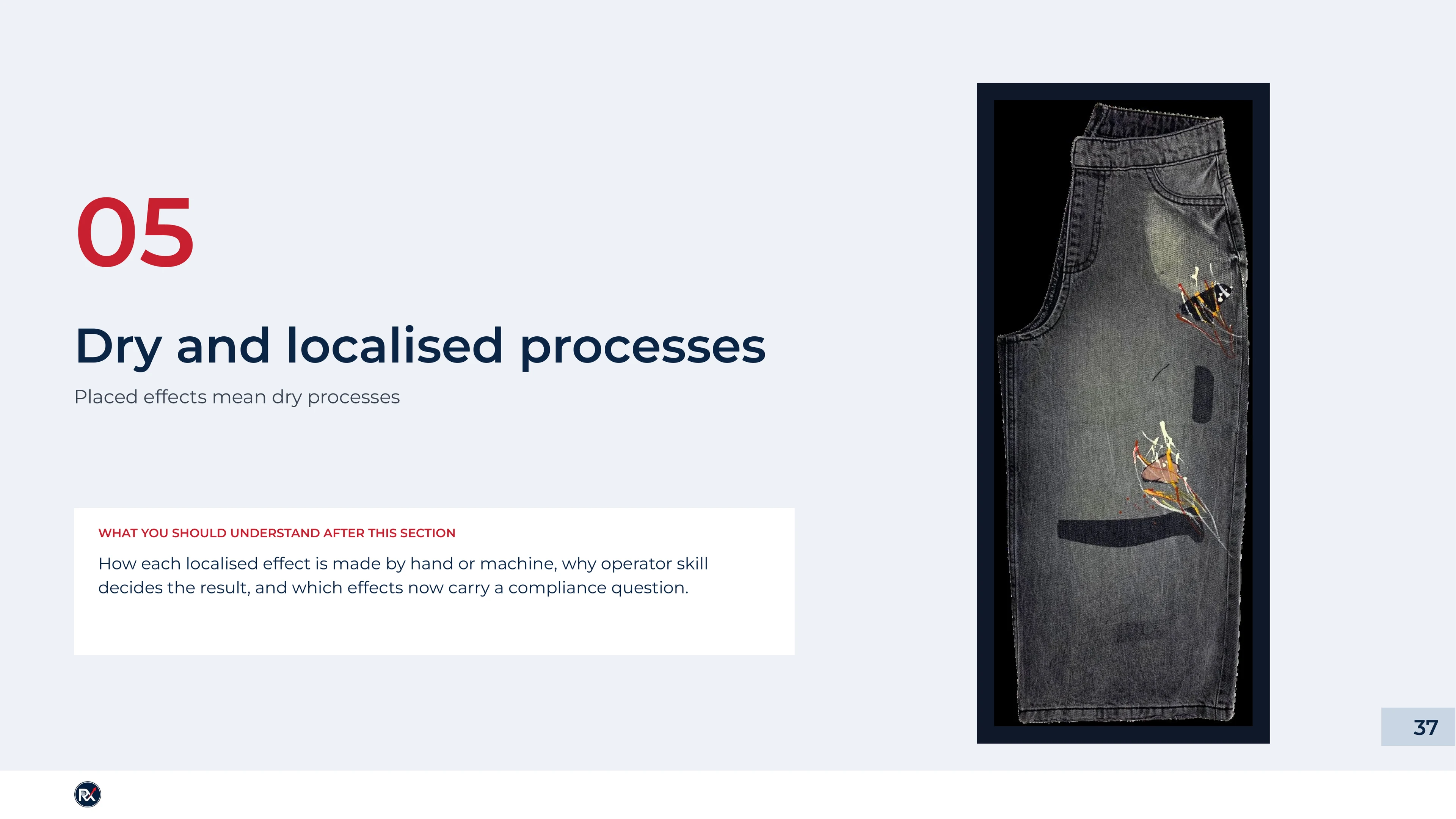
Slide 37 of 85: Dry and localised processes
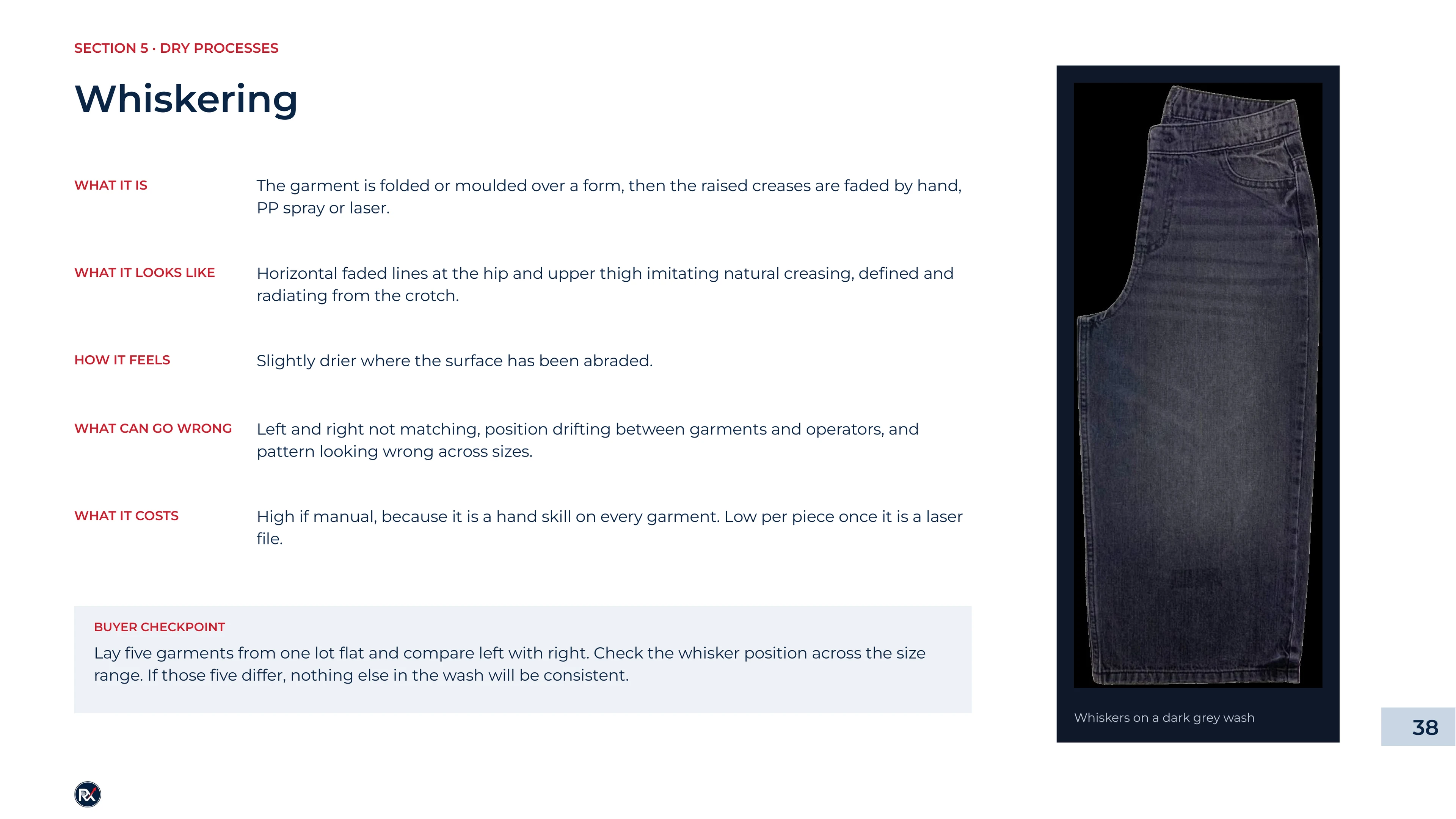
Slide 38 of 85: Whiskering
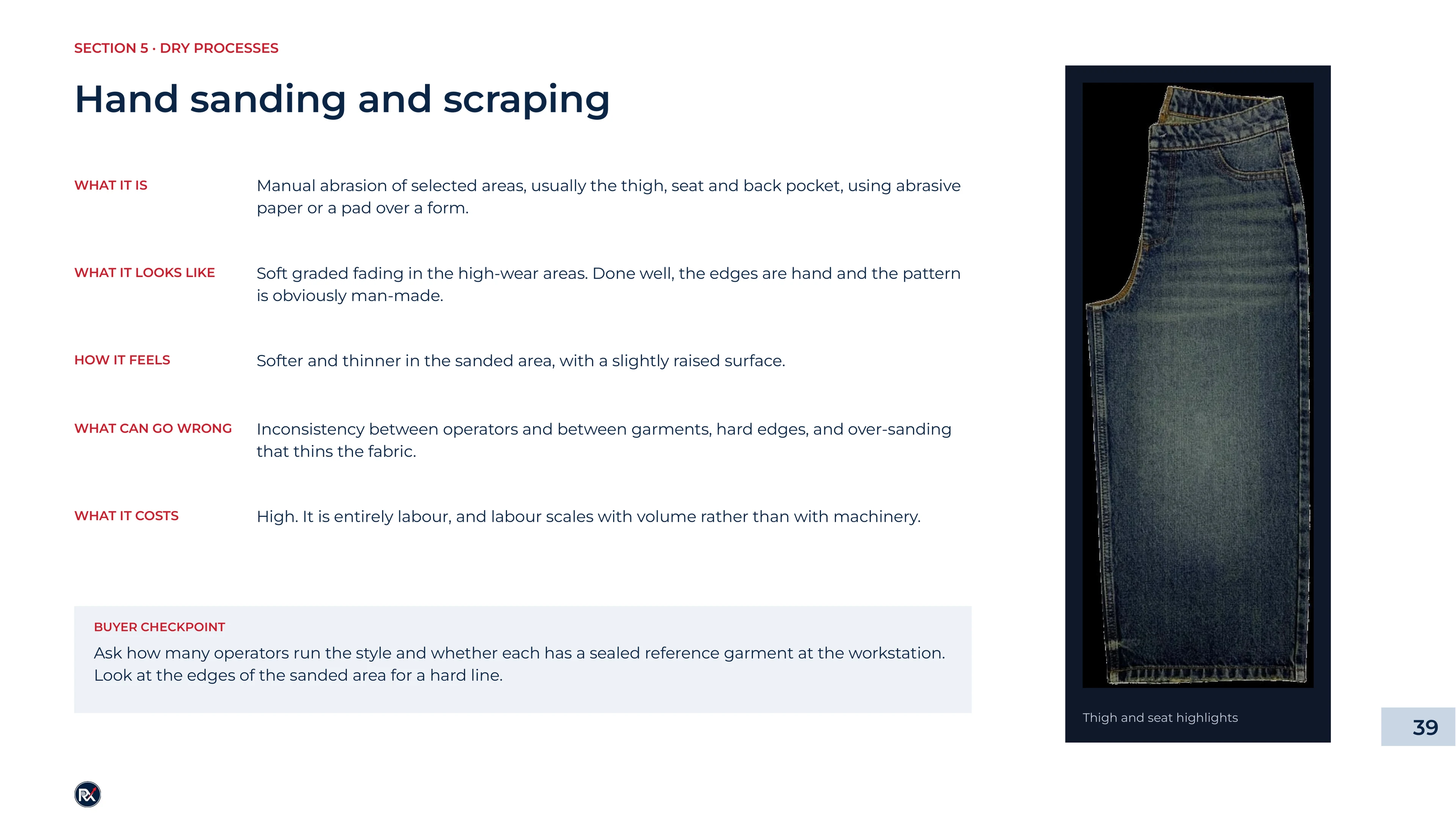
Slide 39 of 85: Hand sanding and scraping
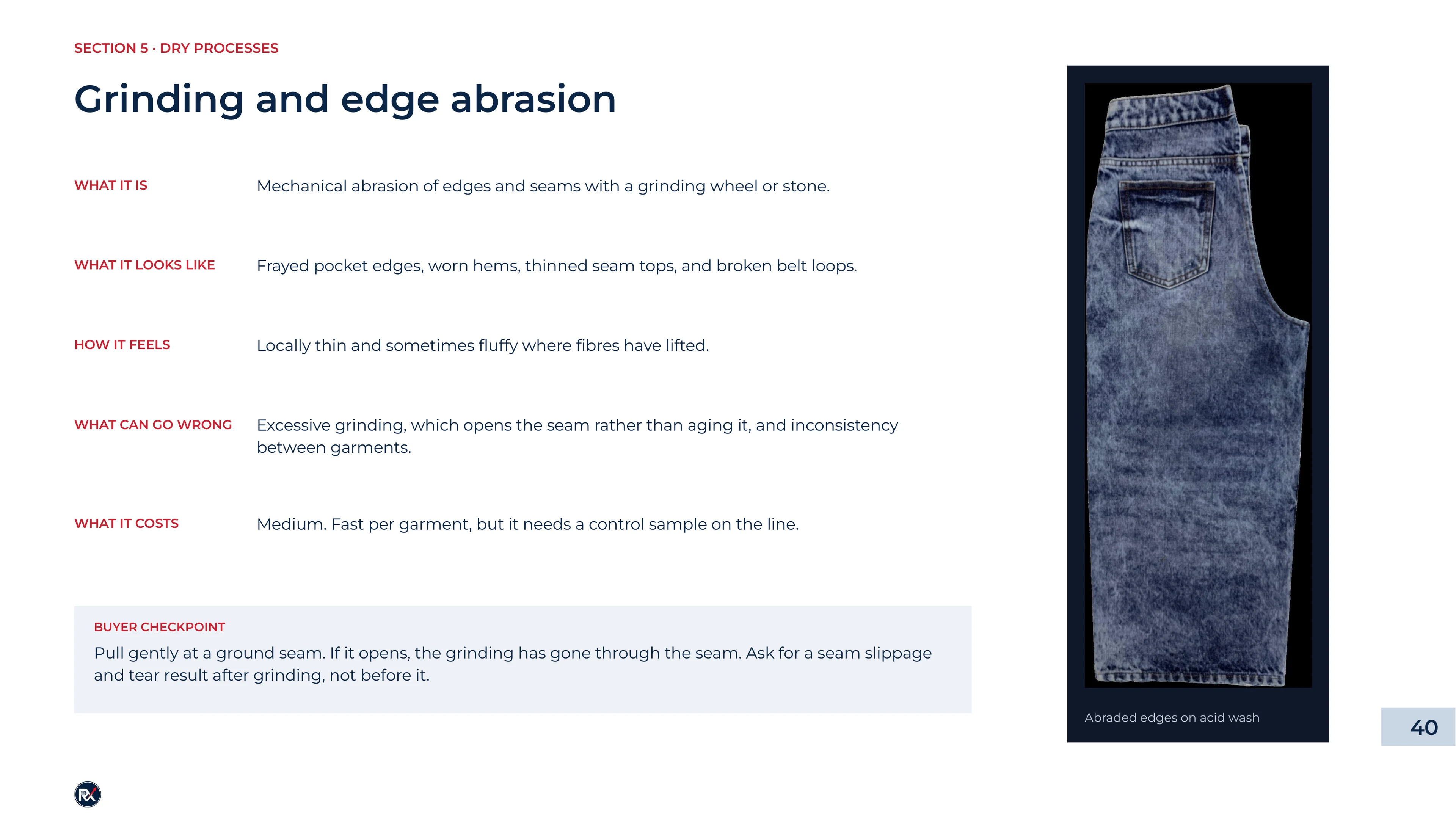
Slide 40 of 85: Grinding and edge abrasion
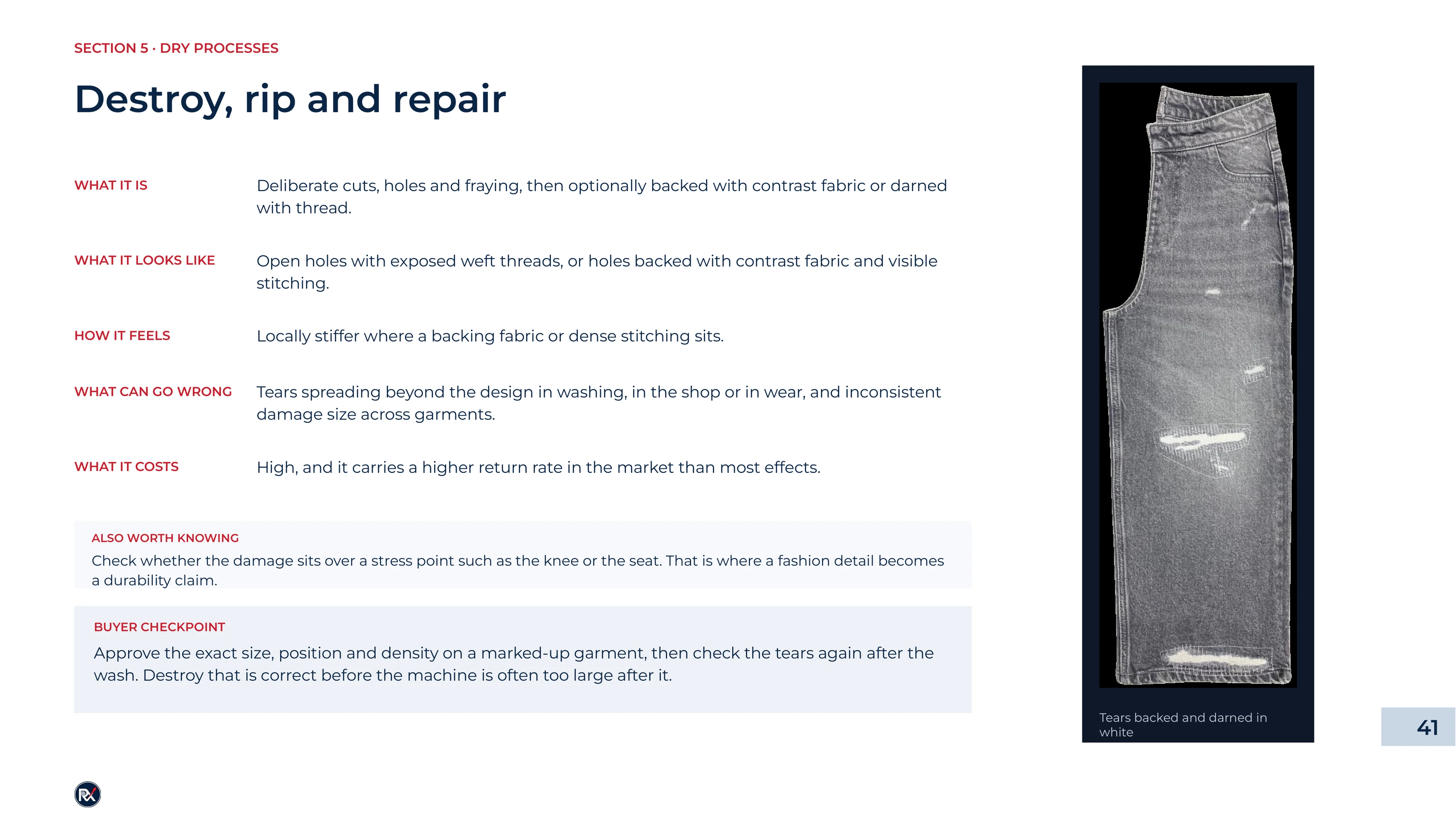
Slide 41 of 85: Destroy, rip and repair
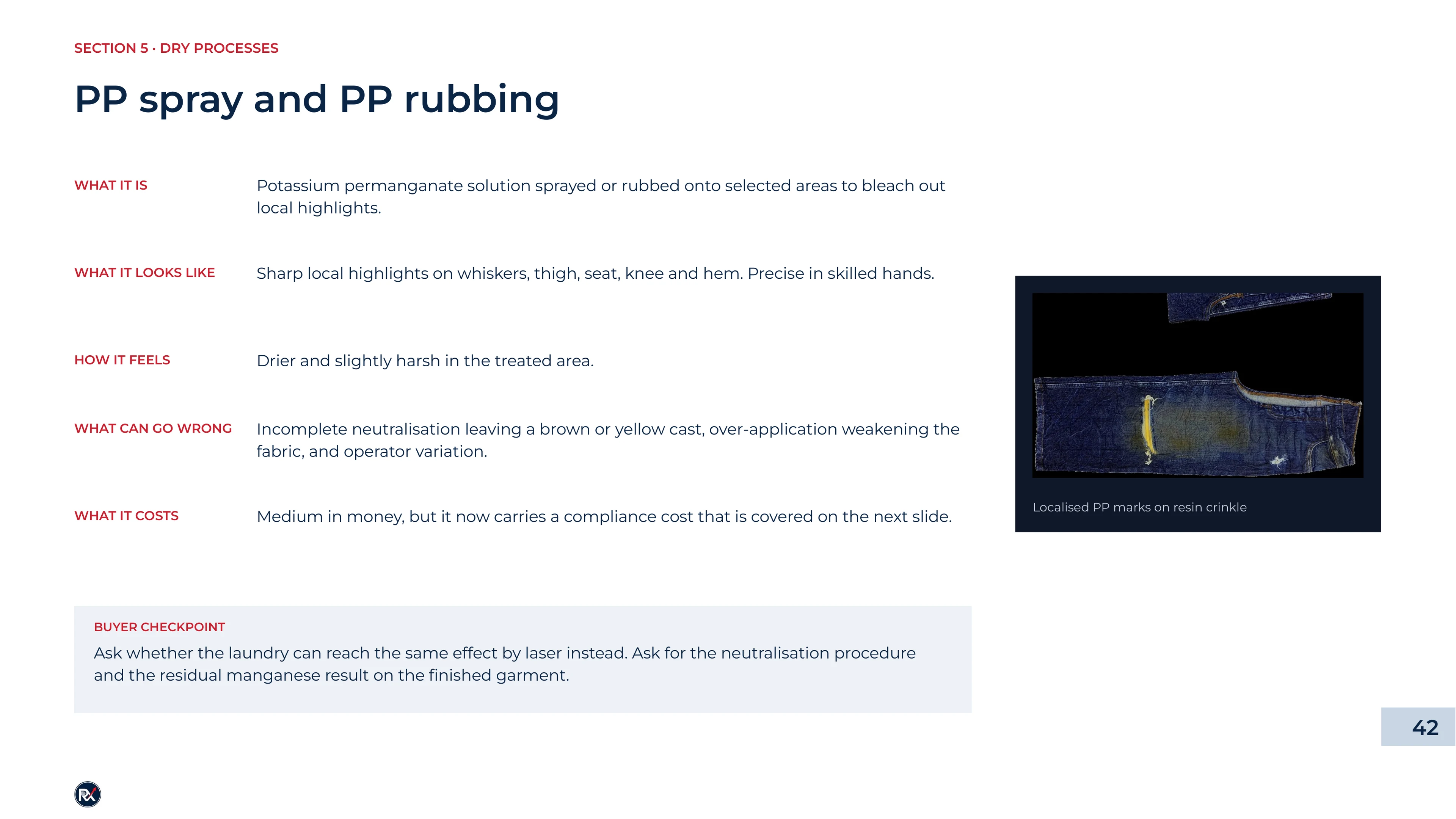
Slide 42 of 85: PP spray and PP rubbing
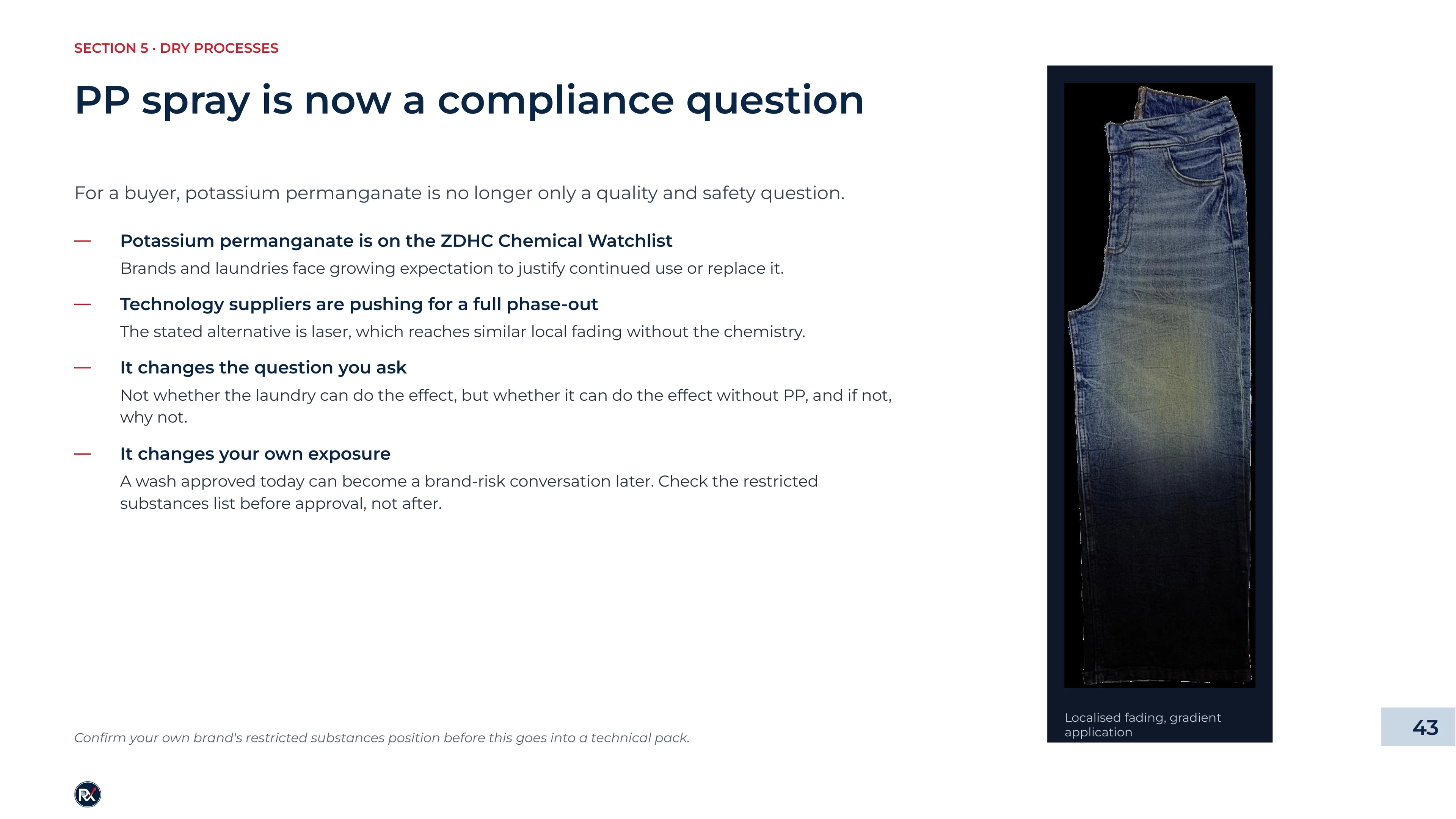
Slide 43 of 85: PP spray is now a compliance question
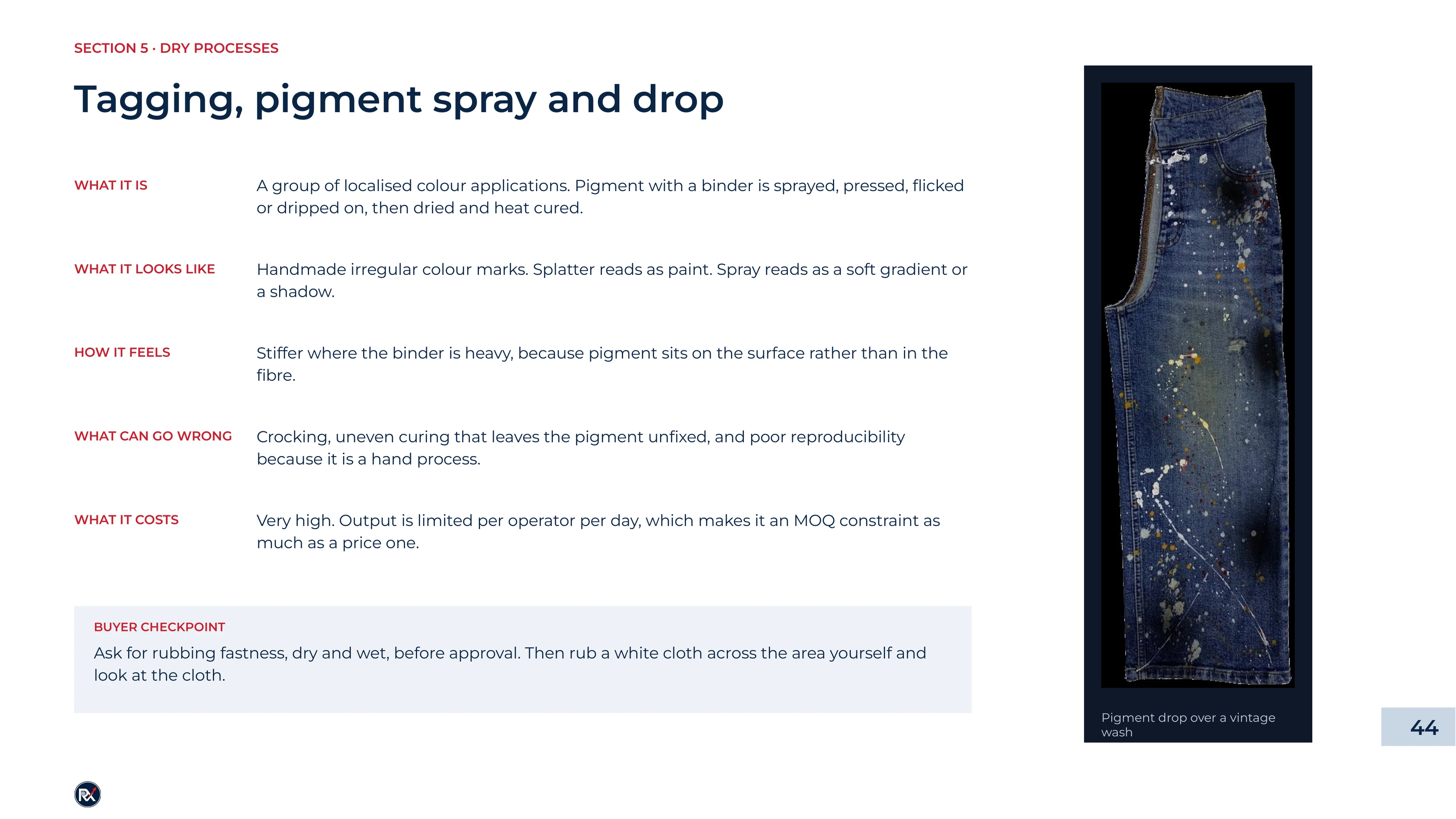
Slide 44 of 85: Tagging, pigment spray and drop
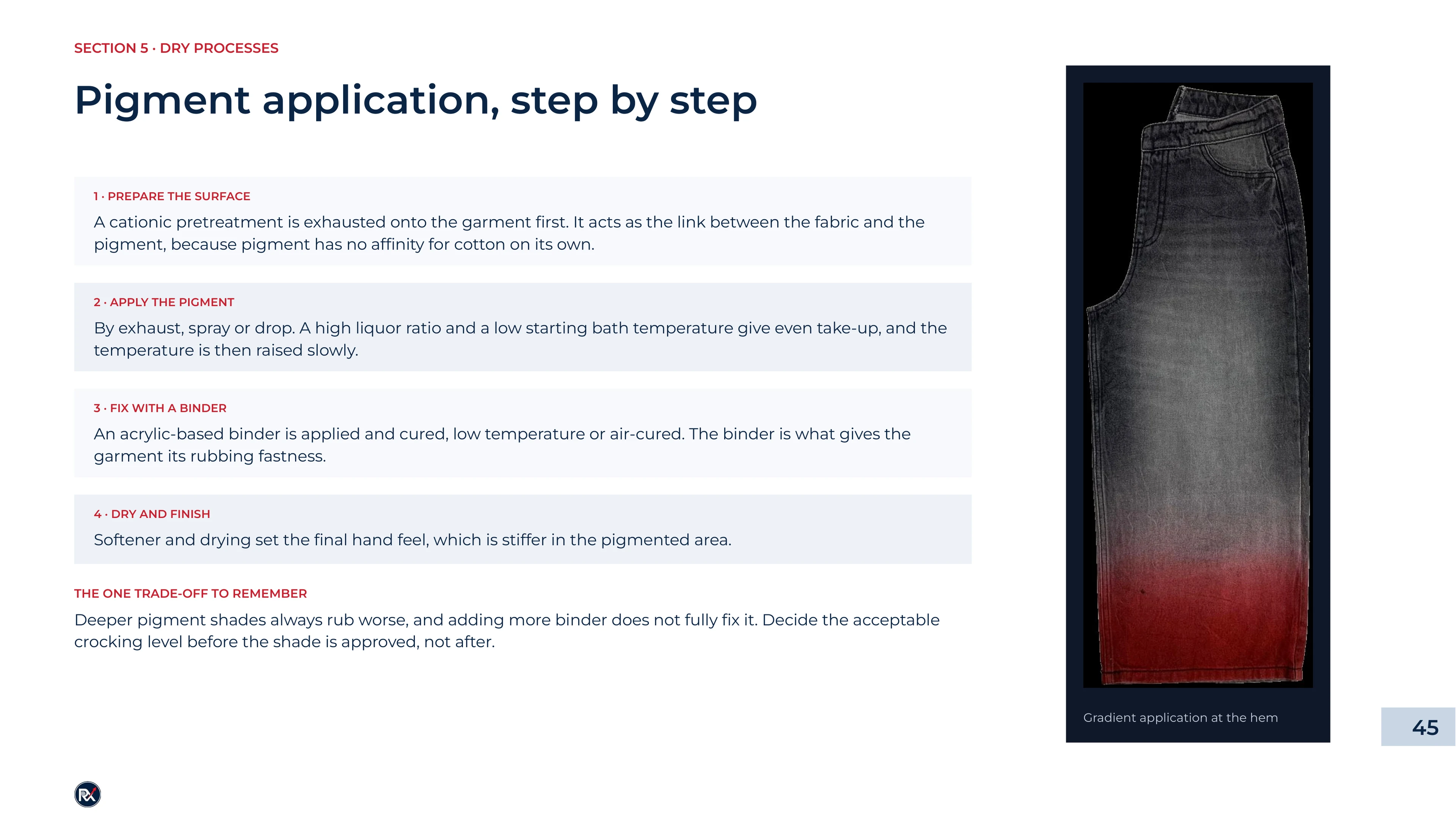
Slide 45 of 85: Pigment application, step by step
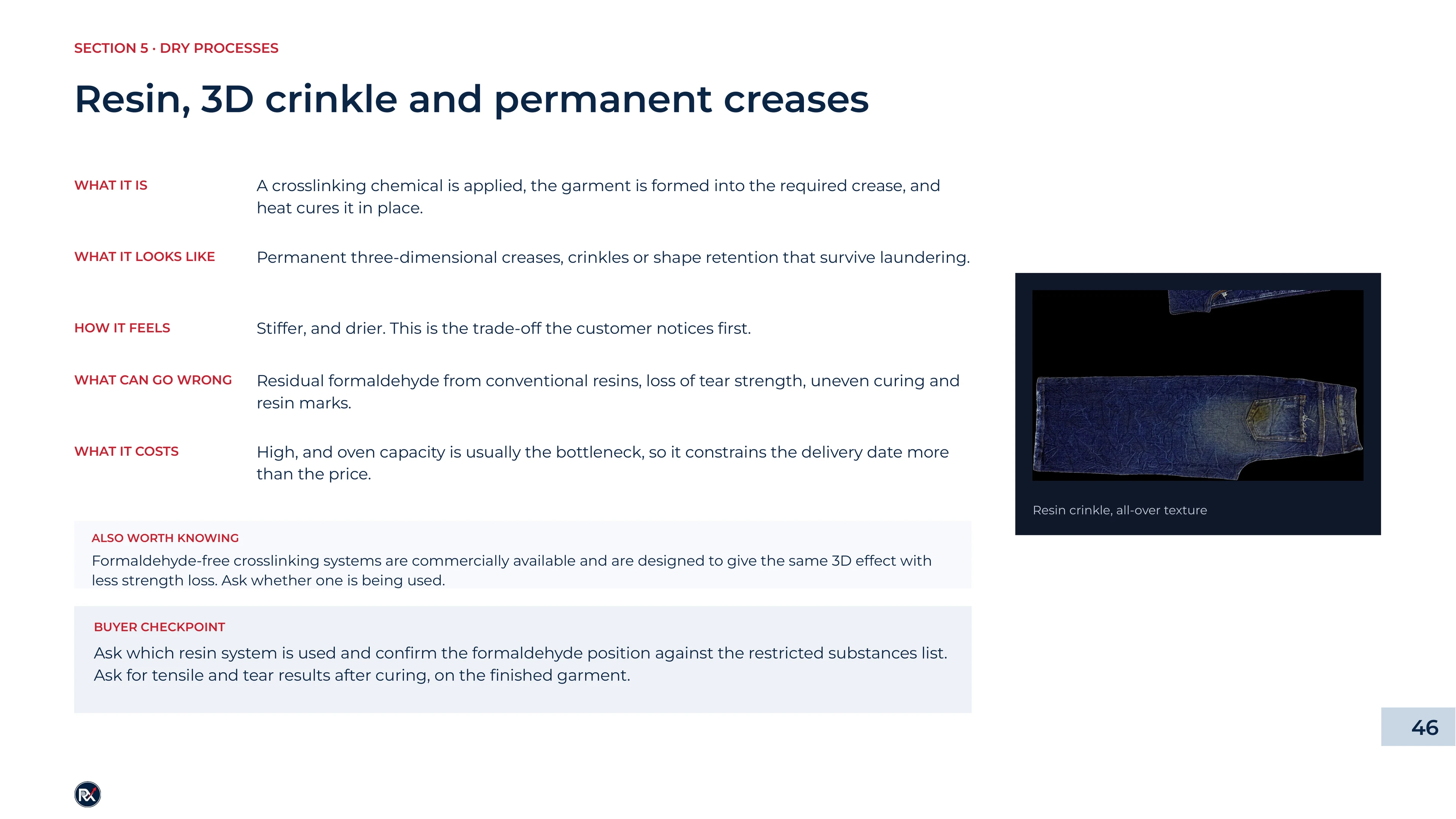
Slide 46 of 85: Resin, 3D crinkle and permanent creases
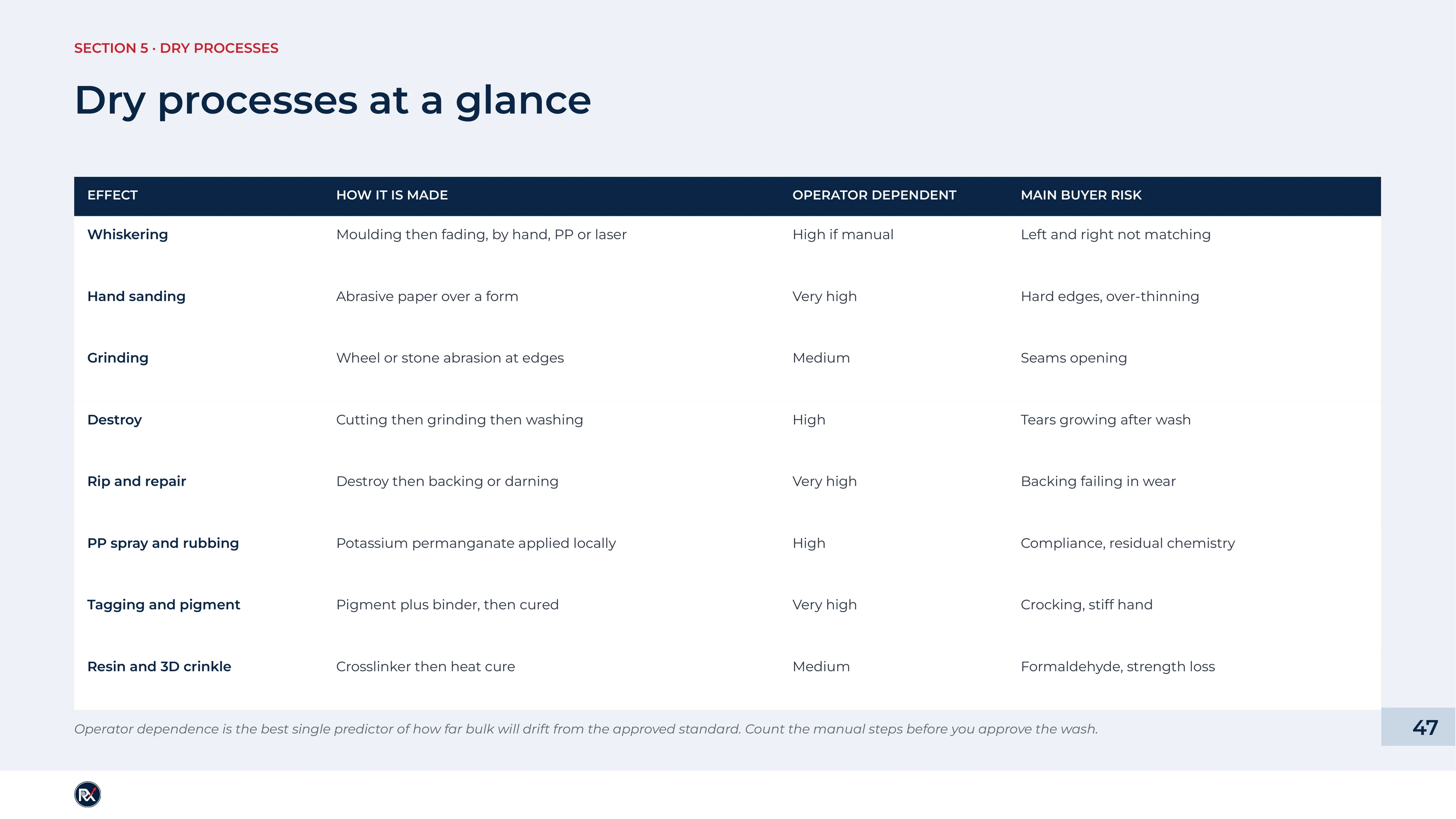
Slide 47 of 85: Dry processes at a glance
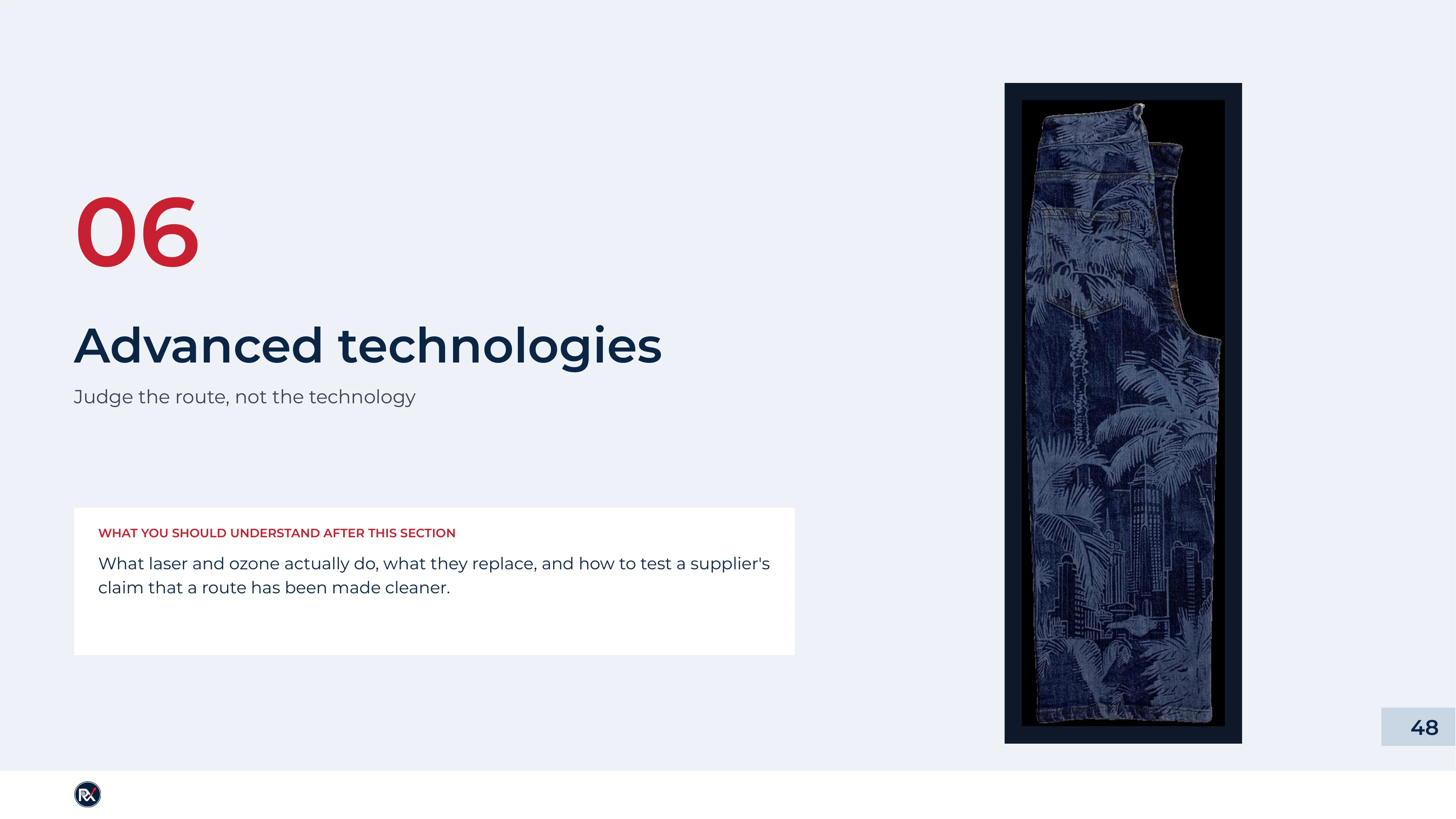
Slide 48 of 85: Advanced technologies
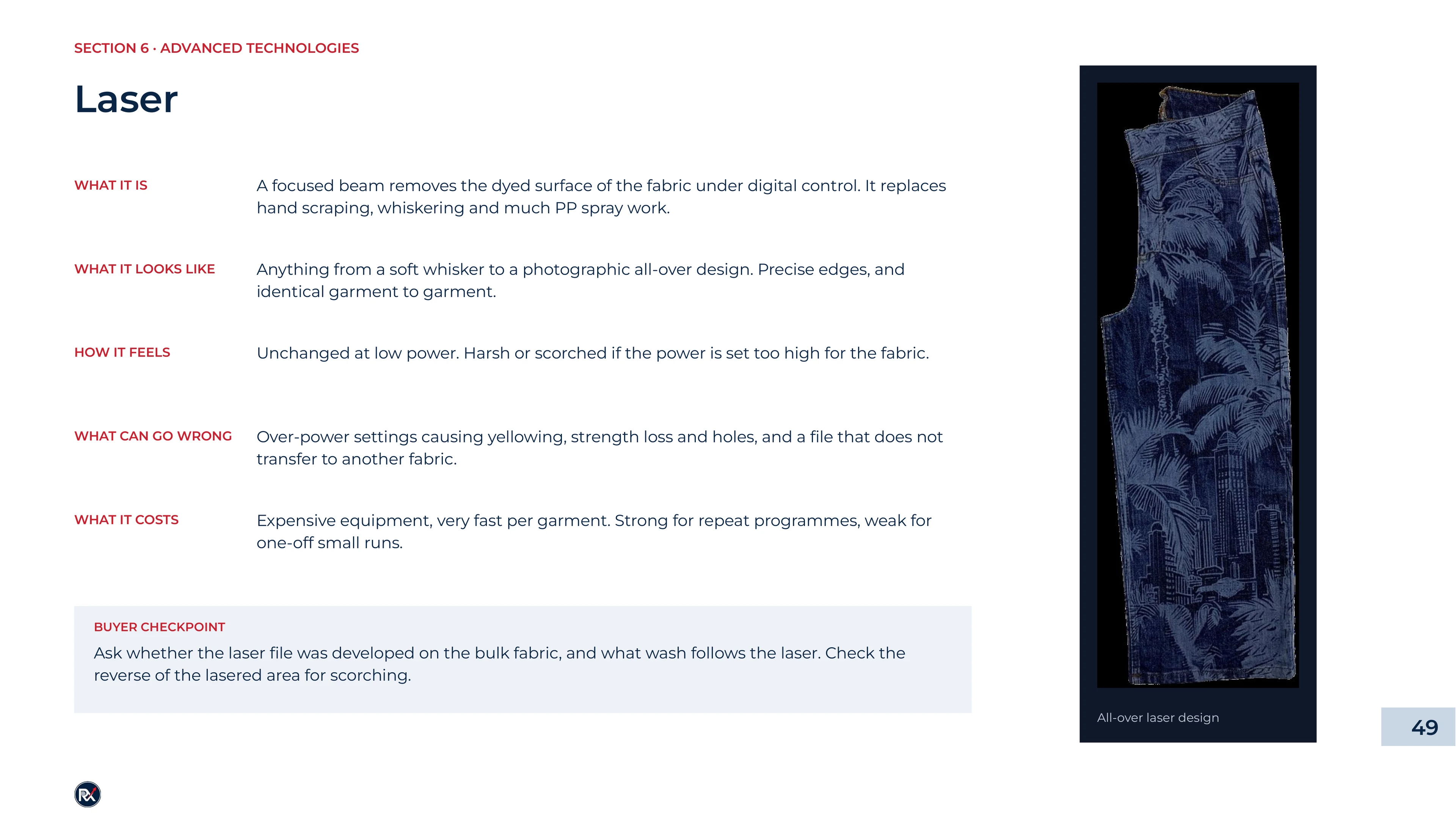
Slide 49 of 85: Laser
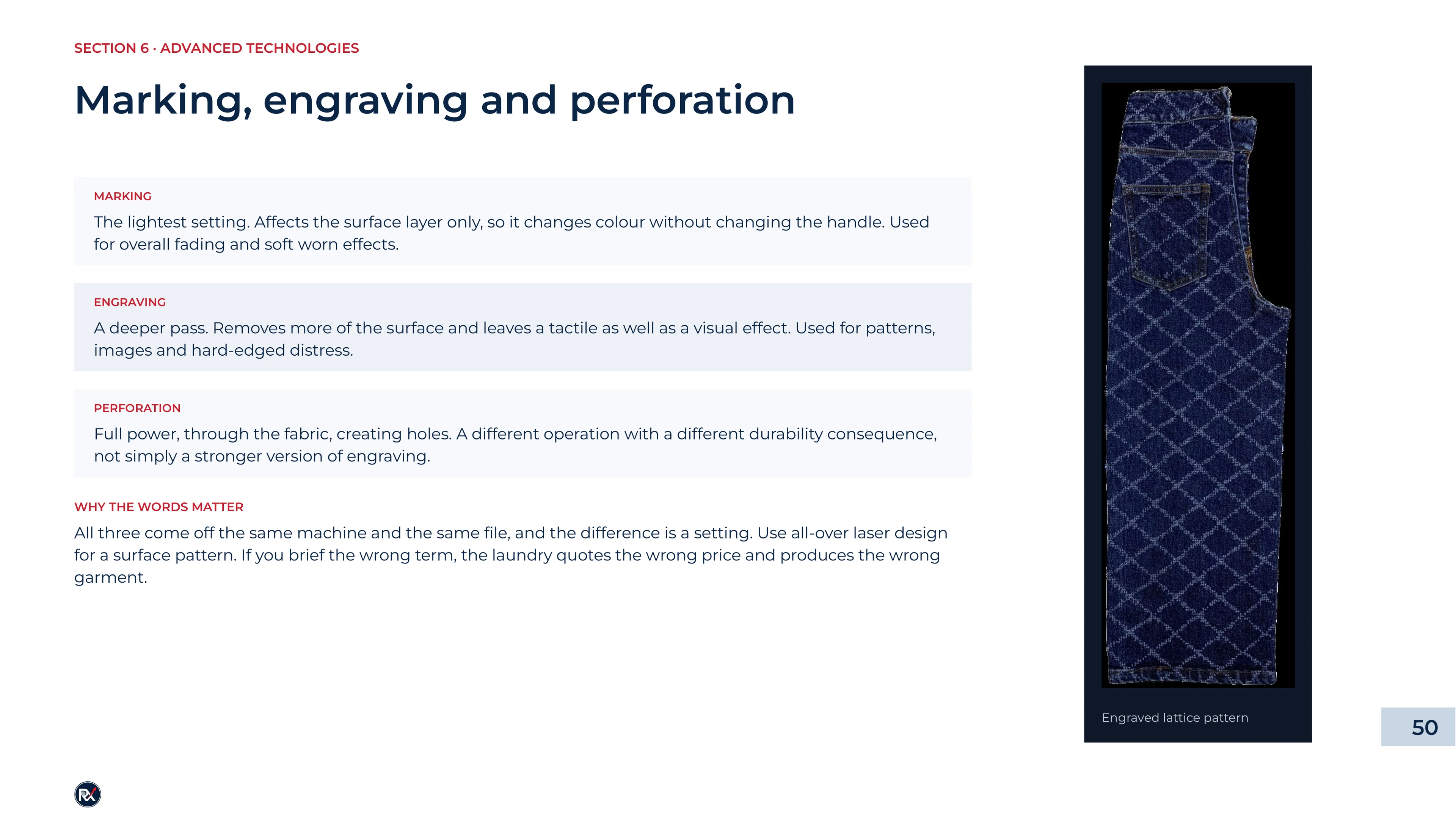
Slide 50 of 85: Marking, engraving and perforation
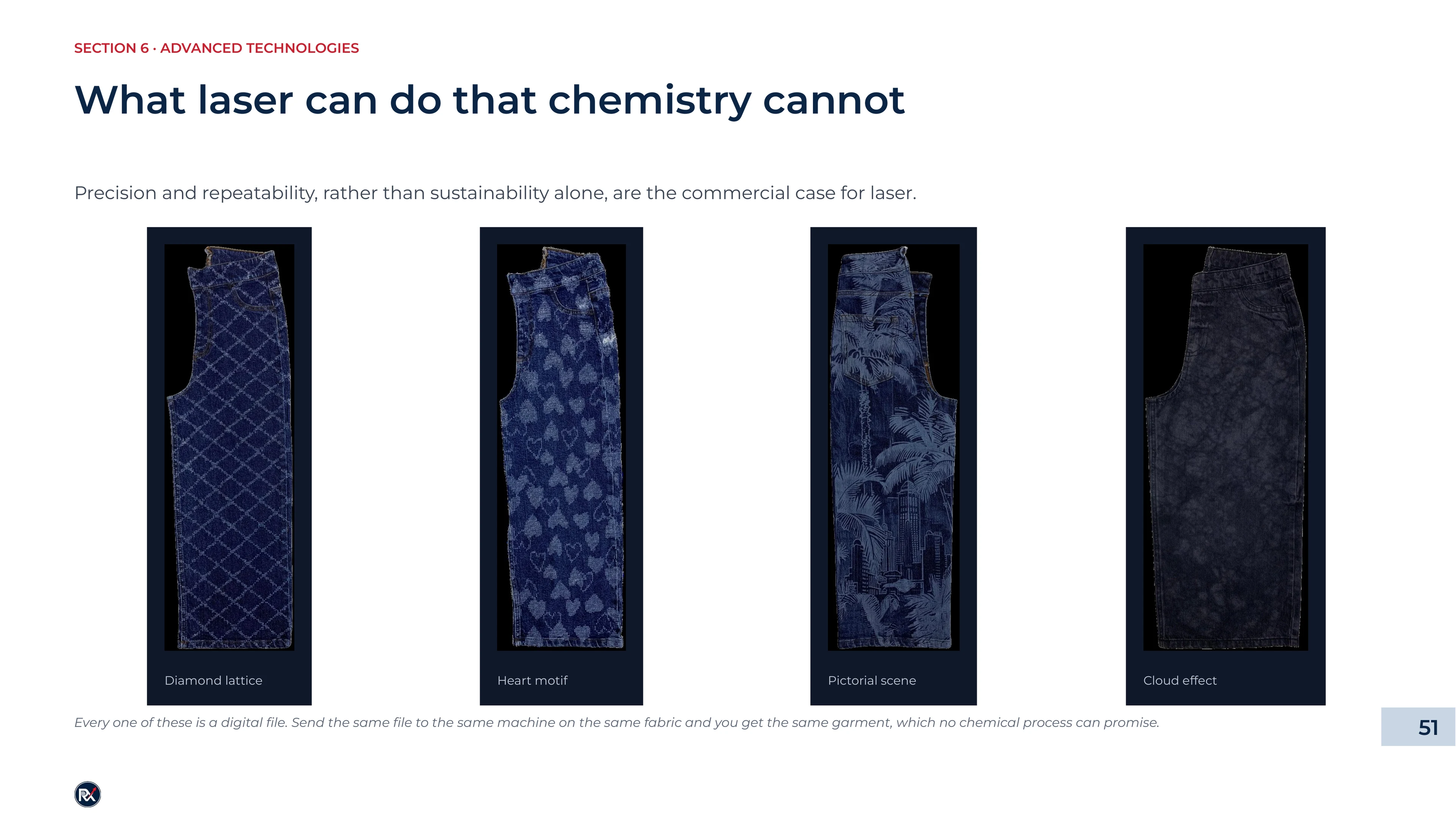
Slide 51 of 85: What laser can do that chemistry cannot
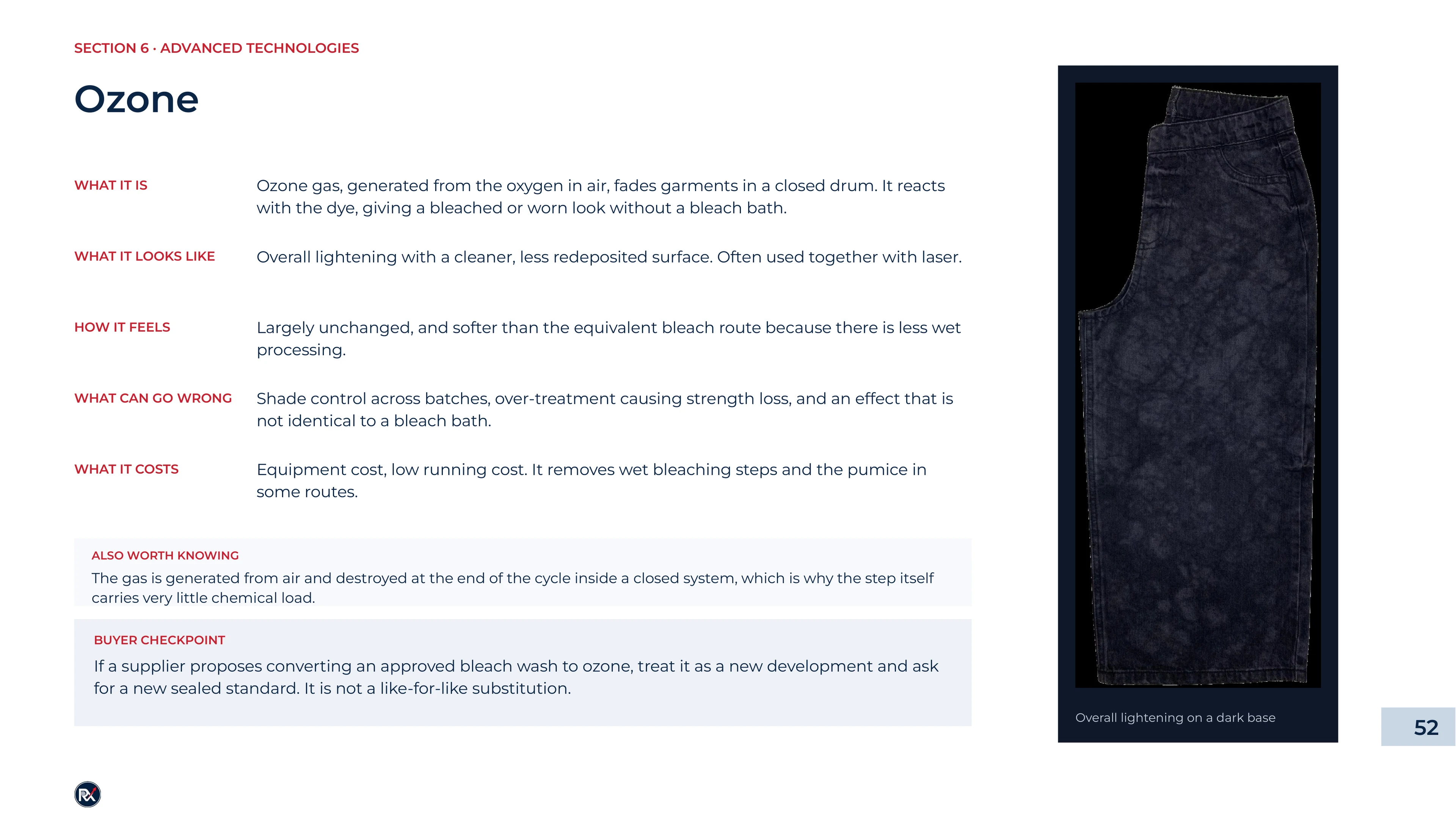
Slide 52 of 85: Ozone
Slide 53 of 85: Low-liquor and water-saving systems
Slide 54 of 85: What replaces what
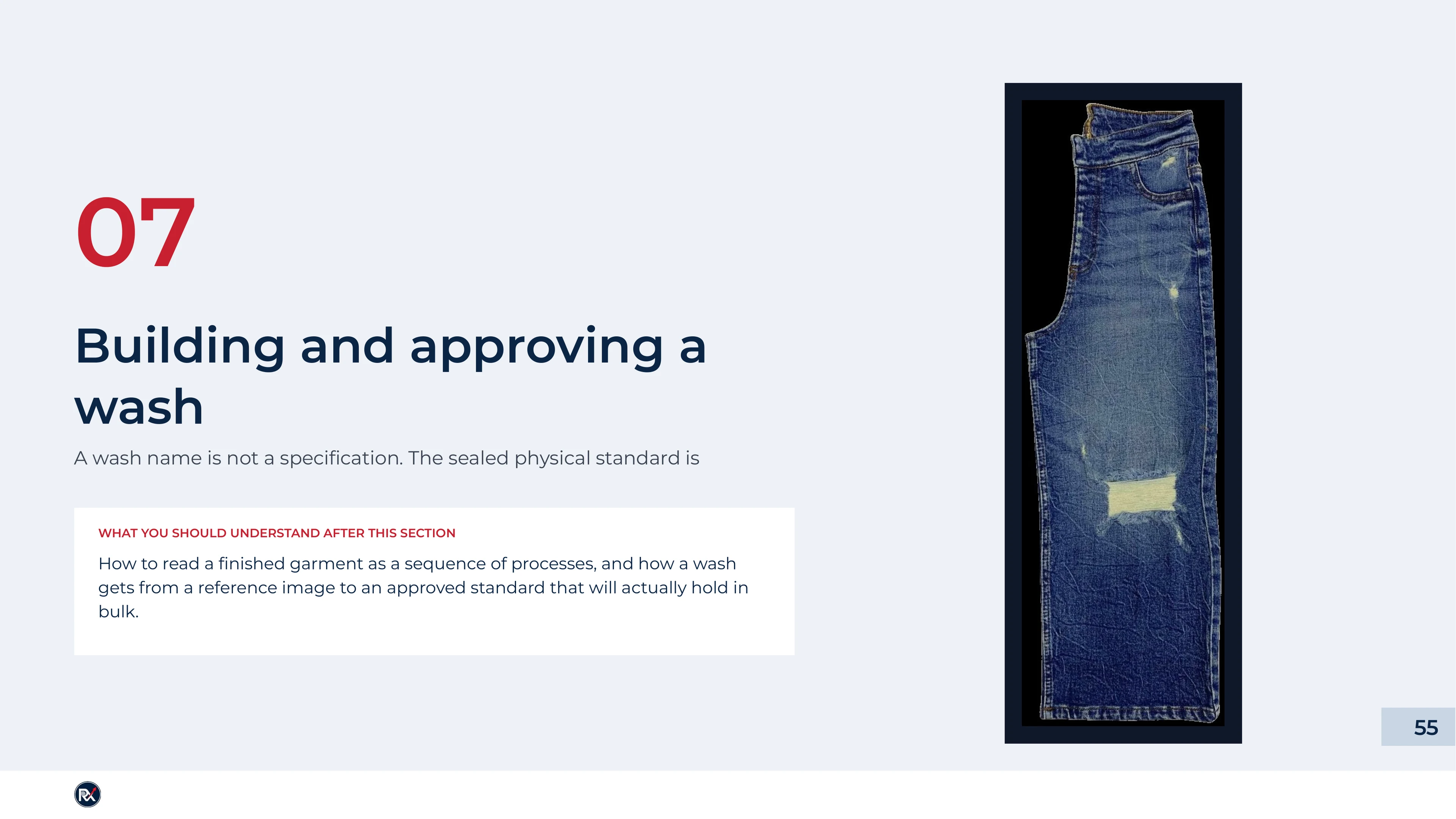
Slide 55 of 85: Building and approving a wash
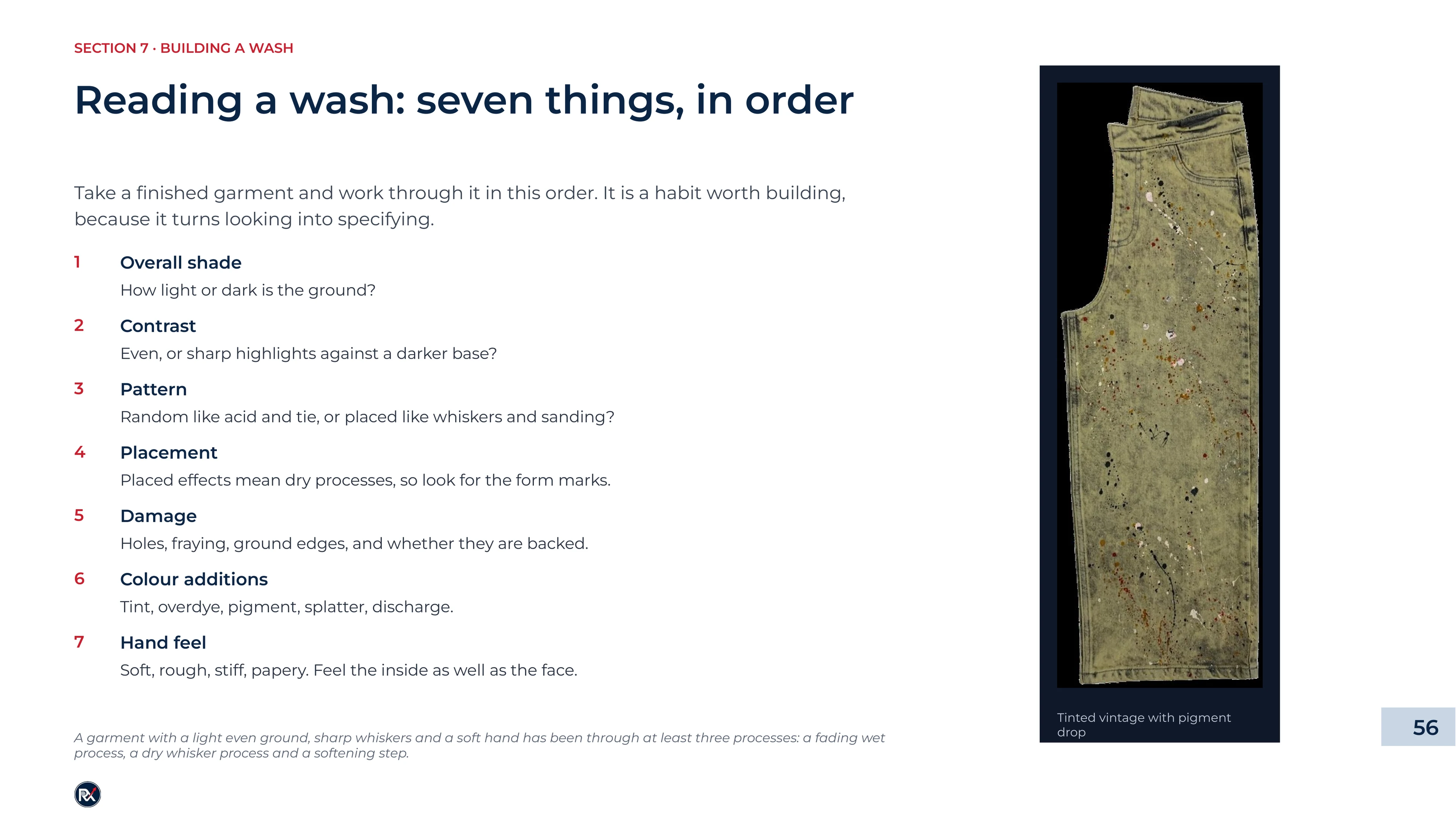
Slide 56 of 85: Reading a wash: seven things, in order
Slide 57 of 85: Combination washes: how a look is layered
Slide 58 of 85: Wash development: standard to bulk
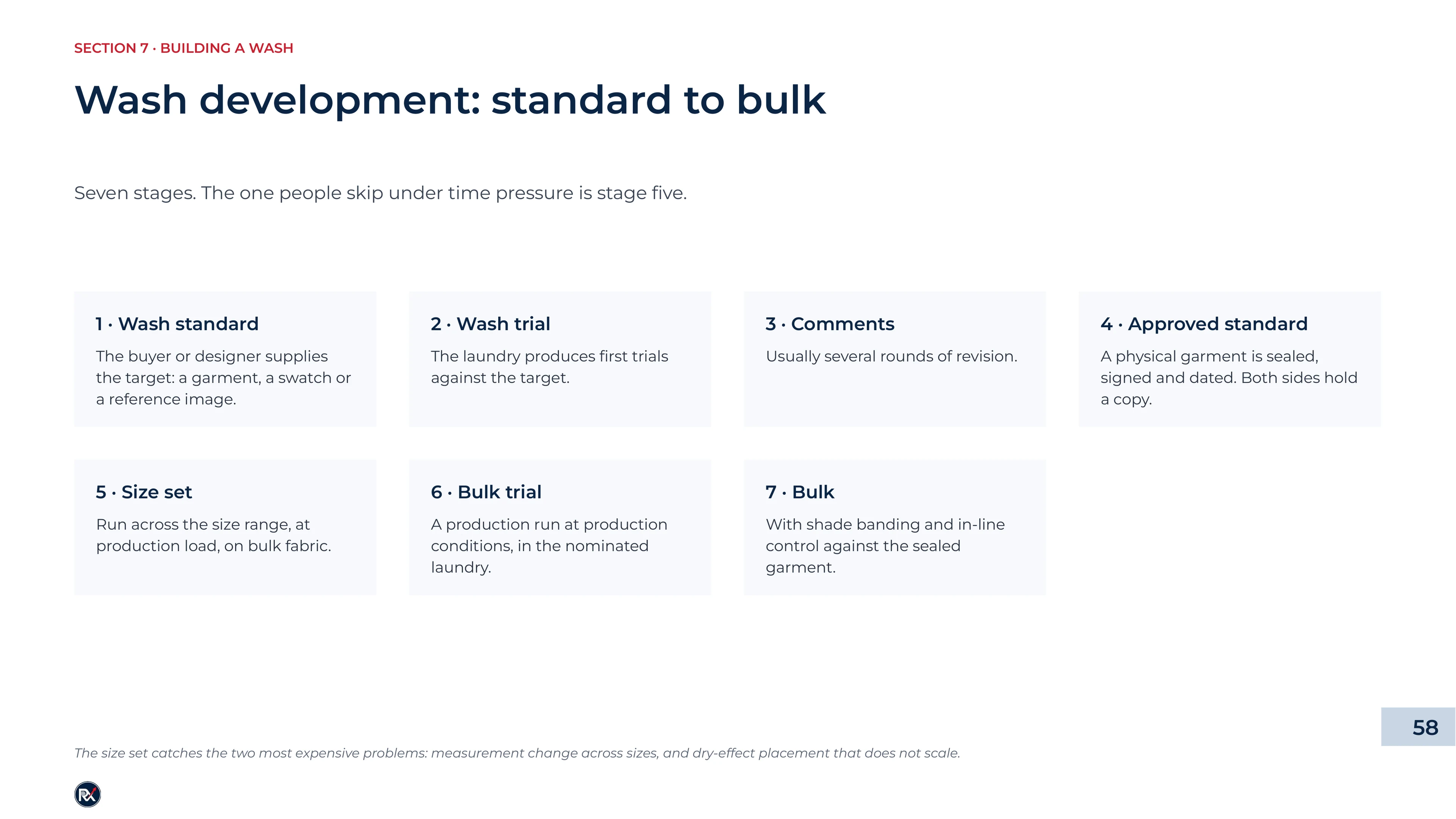
Slide 59 of 85: The approval documents you must have
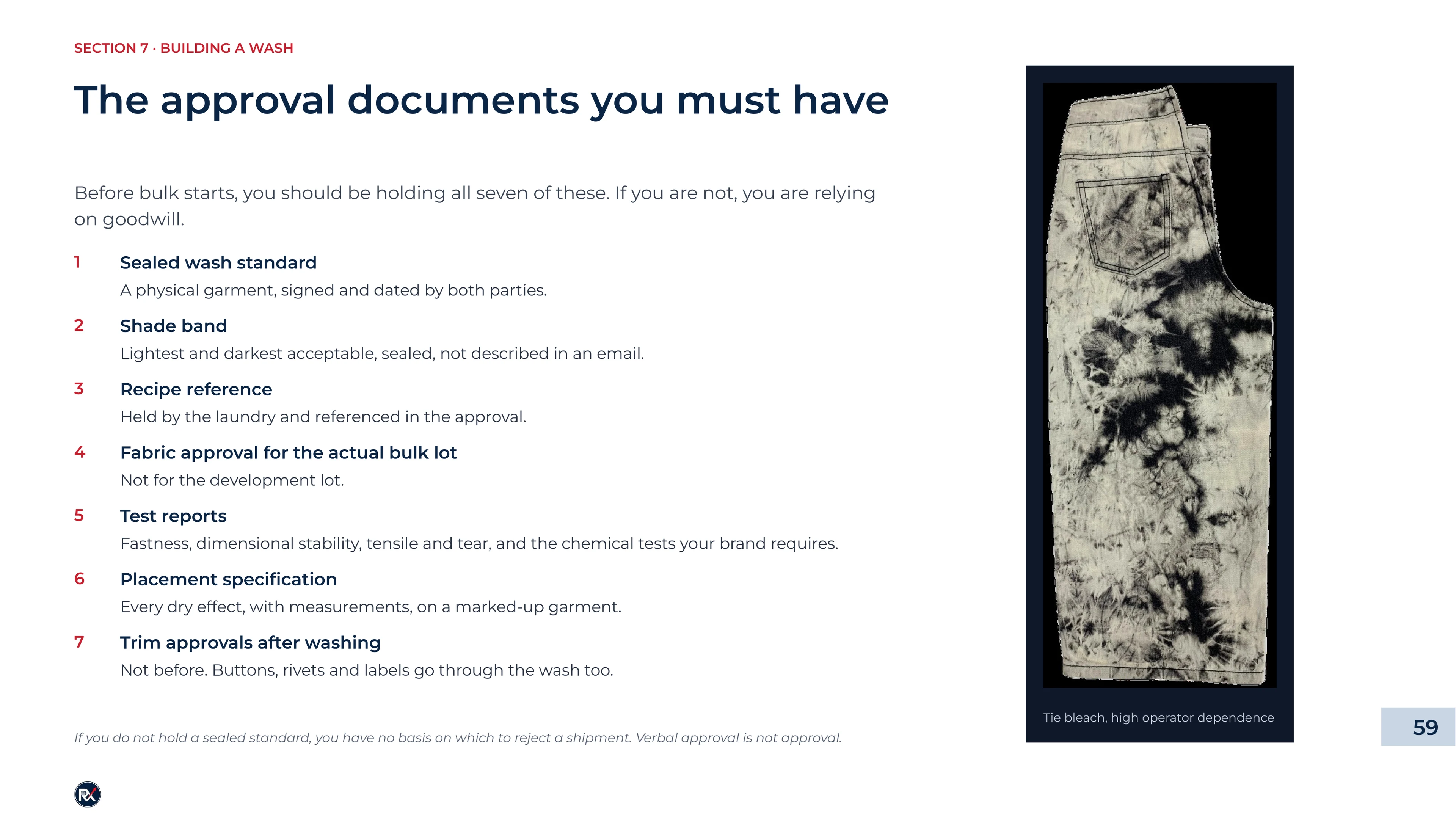
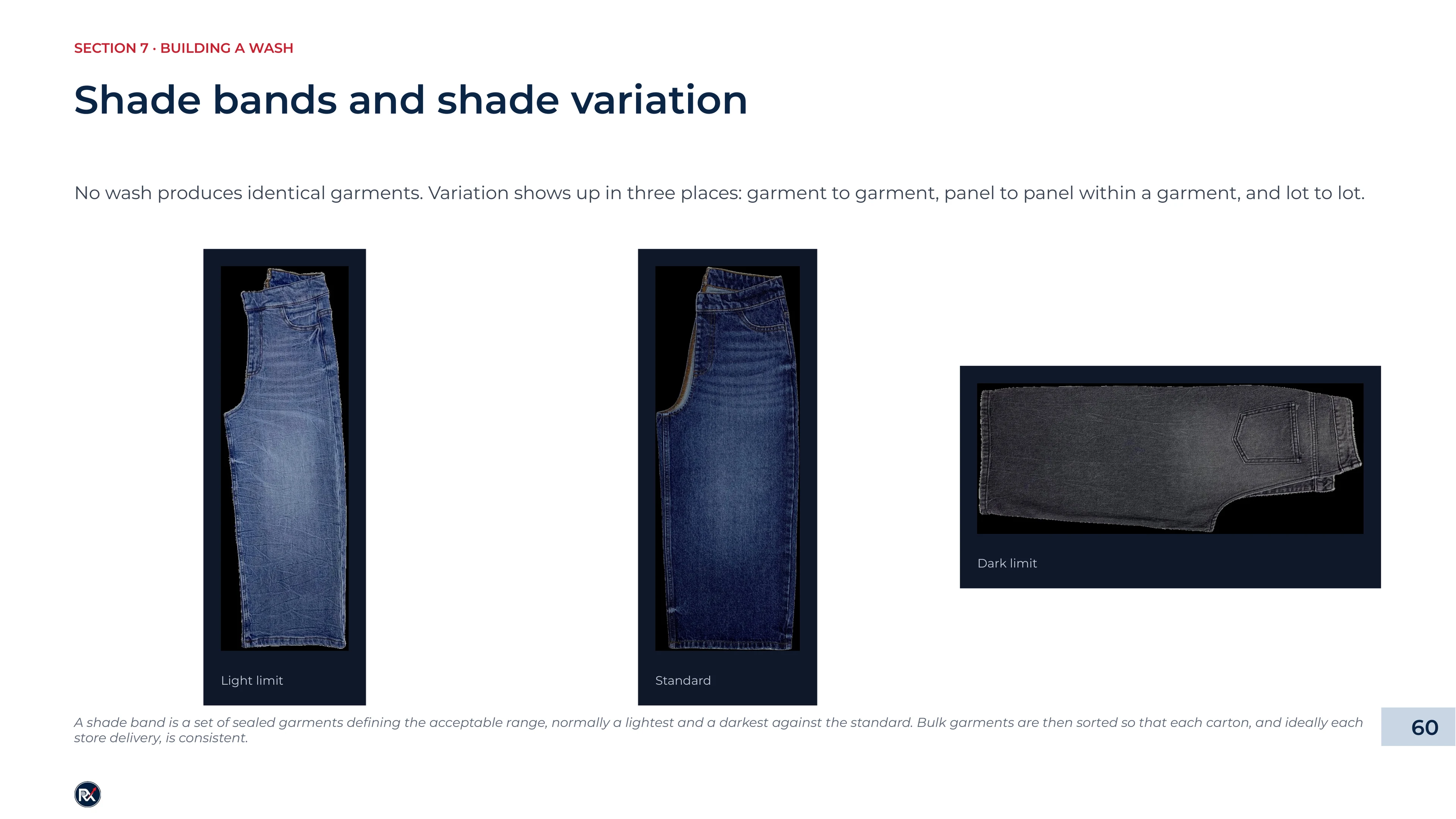
Slide 60 of 85: Shade bands and shade variation
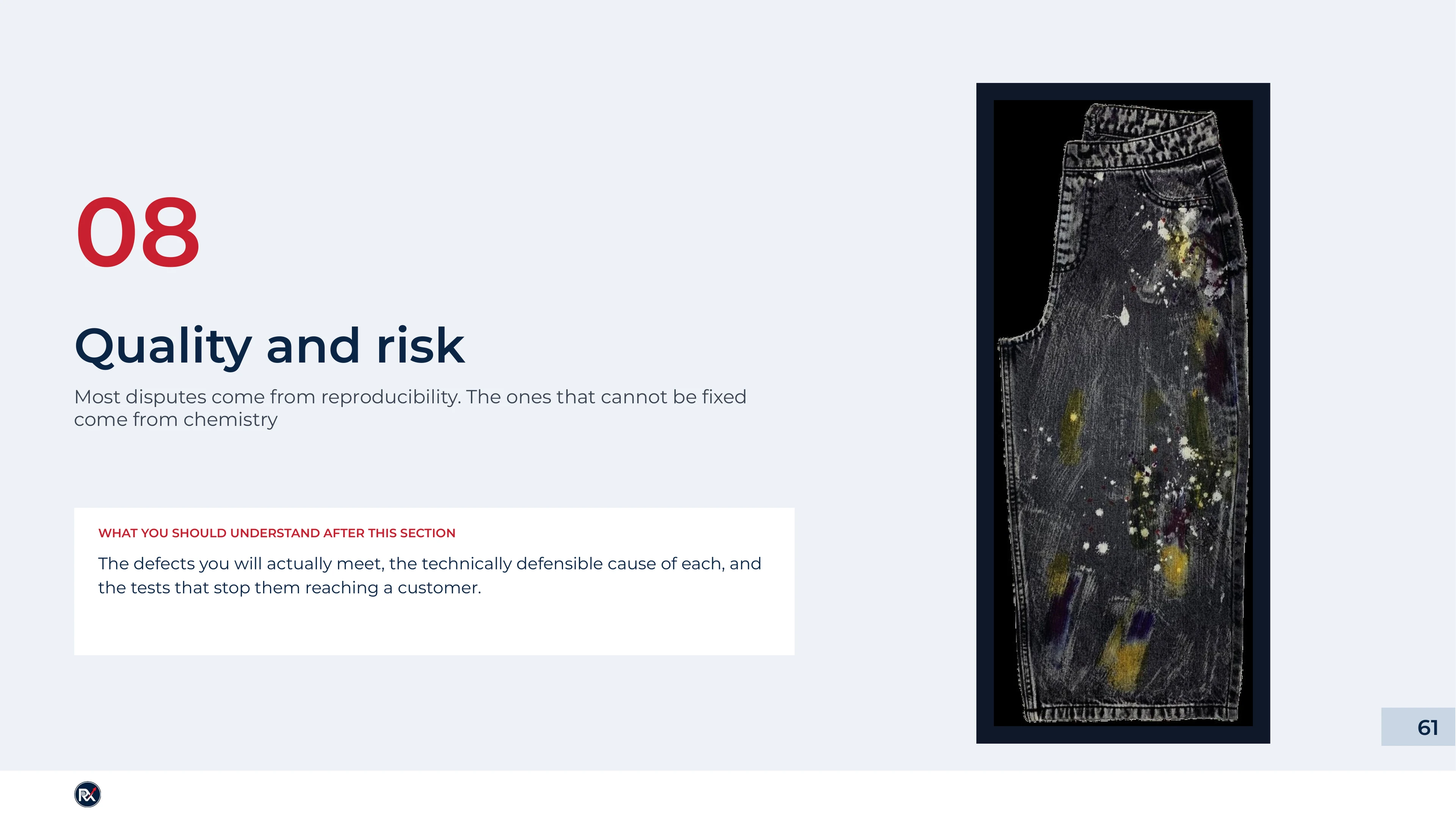
Slide 61 of 85: Quality and risk
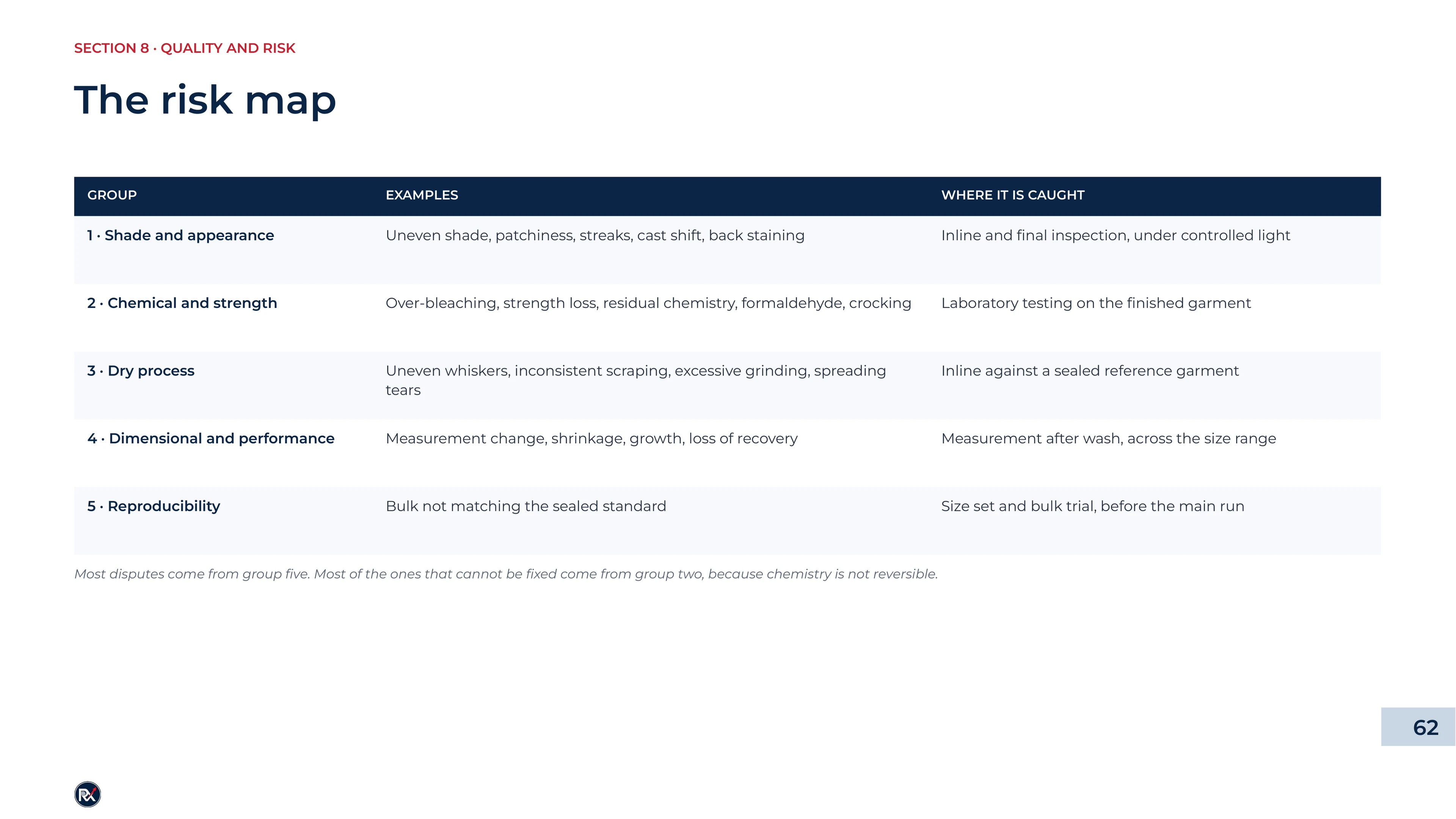
Slide 62 of 85: The risk map
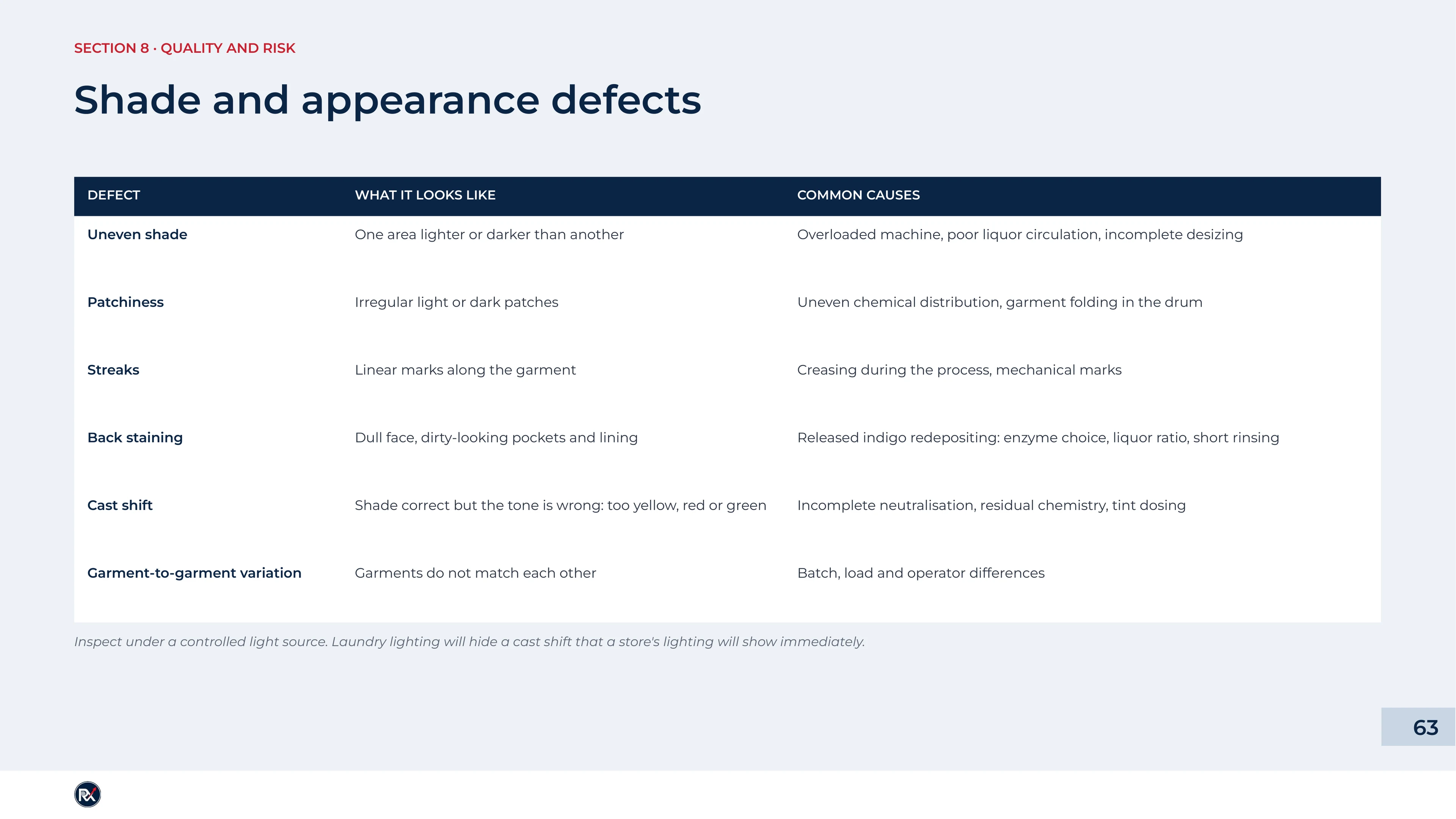
Slide 63 of 85: Shade and appearance defects
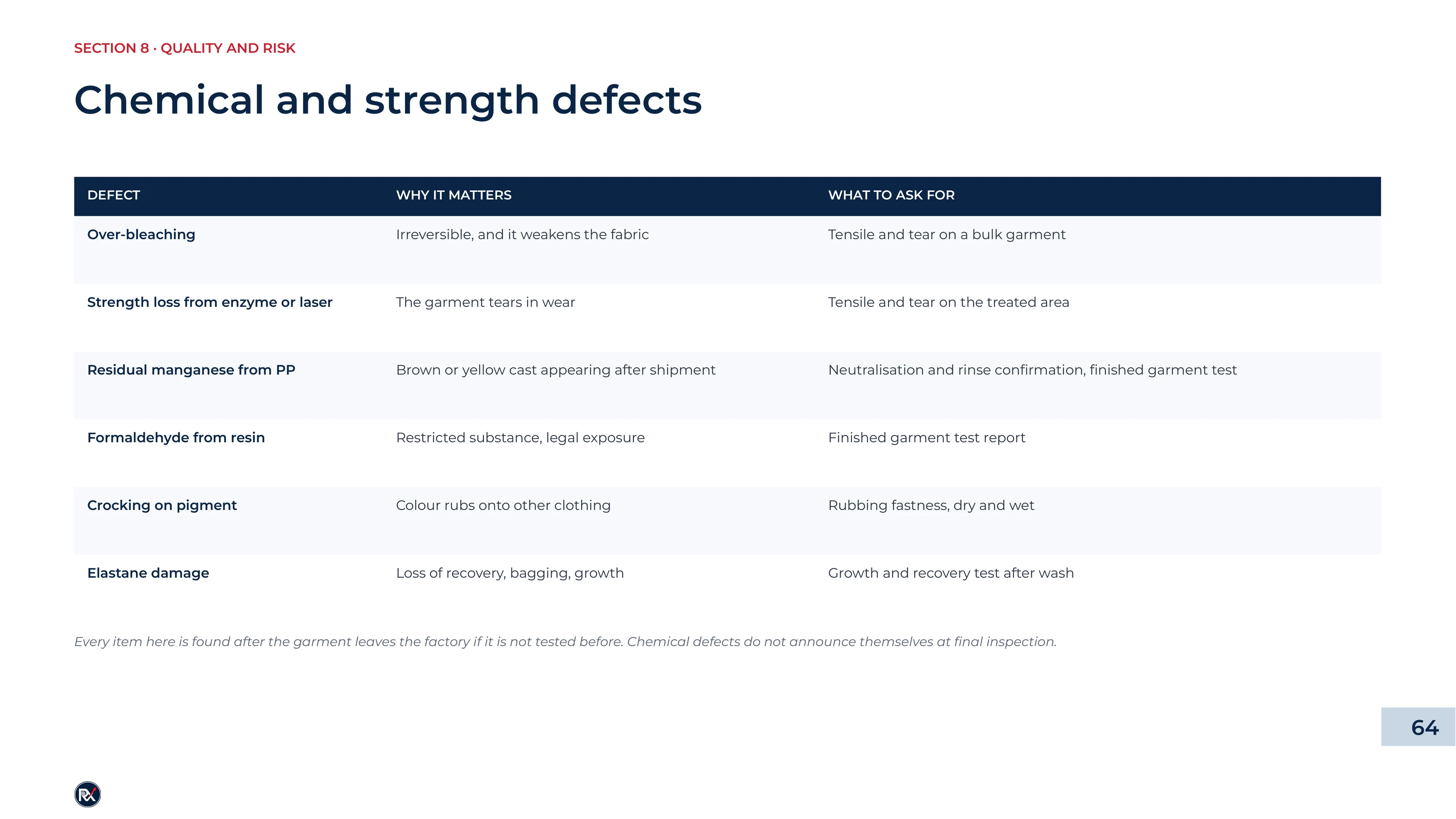
Slide 64 of 85: Chemical and strength defects
Slide 65 of 85: Dry process defects
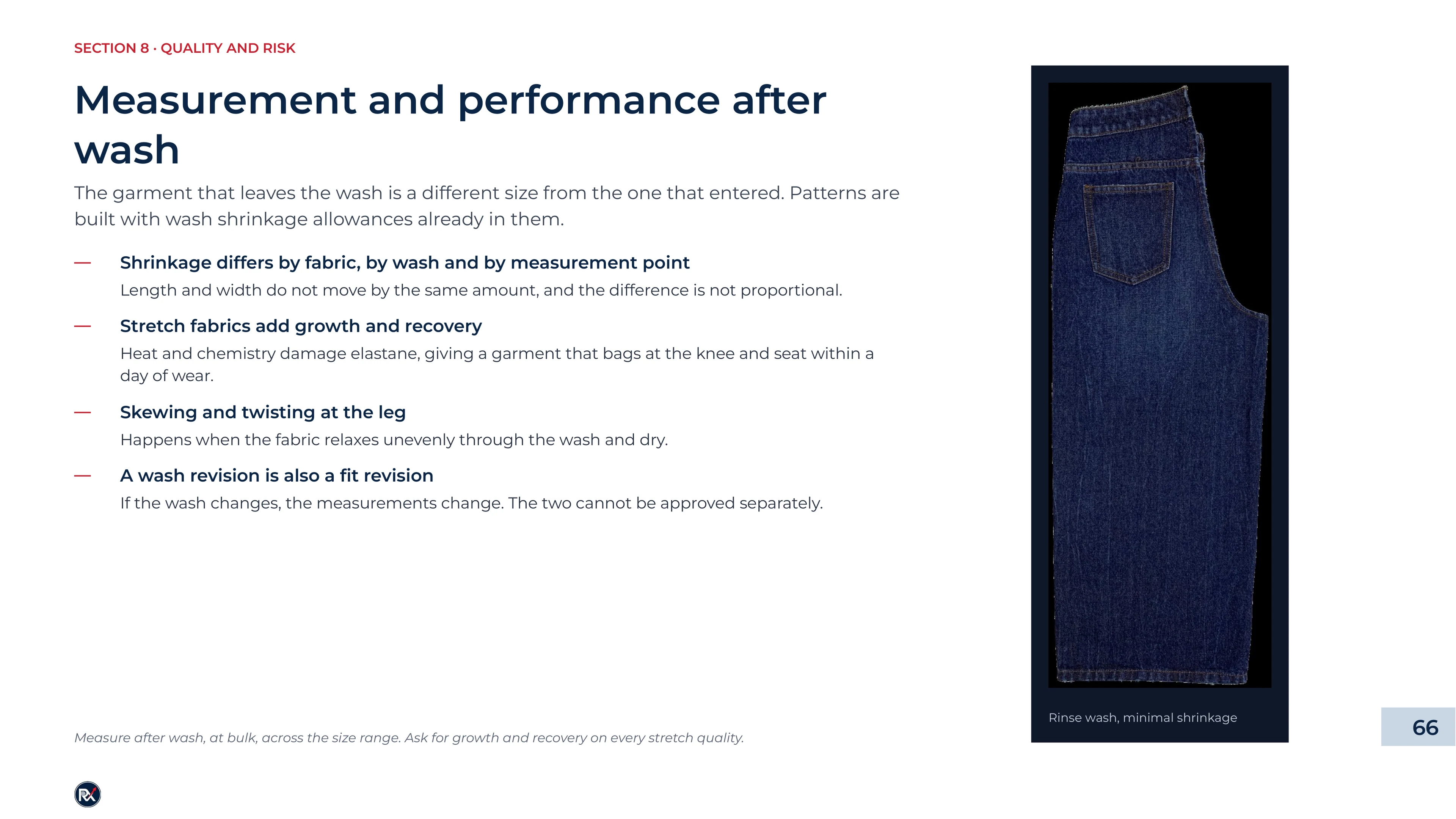
Slide 66 of 85: Measurement and performance after wash
Slide 67 of 85: Bulk versus approved sample
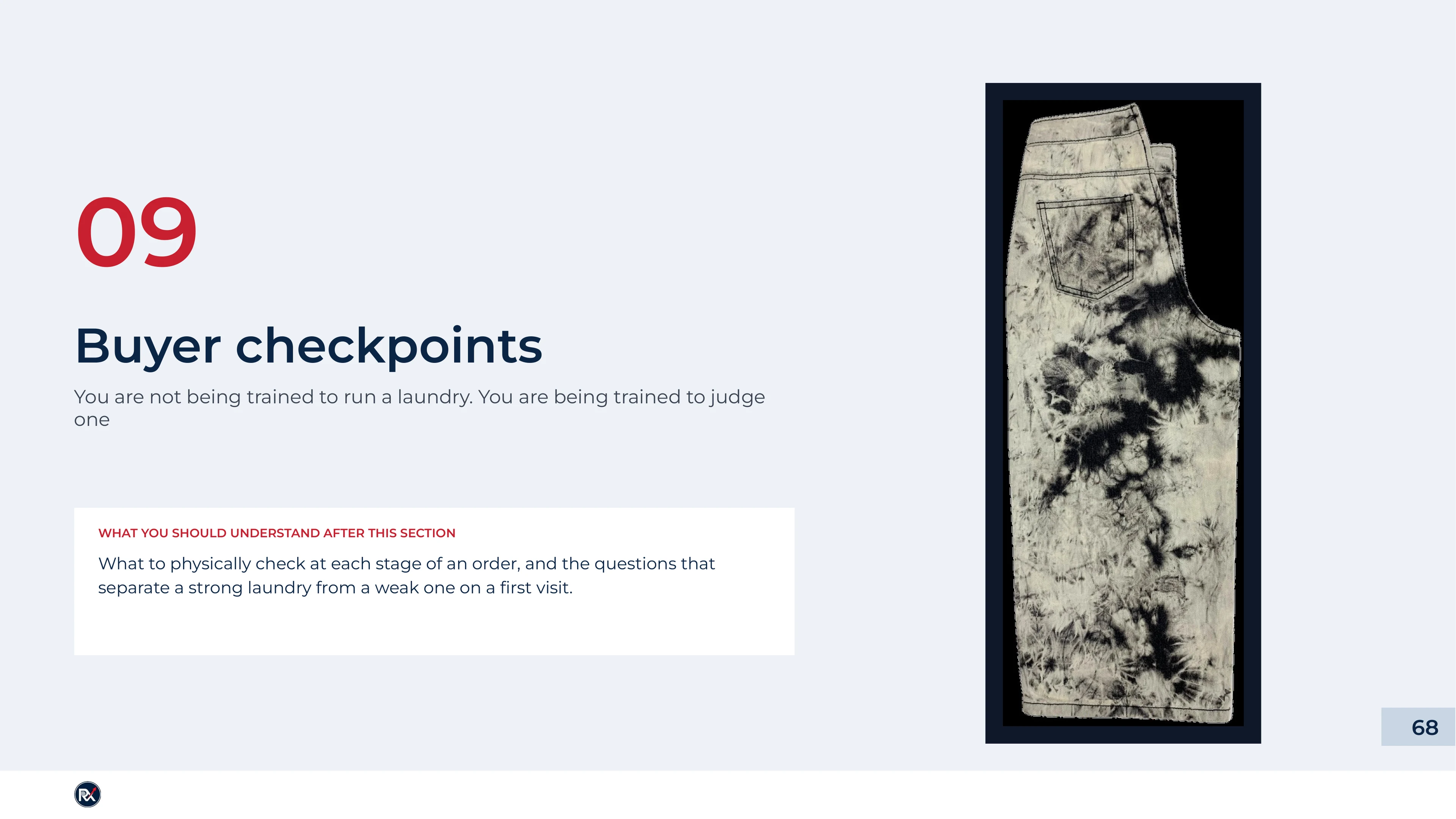
Slide 68 of 85: Buyer checkpoints
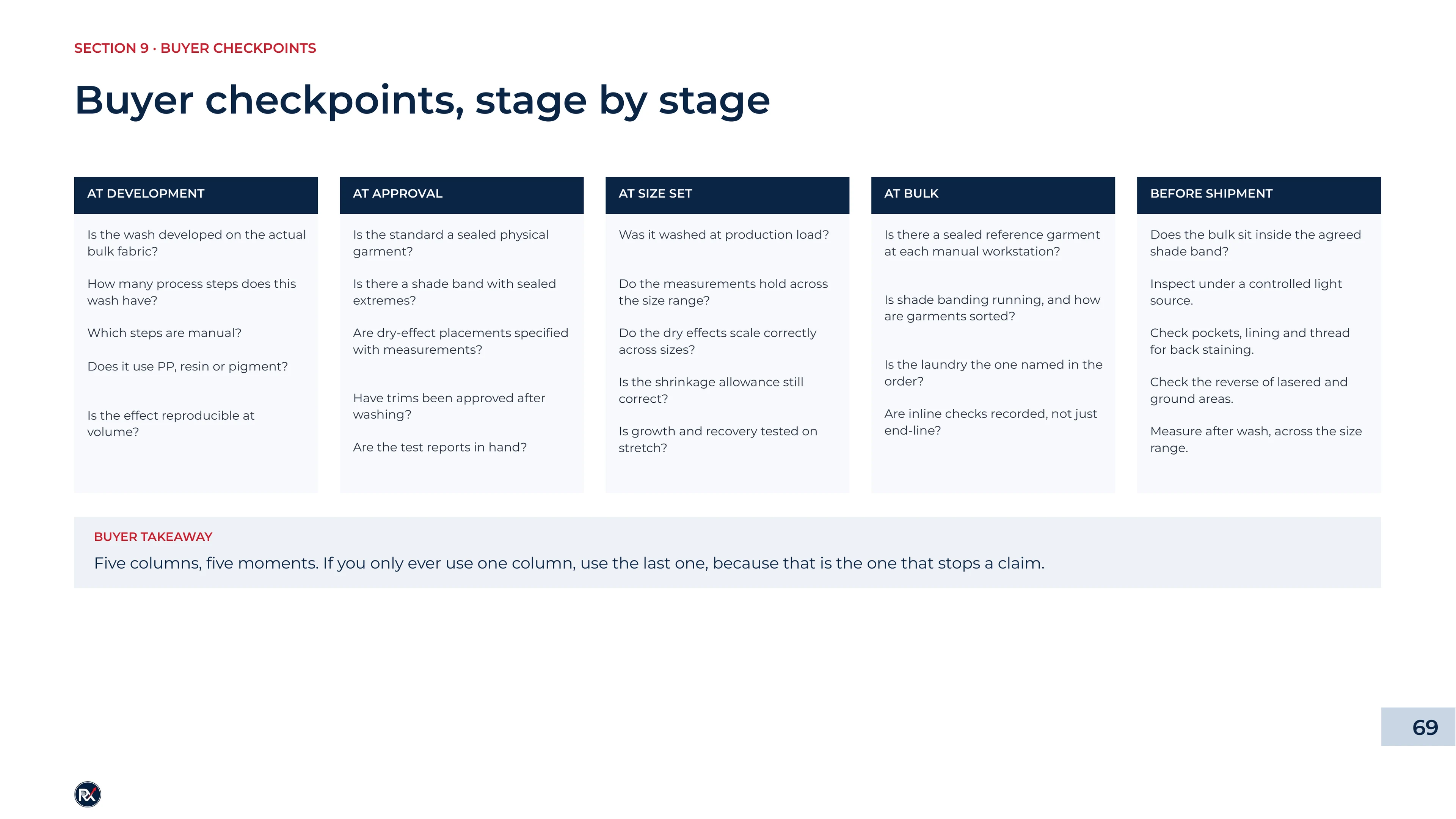
Slide 69 of 85: Buyer checkpoints, stage by stage
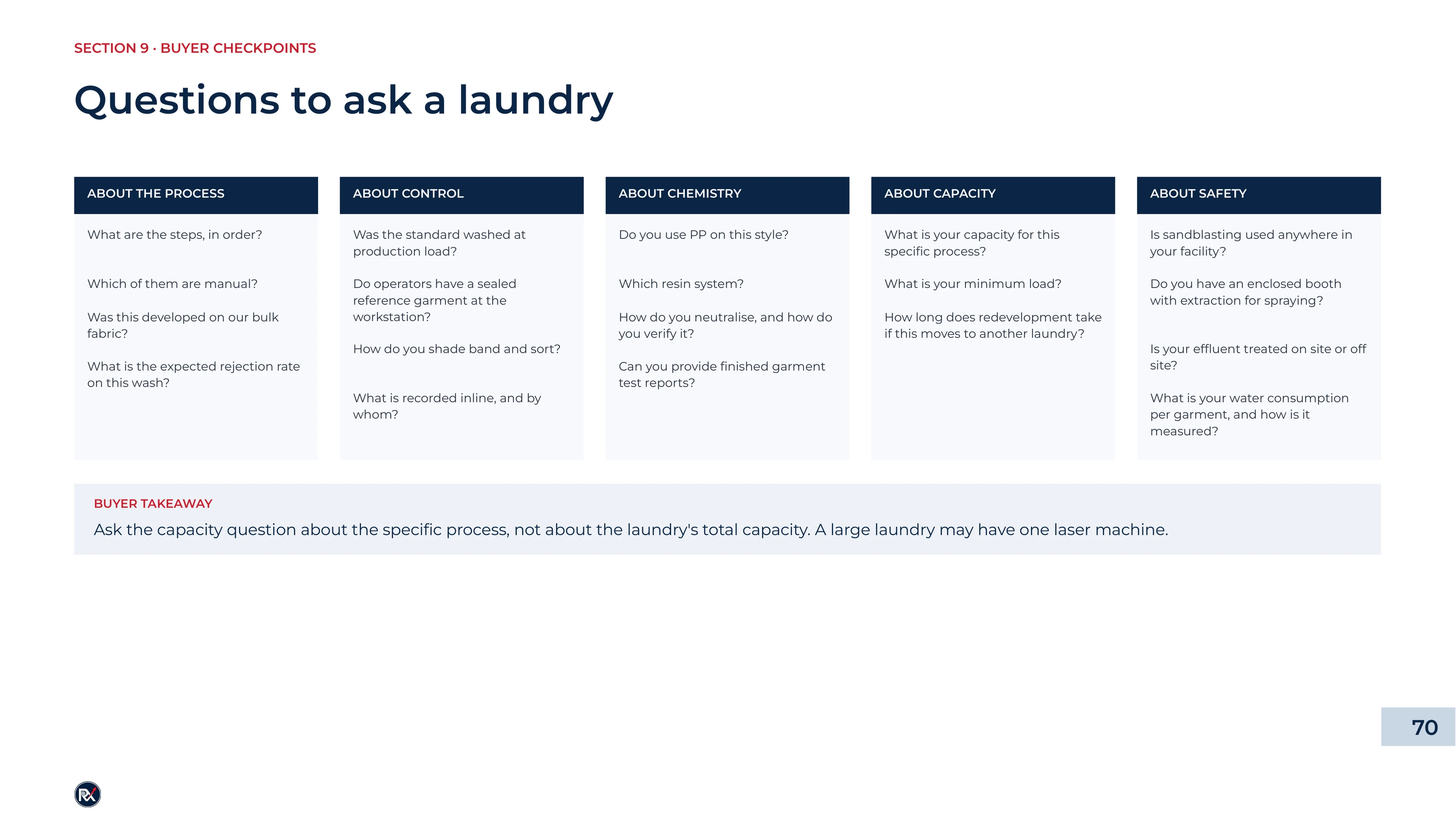
Slide 70 of 85: Questions to ask a laundry
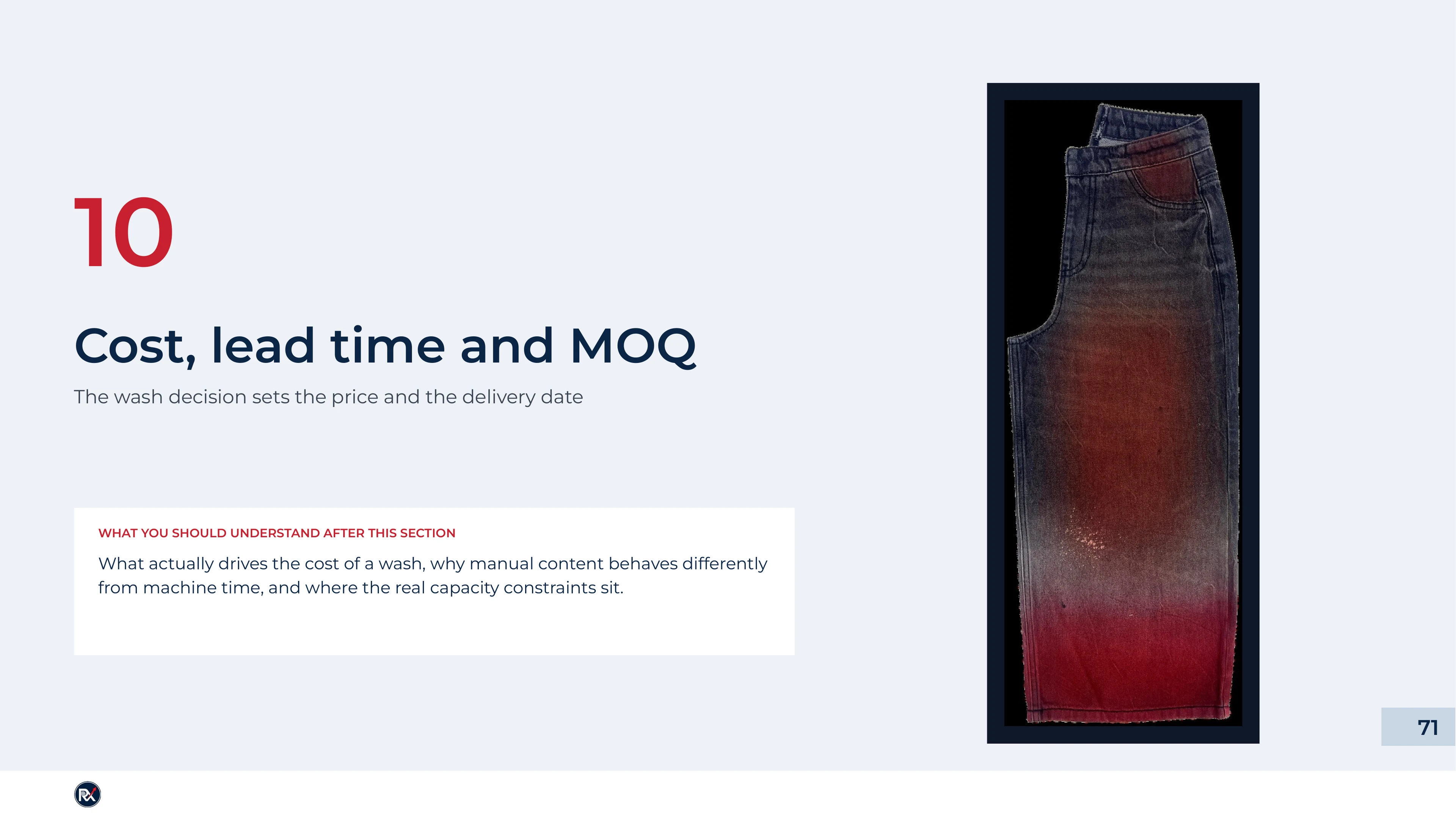
Slide 71 of 85: Cost, lead time and MOQ
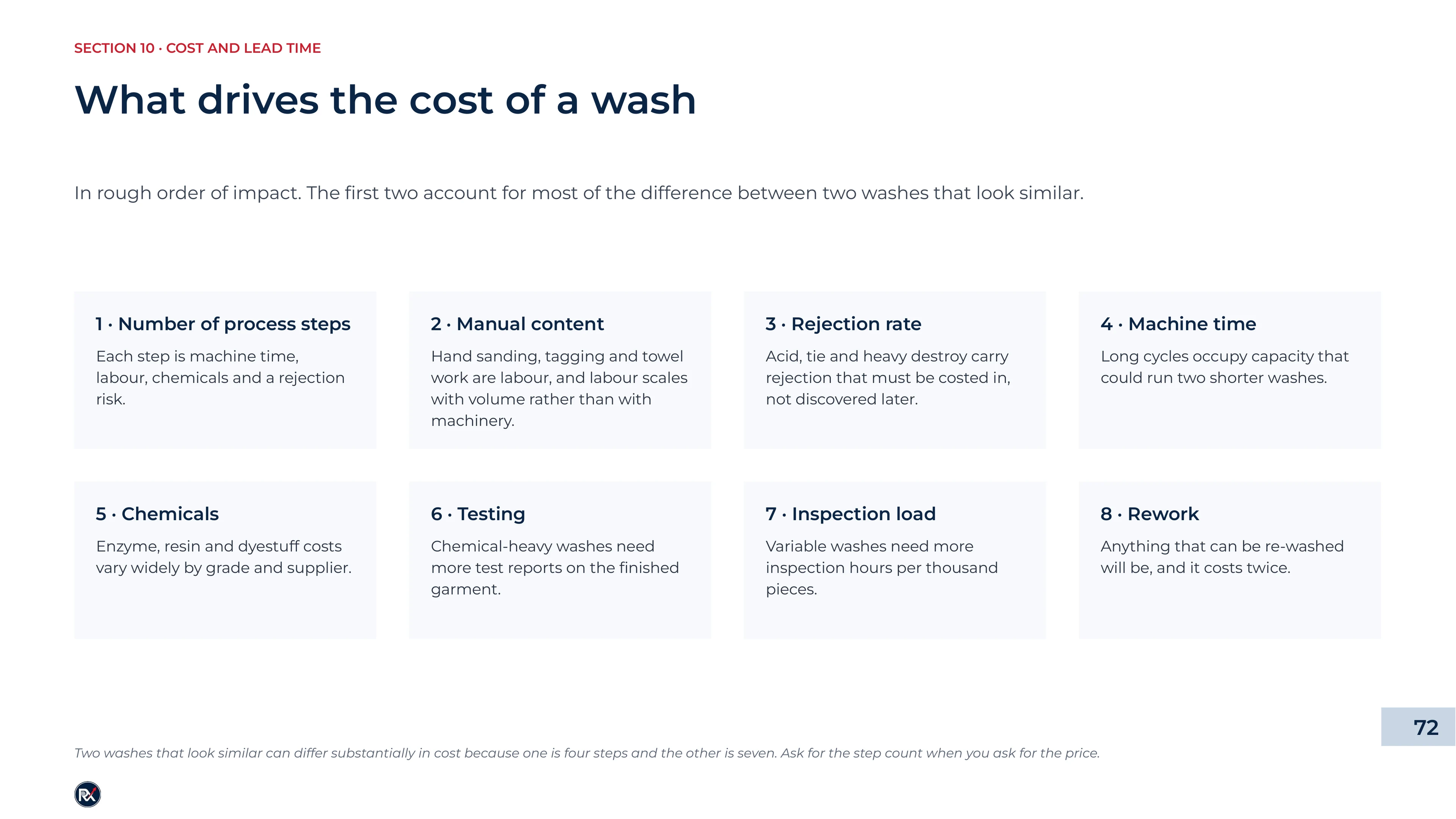
Slide 72 of 85: What drives the cost of a wash
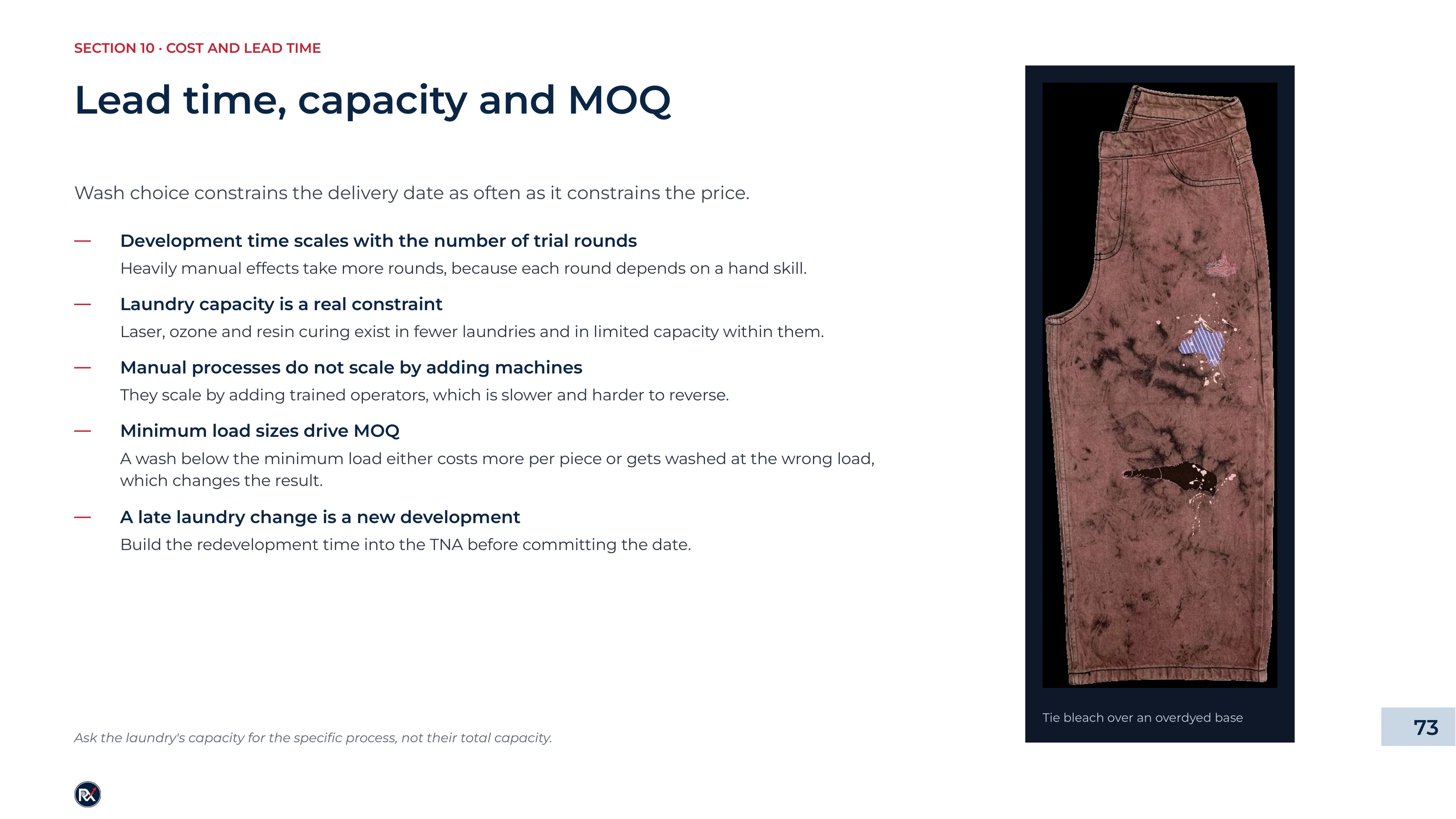
Slide 73 of 85: Lead time, capacity and MOQ
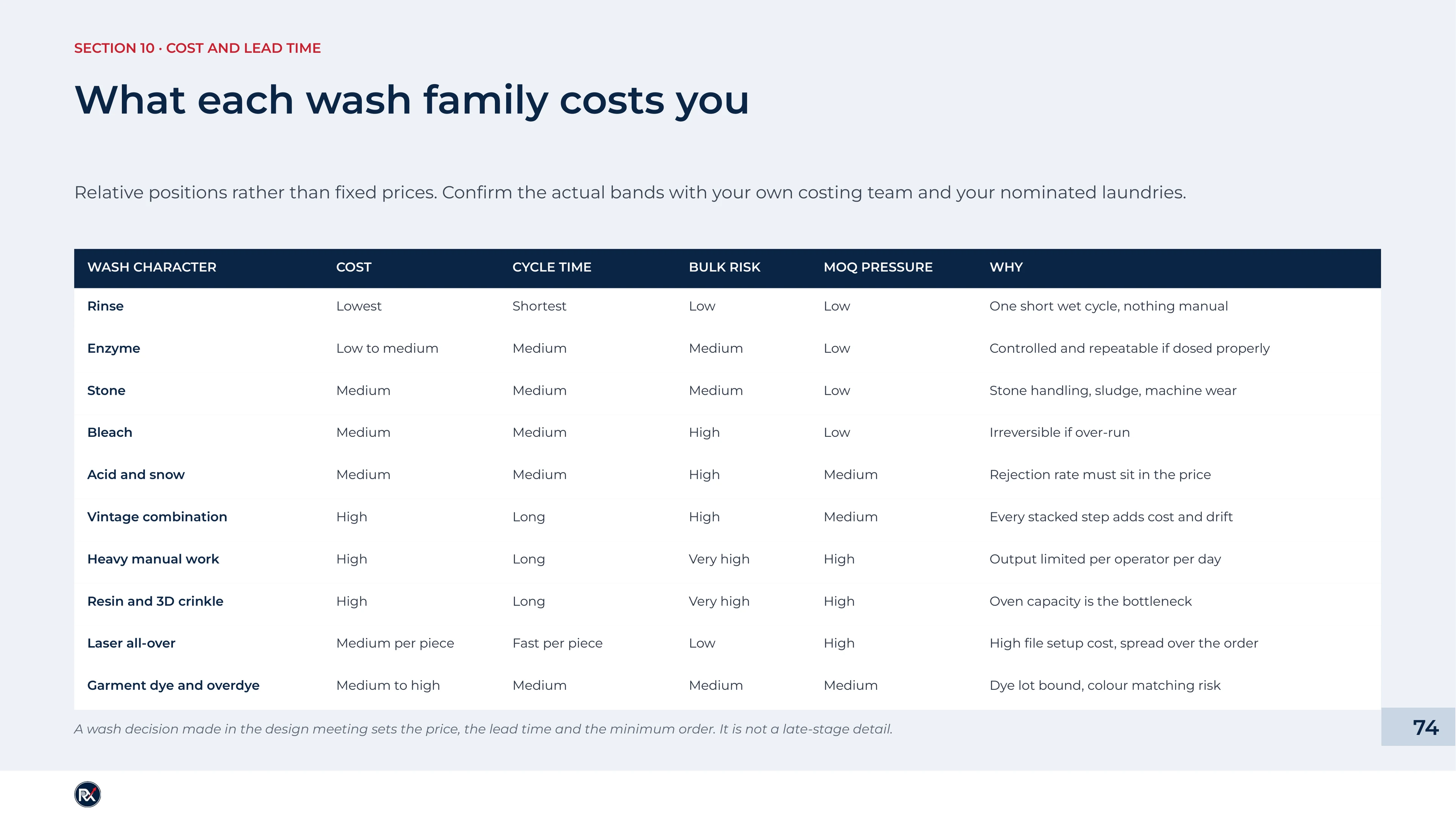
Slide 74 of 85: What each wash family costs you
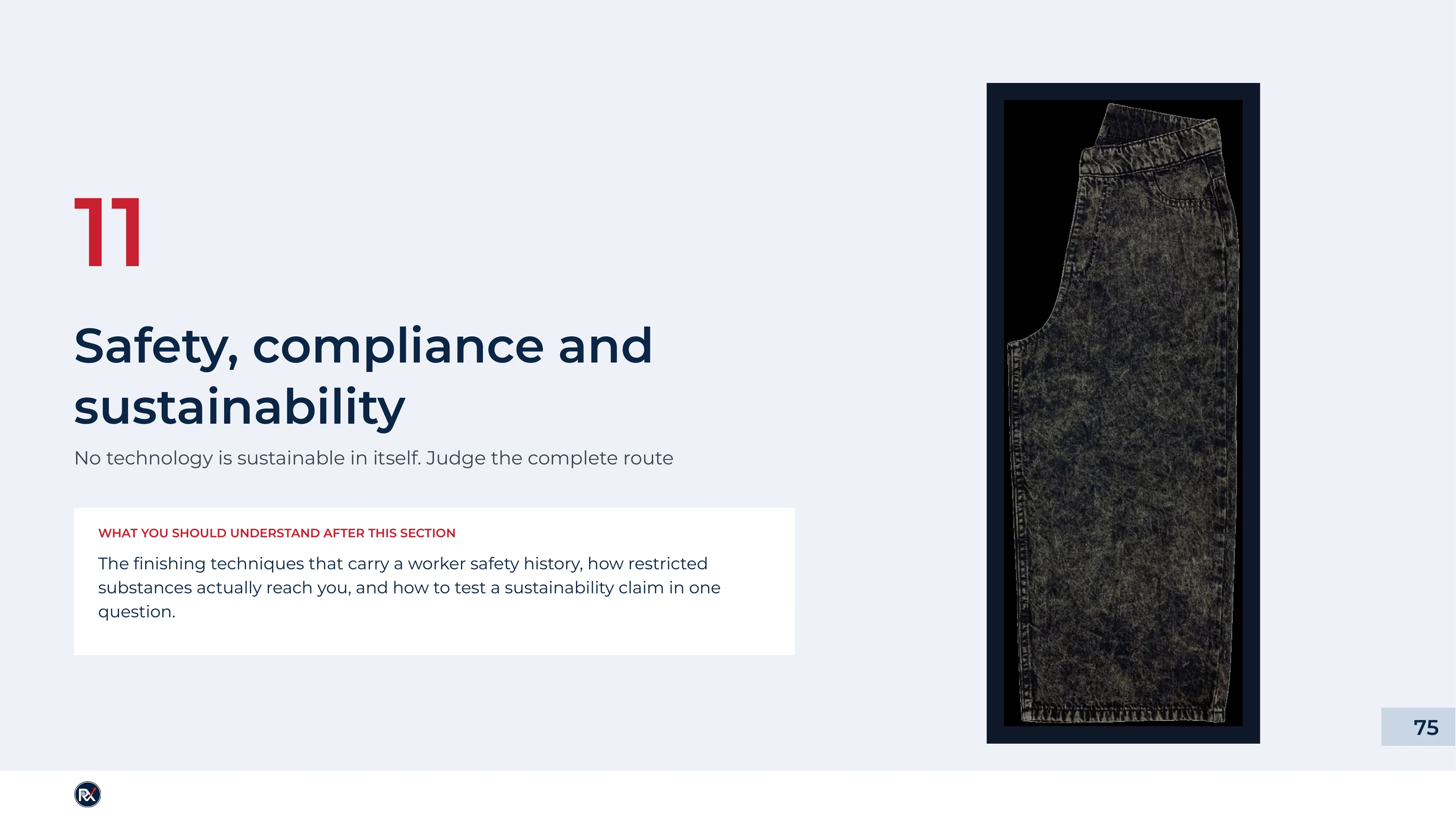
Slide 75 of 85: Safety, compliance and sustainability
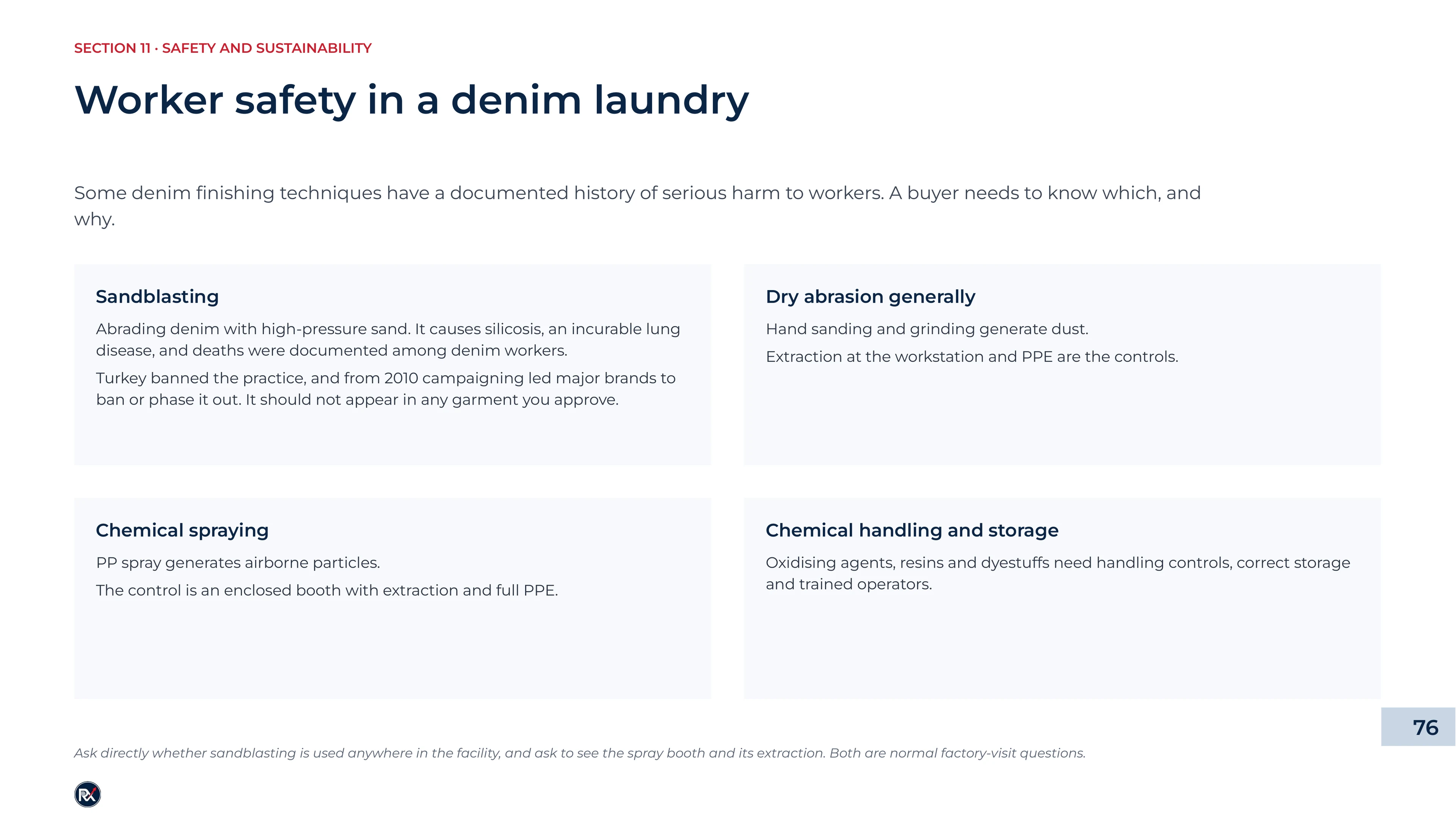
Slide 76 of 85: Worker safety in a denim laundry
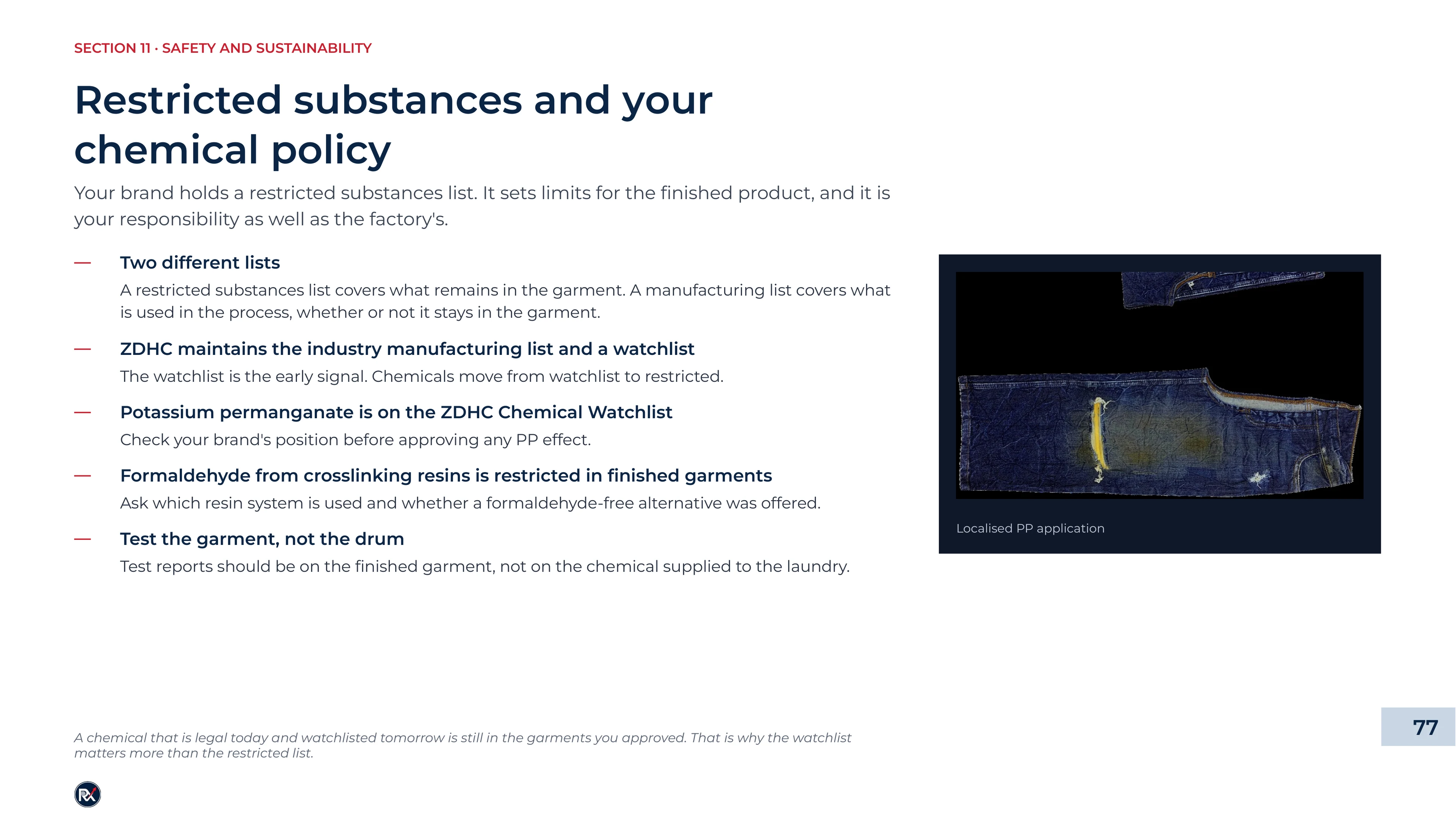
Slide 77 of 85: Restricted substances and your chemical policy
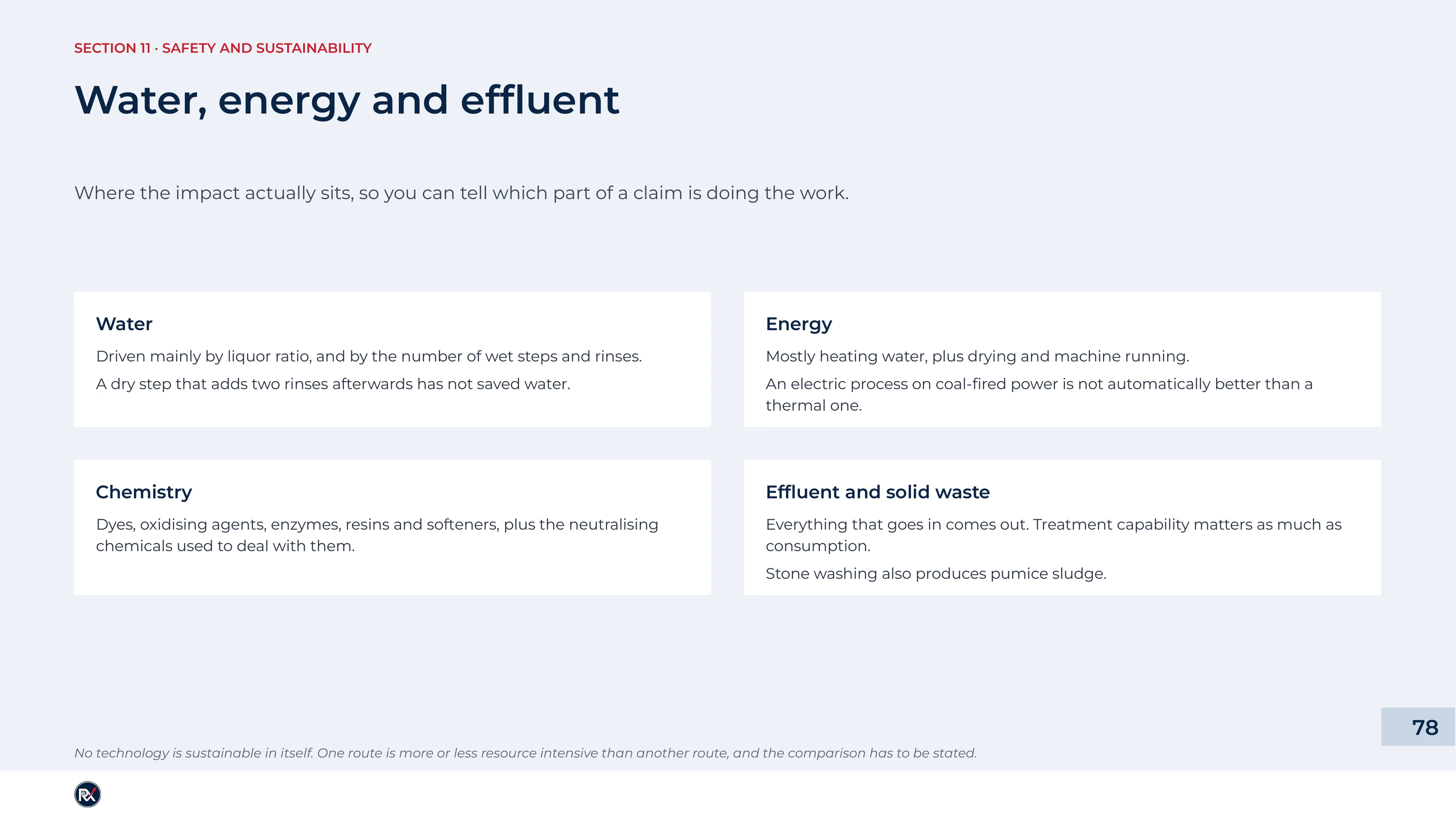
Slide 78 of 85: Water, energy and effluent
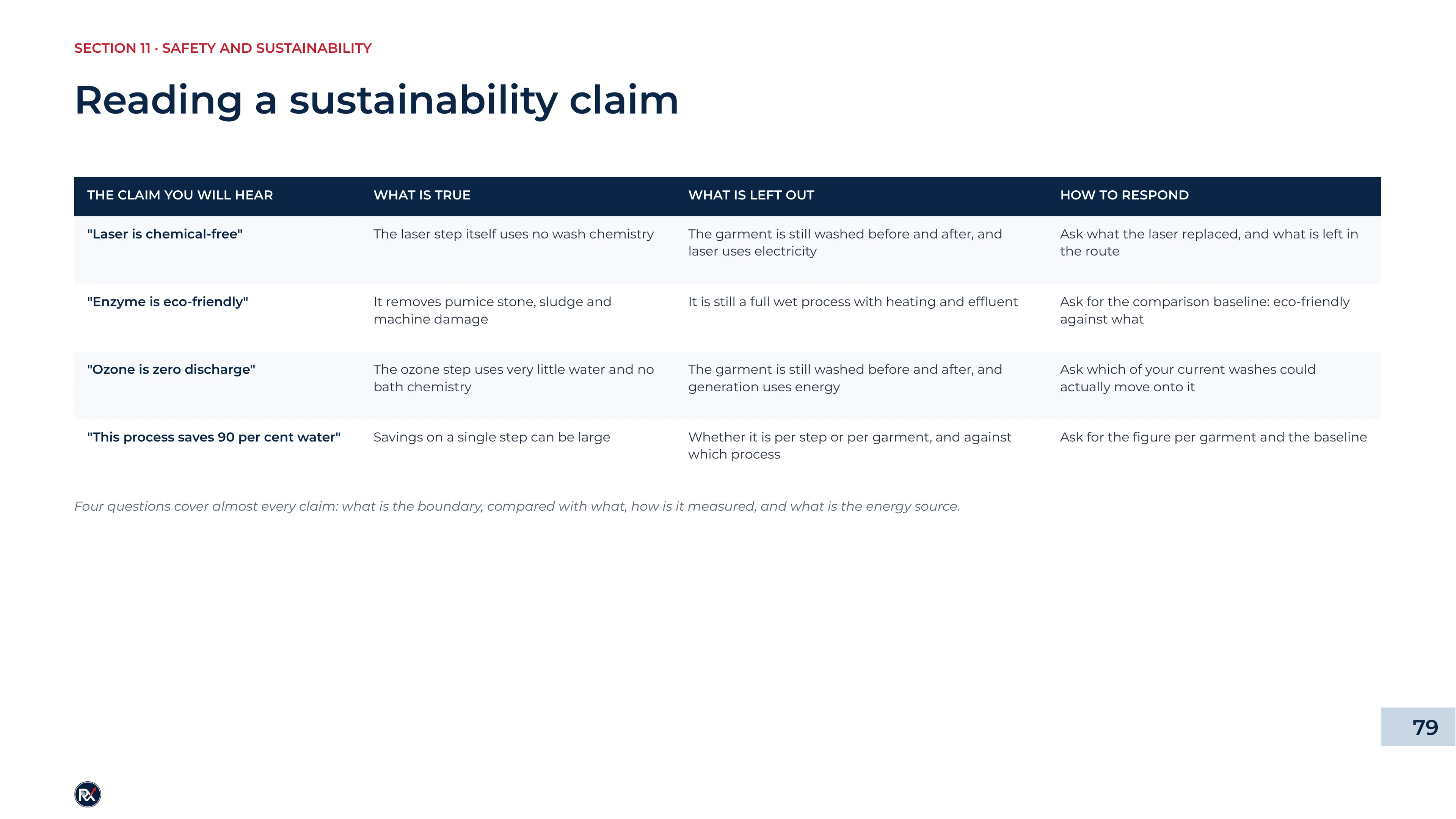
Slide 79 of 85: Reading a sustainability claim
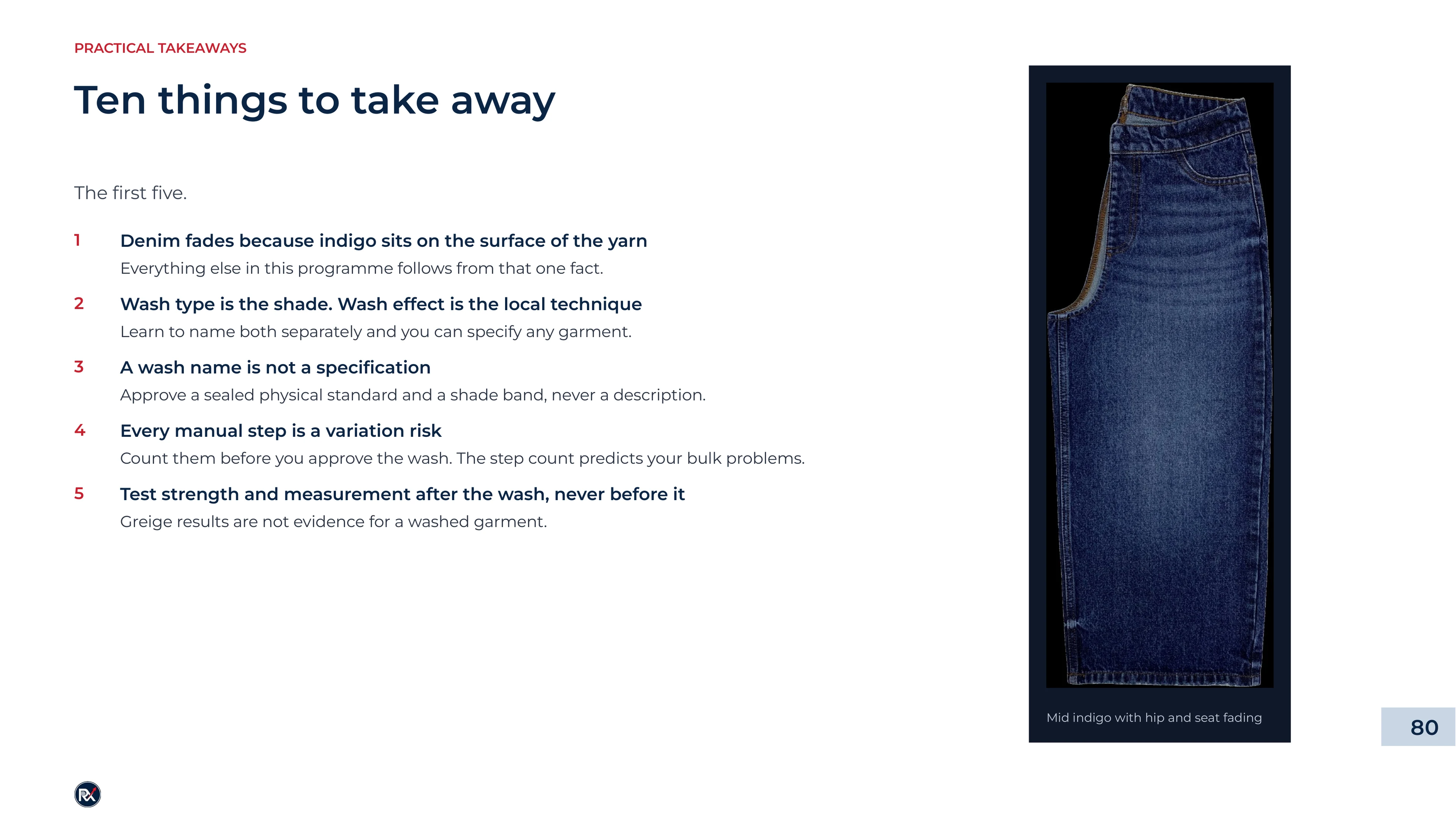
Slide 80 of 85: Ten things to take away
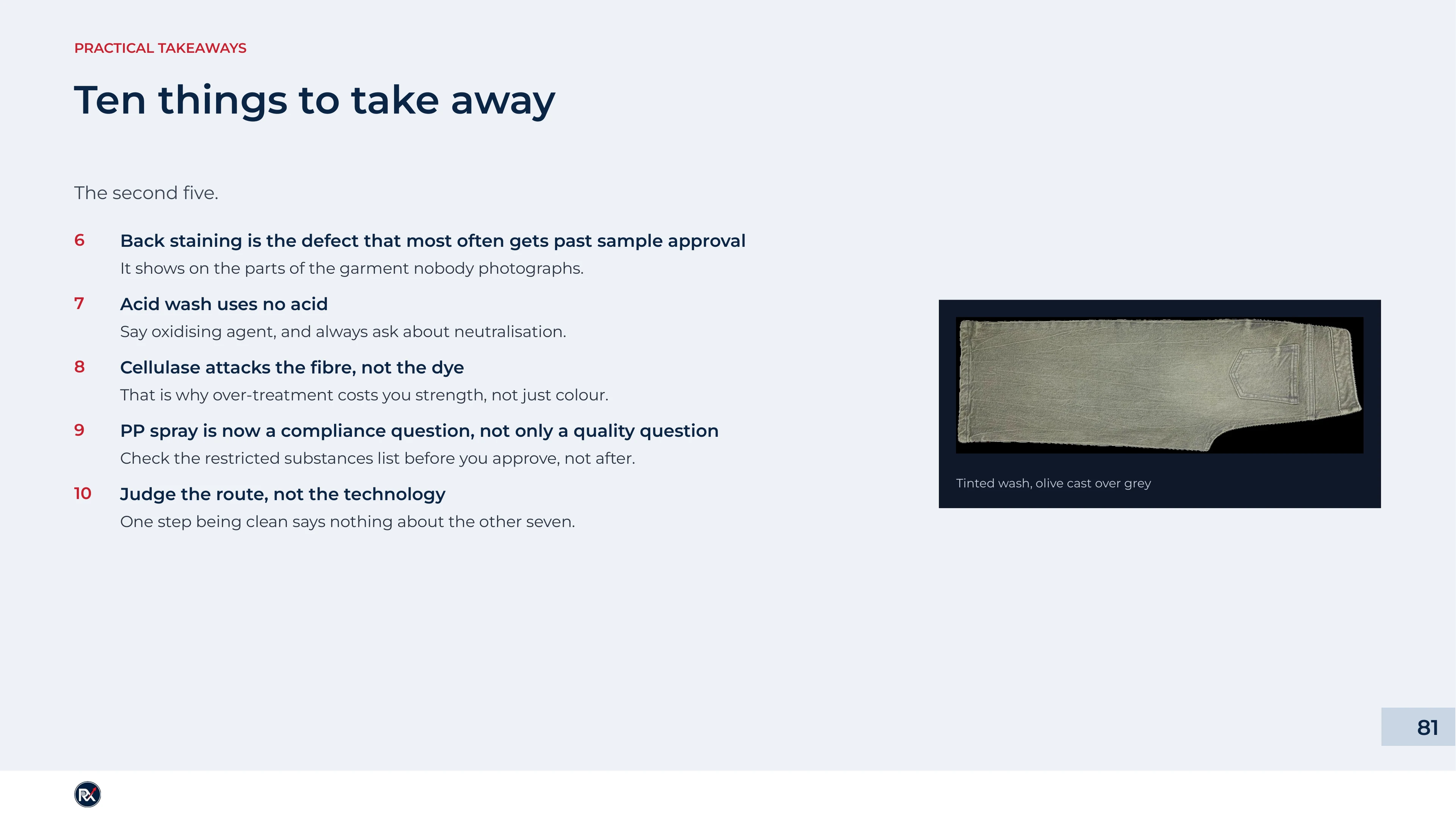
Slide 81 of 85: Ten things to take away
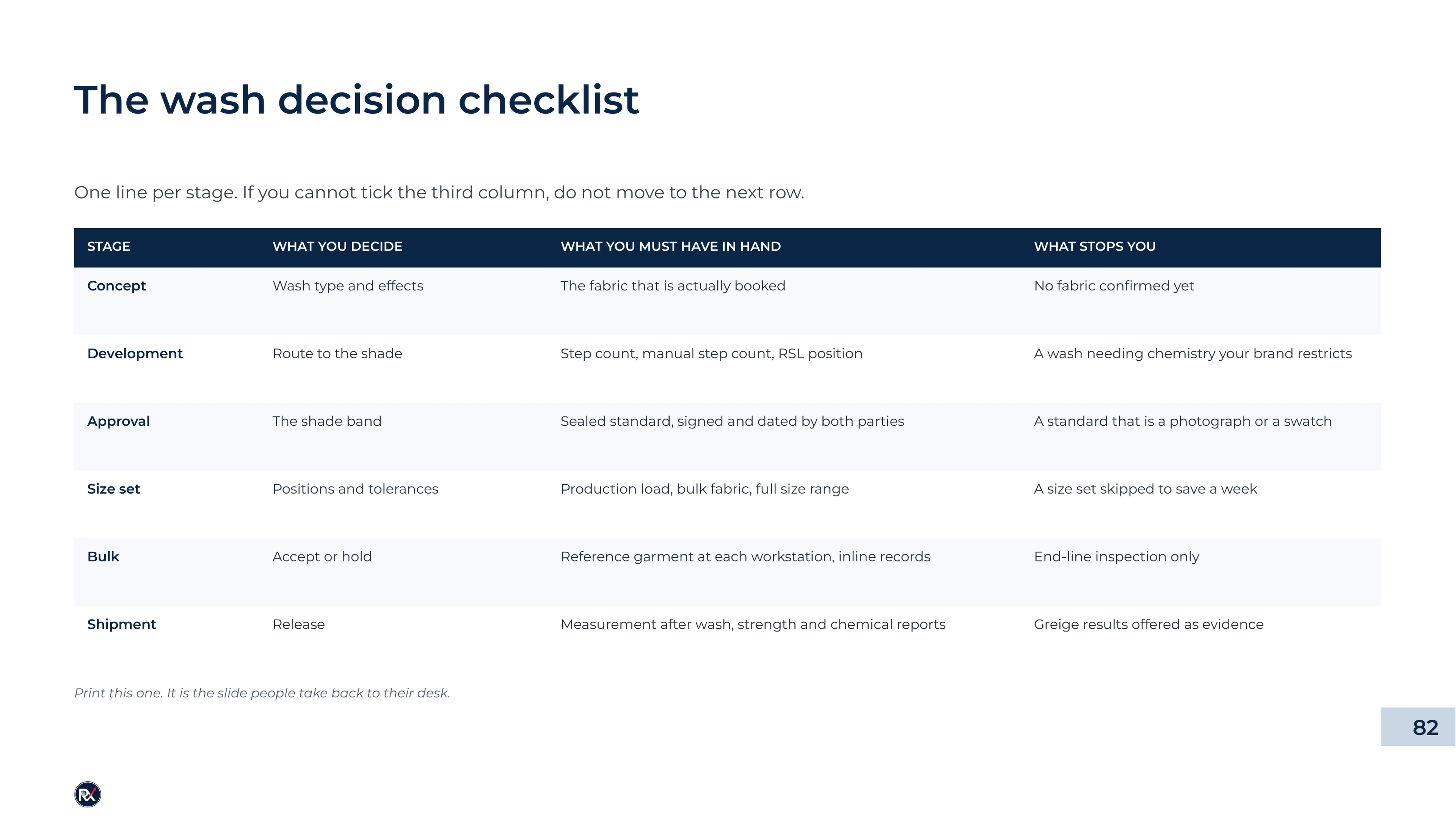
Slide 82 of 85: One line per stage. If you cannot tick the third column, do not move to the next row.
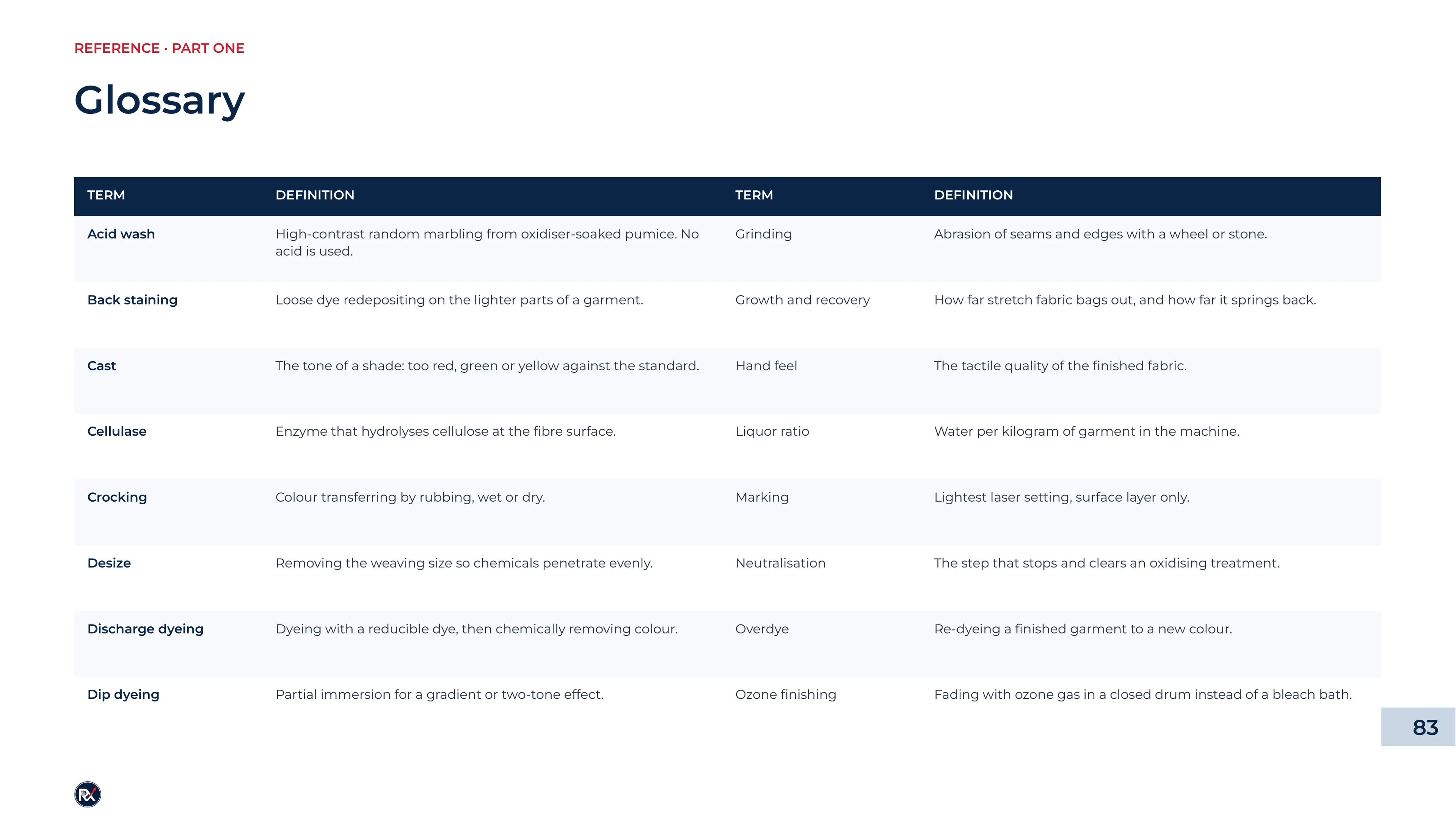
Slide 83 of 85: Glossary
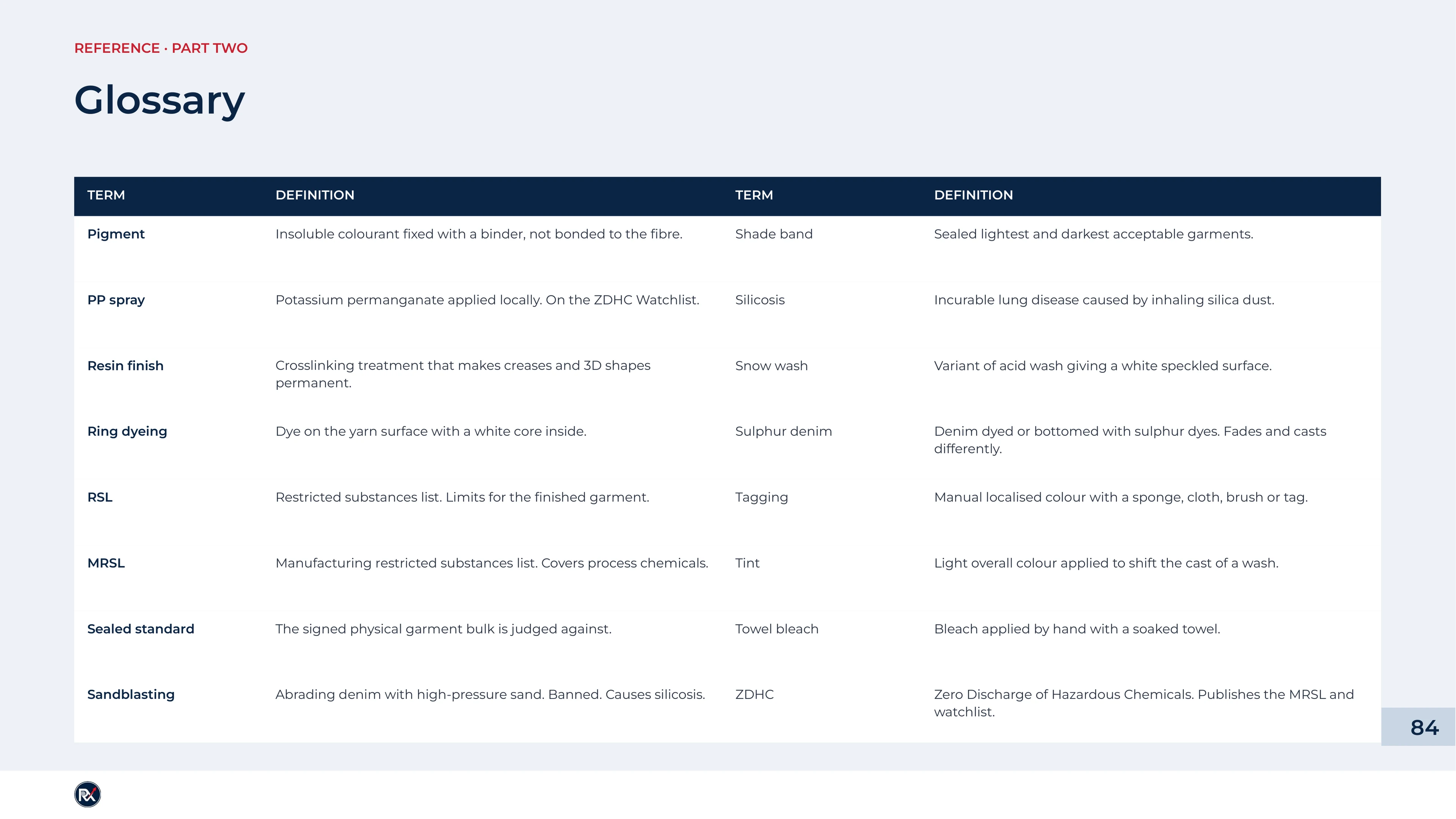
Slide 84 of 85: Glossary
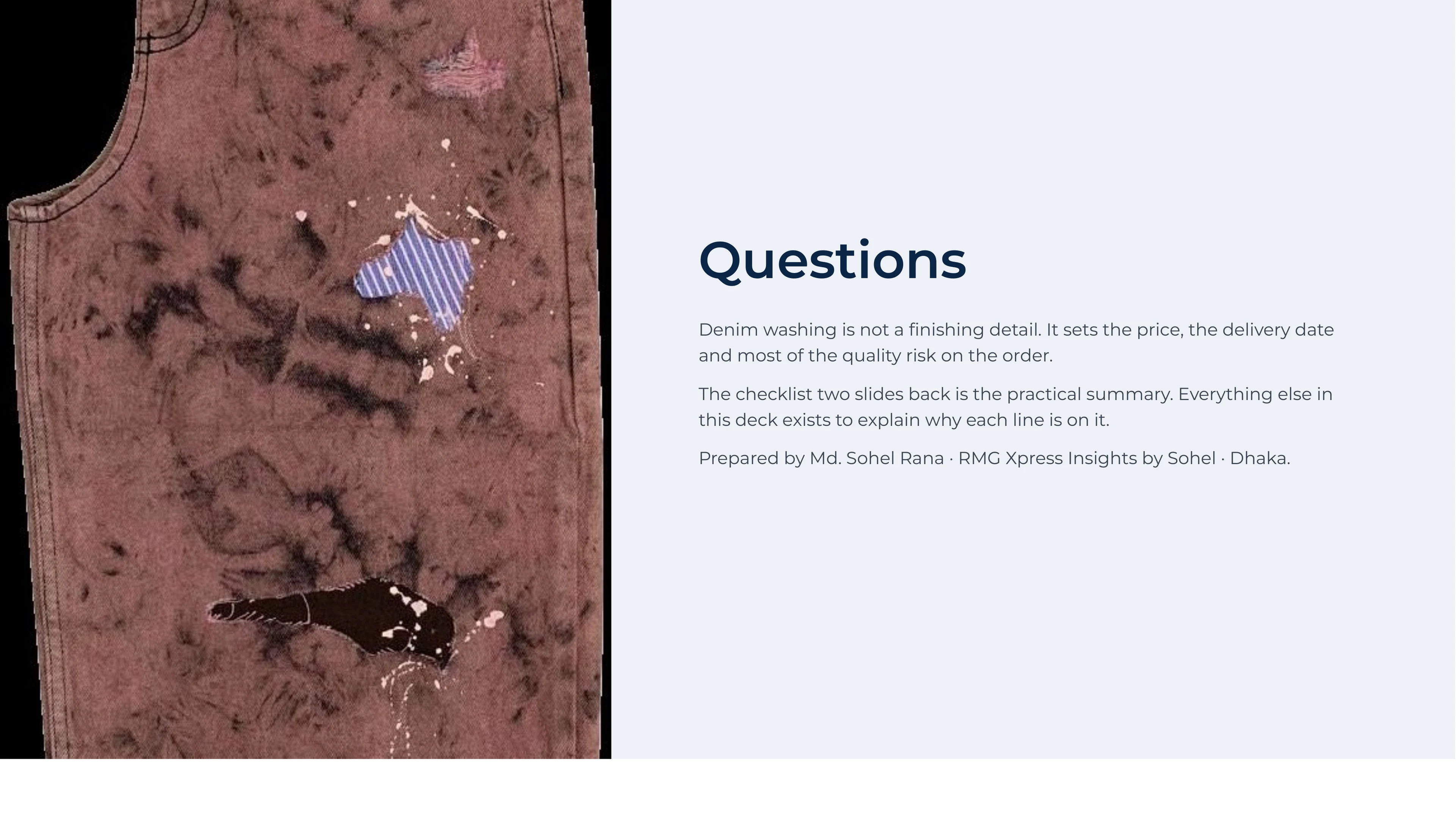
Slide 85 of 85: Denim washing is not a finishing detail. It sets the price, the delivery date and most of the quality risk on the order.